Bangladesh: Ten more RMG factories completed CAPs, says Alliance
The Alliance for Bangladesh Worker Safety has during March-April, 10 more Alliance-affiliated RMG factories completed all material components outlined in their Corrective Action Plans (CAPs). This pushes up the total number of factories that have completed CAPs has now risen to 76.
Alliance country director Jim Moriarty says these companies have made commitment towards worker safety by completing their corrective action plans. Their focus on remediation reflects the broader push that has transformed safety in Bangladesh’s RMG industry and directly translated into lives saved. Meanwhile, the Alliance continues to enforce accountability measures for factories that fail to prioritise remediation. In March and April, it suspended nine factories from the Alliance compliant factory list, bringing the total number of suspended factories to 146.
The Alliance was formed by North American retailers including Walmart and Gap after the Rana Plaza building collapse in April, 2013, that killed more than 1,100 people, mostly garments workers. Under a five-year plan, the Alliance has set timeframes and accountability for inspections and training and workers empowerment programmes.
New Delhi to host seminar on efficient water usage in textiles sector
A conference on innovative and water efficient processes in the textile sector will be held in New Delhi on May 18, 2017. The conference is being organised with a view to create awareness to deal with the challenges with regard to new regulations and guidelines and learn about increasingly advanced treatment technologies, innovative strategies geared towards water and wastewater reuse and resource recovery.
The conference will be attended by prominent stakeholders from the textile industry, relevant authorities from the Central and State Pollution Control Boards and other experts to deliberate upon the challenges being faced by the sector and showcase national and international best practices from progressive and futuristic companies.
The Central Ground Water Authority and the National Green Tribunal have issued directions to ensure that all existing, new and expansion industries or projects extracting ground water should obtain permission from the Central Ground Water authority.
The textile industry has a strong impact on climate. Water is used extensively throughout textile processing operations. There is an urgent need for making efforts toward reducing the use of fresh water in various processes and making use of technologies that treat and reuse process water as well as treated wastewater. The event is being organized by the Confederation of Indian Industry (CITI).
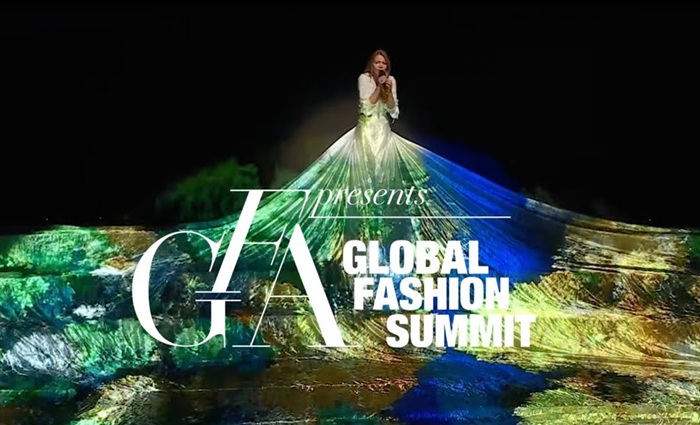
Denmark set to host Youth Fashion Summit
A Youth Fashion Summit will take place in Denmark from May 9 to 10, 2017. This will attract students from around the world. Young talents will engage in discussions about the industry they will soon inherit and how to address the major problems of fashion manufacturing and consumption. They will draft and negotiate the first-ever United Nations resolution on fashion.
The resolution will be negotiated with industry leaders such as H&M and Swarovski and NGOs such as Greenpeace before being presented on stage at Copenhagen Fashion Summit on May 11. Later this year, the resolution will be presented to the UN in New York. The Youth Fashion Summit is a collaboration between Global Fashion Agenda and the Copenhagen School of Design and Technology in partnership with Swarovski.
At last year's Youth Fashion Summit, students explored how the 17 UN Sustainable Development Goals represent opportunities for companies to align their sustainability goals with broader societal aims: from gender equality and poverty reduction to responsible consumption and climate action.
Educators and fashion education leaders will meet prior to Copenhagen Fashion Summit for their respective events, Educators Summit and Academic Leaders Roundtable. While Educators Summit is a platform for teachers to exchange ideas and experiences on how to effectively teach sustainability and build a strong international network around it, Academic Leaders Roundtable convenes the most influential decision-makers from across fashion education, industry and non-governmental organizations for an intimate discussion informing the development of sustainability in global fashion.
Bangladesh Denim Expo to highlight denim ties
Bangladesh Denim Expo will be held from May 17 to 18, 2017 in Dhaka. The theme for the expo is ‘Denim Networks’ and will highlight the importance of developing understanding and relationships in the denim industry. The aim is to connect experts, brands, retailers and the industry’s top players in order to share a global approach toward the main challenges.
Exhibitors from 12 countries -- Bangladesh, China, India, Turkey, Spain, Italy, Pakistan, Japan, San Marino, Germany, Brazil and Hong Kong -- are expected to take part. The trend zone area, the unique space dedicated to showcase latest denim trends and innovative products, has been expanded in parallel, incorporating a new information exchange zone where visitors will be able to gain insights into denim fabrics, styling and finishing available in Bangladesh, together with a select offer of the most relevant denim publications. Bangladesh Denim Expo has been conceived of as an international strategic hub to attract the most interesting and innovative denim-related projects.
Caldera showcases at Fespa which opens on May 8
Caldera is showcasing its updated textile production platform, Textile Pro, at Fespa, Germany, May 8 to 12, 2017. Textile Pro reflects Caldera’s long history of partnerships within the world of digital printing onto fabric, providing intuitive workflow control for both decorative and industrial textile printing.
Textile Pro ensures colors are repeated faithfully by providing RGB (red green blue) workflow throughout pre-press and imposition, while patternation and media variances are handled effortlessly within the interface. Supporting all major textile printer manufacturers and with partnerships, Caldera is witnessing rapid adoption in this evolving market.
Caldera V11 was released to celebrate the company’s 25th anniversary last year, and 2017 now sees the advent of V11.1. This update introduces the ability to define custom media sizes within the print interface without needing to configure new media in the server administration.
For ultra-connected printers, such as the HP Latex range, this enables Caldera to recognise the media type and size when loaded on the engine. It also sees the introduction of exponential linearization targets in Easy Media to improve color calibration and stability. Further improvements to popular modules include additional functionality in Print Bleed and enhanced savings in Ink Performer.
Sustainability in focus at Kingpins Amsterdam and Denim Première Vision
"The push and pull between rigid and stretch, authentic and performance, and fast and handcrafted played out at Kingpins Amsterdam and Denim Première Vision, where a global blend of mills, trim suppliers and other elements of the denim supply chain came together to present their Autumn/Winter 2018-2019 collections and innovations. Anchoring each of these themes was a heightened awareness for sustainability as mills debuted new efforts to save water, reduce chemicals and increase the use of sustainable fibres like Tencel, BCI cotton, recycled polyester and other post-consumer fibres."
The push and pull between rigid and stretch, authentic and performance, and fast and handcrafted played out at Kingpins Amsterdam and Denim Première Vision, where a global blend of mills, trim suppliers and other elements of the denim supply chain came together to present their Autumn/Winter 2018-2019 collections and innovations. Anchoring each of these themes was a heightened awareness for sustainability as mills debuted new efforts to save water, reduce chemicals and increase the use of sustainable fibres like Tencel, BCI cotton, recycled polyester and other post-consumer fibres.
For most mills at the shows, sustainability began with new techniques that save water, and ultimately money. In fact, Denim Première Vision’s fashion team called water-less technology as a key theme in its Autumn/Winter 18-19 Denim Tastings seminar, pointing out that these innovations are creating new design possibilities.
Greening growth pastures
At Denim Première Vision, Mexico-based mill Global Denim touted its Ecoljean technology. While a regular pair of jeans passes through six washes and takes an average of 20 litres of water to produce, Ecoljean process requires no water discharging, less energy consumption, less dye consumption and creates a smaller CO2 footprint. The result is an efficient product with less colour variation and a better wash down effect.
In Amsterdam, where the cost of sustainability was a hot topic during Kingpins Transformers, Garmon Chemicals rolled out Geopower NPS, the company’s newest effort to establish strong and effective R&D that sets a new standard for sustainable practices. Short for ‘no pumice stone,’ the new technology achieves rich heritage looks on denim and creates a range of stonewash effects, panel and seam abrasion, high color loss and contrasts. The technology, which has already been implemented by denim brand Only’s R&D program, produces zero pumice sludge and radically cuts environmental impact (especially water) and costs.
Kassim introduced denim that helps clean air pollution. The mill collaborated with an Italian research partner to produce Photocatalytic Denim containing photocatalytic nano composites to eliminate pollutants by using just natural sunlight. Kassim also teamed up with Bainisha, a biomedical product development company, to create denim for professional athletes. Garments are equipped with sensors that send data about the wearer’s posture and gait to an app accessible on their phone.
Fashion & functionality at its best
At Kingpins Amsterdam, Artistic Milliners and its Dubai-based garment and finishing innovation lab, presented denim made with the mission to make each step as sustainable and traceable as possible, from thread to rivet. The end product was a jean made with organic cotton, recycled cotton, recycled polyester and Lycra, finessed with sustainable rivets and sustainable leather back patch.
Denim’s reliance on sustainable and performance fibres was evident at both European shows. Going into the new season, Denim Première Vision’s trend team said BCI cotton is the most frequent proposal, followed by organic cotton and recycled polyester. Meanwhile, mills turned to fibres from Invista and Lenzing to create stretch and authentic looks that satisfy the market’s demand for recovery, softness and durability. US Denim partnered with Invista to create SelvedgeX, a range authentic selvedge with built-in comfort and performance. The denim is made with a collection of antique selvedge looms, incorporating Lycra XFit technology for freedom of movement, controlled shrinkage and shape recovery.
Innovations galore
Artistic Milliners Garments and Finishing used Tencel and Lenzing Modal as a springboard for its new PP-free ‘sustainable softness’ Haptic collection. The eco fabrics, designed to offer softness, moisture management and breathability, combines laser technology and other treatments to achieve a localized effect. For instance, ozone technology enhances Haptic’s sanitizing and disinfecting properties, while Jeanologia’s E-flow technology creates high and low effects. Inspired by the Nordic ‘hygee’ movement—a trend based on cozy and comfortable living—Artistic Milliners presented Sunday Jeans. The fabrications incorporate Tencel, Lenzing Modal and fiber dyed modal for a soft look and feel. The fabric is suitable alternative to leggings for mellow weekends.
Soorty sees demand for more application of denim in the activewear market. The mill rolled out Denim Active, a bi-stretch Tencel and organic cotton concept based on second skin silhouettes. The collection, offered in three variants, delivers an index of performance qualities, including freedom of movement, quick dry, soft touch and moisture management. A version with Coolmax All Season is designed to keep the wearer cool and dry on hot days and warm on cold days. A version with Coolmax Eco-Made is made with 97 per cent recycled resources and provides moisture wicking properties. Denim Active made with Thermolite IR raises the temperature of the garment and absorbs NIR through solar-activated technology.
Arvind draws the focus on India
Jelt denim found a place in mills’ collections for A/W 18-19. The heritage workwear fabric was adopted in large scale by HD Lee Company in the 1920s. Known for using better quality, longer staple yarns, the denim became a staple for workwear brands and sailors. Arvind reconsidered Jelt denim, recreating a faithful reproduction of the original 2×1 weave—complete with shuttle loom versions with selvedge and grey heather weft—with contemporary fibers. The mill added performance to Jelt 2.0, with versions made with Lycra fiber, Tencel and Coolmax.
Arvind introduced Faux Denim, a collection of denim fabrics with a leather finish. The mill says coatings are resistant to cracking. Artistic Milliners introduced easy-care Aloe Vera finishing with freshness and moisturizing properties. The smooth and silky finish can be applied to a variety of blends, including Tencel and Cordura. Colour and wash stories spanned intense to authentic. To satisfy true indigo lovers, Arvind presented Azurite, a line of premium fabrics made with a patented technology that uses indigo dyed weft and warp yarn. The result is saturated blue fabrics with unique wash downs.
Activewear gaining ground in China, Euromonitor study
"Till now, the US used to be main market for athleisure companies but now, the table seems to be turning towards China. The market of activewear/athilesiure in the US with a population of 321 million people is estimated at $44 billion, says a NPD Group study. While the category is expected to continue to grow trend as per Morgan Stanley forecasts will reach $83 billion by 2020. With rising enthusiasm for sports activities, more local consumers are engaged in various forms of physical exercises amidst accelerating pace of life and mounting work-life pressures."

Till now, the US used to be main market for athleisure companies but now, the table seems to be turning towards China. The market of activewear/athilesiure in the US with a population of 321 million people is estimated at $44 billion, says a NPD Group study. While the category is expected to continue to grow trend as per Morgan Stanley forecasts will reach $83 billion by 2020. With rising enthusiasm for sports activities, more local consumers are engaged in various forms of physical exercises amidst accelerating pace of life and mounting work-life pressures.
But the Chinese market is brimming with opportunities. At nearly 1.4 billion people that dwarfs America. It began exploring national fitness policies as far back as 1978. Following the 2008 Olympics in Beijing, the president of China, Hu Jintao, announced a government-backed sports-for-all fitness policy.
Growth Triggers for Activewear

Higher disposable income is also one of the many reasons for growing popularity in China. According to National Bureau of Statistics, China’s per capita disposable income increased 6.3 per cent year-on-year. IBISWorld’s Gym, Health & Fitness Clubs market research report shows the industry was set to generate $5.81 billion last year, an 11.8 per cent annualised growth between 2011 and 2016. Activewear study shows consumers who buy athletic apparel work out at least three times per week.
Euromonitor International did a Sportswear in China survey and found running to be increasing in popularity because it does not require a specific field or equipment, with low entry barriers for ordinary consumers. Meanwhile, runners can eagerly and easily share their successes via their personal social media accounts such as WeChat, to have a sense of accomplishment. The rising passion for running amongst average consumers gave rise to the rapid growth of running footwear and apparel.
Activewear is not just for exercise
The Activewear study showed they also wear it for running errands (40 per cent), shopping (42 per cent), around the house (39 per cent), out to eat or a movie (33 per cent), and doing yard work outside (27 per cent). Nearly 6 out of 10 consumers (59 per cent) choose activewear for other activities because it’s comfortable. Regardless of activity preference or exercise level, cotton (47 per cent) is by far the overall fabric preference for activewear, followed by cotton blends (20 per cent), rayon (7 per cent), and polyester (4 per cent), according to the Activewear study. Further, 69 per cent says it’s the only fabric/one of the few fabrics they consider when shopping for athletic apparel.
Chinese consumers currently do not own a lot of activewear pieces. On average, they own 2.5 T-shirts, 2 compression or tight-fitting shirts, 2 tank tops or sleeveless shirts, 2 pairs of shorts, and 2 pairs of pants. The Euromonitor research found athleisure is popular with younger consumers who wear it on a daily basis. More sports-inspired apparel brands aim to enhance their brand awareness and reputation by cooperating with fashion and sports media. In addition, these brands often incorporate popular topics or elements in their products, to set trends by launching limited editions. Vans, for example, joined with Disney and introduced a ‘Toy Story’ series.
The Activewear study finds Nike (26 per cent) and Adidas (20 per cent) are the top activewear brands purchased in China by all consumers, whether they are light or heavy exercisers, or even if they don’t exercise at all. With the rising enthusiasm for sports activities, more local consumers are engaged in various forms of physical exercise to keep fit amidst the accelerating pace of life and mounting pressures from life and work, especially amongst white collar workers, the Euromonitor informs.
Vietnam’s textile and garment industry continue to grow
General Director of the Vietnam Textile and Garment Group (Vinatex) Le Tien Truong says the industry’s good results last quarter was due to rapid growth from new markets. Exports to Eurasian Economic Union (EAEU) grew 115 per cent and the Asian Economic Community (AEC) saw growth of 17 per cent.
Statistics showed the industry earned $6.75 billion from exports in the first quarter of this year, up 12.4 per cent from the same quarter last year. Although there were many challenges in key export markets, including low growth rates of exports to the European Union and the United States of 6.3-6.4 per cent, traditional markets such as South Korea, Brazil and India maintained high growth 14-34 per cent.
There was good growth in exports of new products like swimsuits and raincoats at 29 per cent and 41 per cent respectively. Vinatex, had foreseen difficulties in European markets and the failed Trans-Pacific Partnership agreement before devising their own ways to promote business overseas with new products.
Stable forex rate is a problem for businesses, particularly Vietnam’s rivals, including China, India, Bangladesh, Pakistan, Indonesia and Malaysia, devaluing their currencies to keep their market shares. Truong feels textile and garment businesses always expect that in macro policies, there would be calculations to balance the Vietnamese dong’s forex rate and currencies of other countries to raise competition. The industry could reach its targeted growth rate of 10 per cent this year.
Switzerland leads in sustainable biomedical textiles for the future
Switzerland’s textile and clothing industry has a long history. To remain competitive globally, the industry relies on innovations. The Sustainable Biomedicine Textiles research initiative was set up by Empa and Swiss Textiles, the Swiss textile industry association, for this very purpose. Through innovative approaches and knowledge transfer, researchers and players are working tirelessly together to promote innovations in the field of biomedical textiles, and to bring them to the market more rapidly.
René Rossi, Subitex Project Manager and Head of Empa's Biomimetic Membranes and Textiles lab says the company needs to give up the idea that development of textiles revolves around cotton T-shirts. Their research is focused on a wide range of ceramic, metal, wood, and synthetic fibers.
Many Swiss textile companies have also recognized this, successfully transforming themselves into specialist manufacturers of highly technical and high-quality products. They have networked intensively with researchers and have skilfully occupied economic niches. Empa offers its services as a research partner precisely because it draws a line from basic research, as in the case of the "Zurich Heart" project, all the way to products that are close to the market. For example, it has developed optical fibers that are used in hospitals to measure the vital functions of premature babies, or as biosensors with pH-sensitive fibers to monitor wounds. Other examples of applications include textile pressure sensors that can be installed in wheelchairs, for instance, in order to show incorrect pressure loads; textile plasters that release medication in a targeted way and a wettable chest strap that can be reliably used for long-term monitoring of electrocardiograms for cardiovascular patients.
Italy to host men’s wear exhibition ‘Pitti Uomo’ in June
Pitti Uomo will be held in Italy from June 13 to 16, 2017. This is a men’s wear and accessories show with 1,220 brands and collections—almost 45 per cent of which come from abroad. The show is held twice a year. At last year's summer edition, there were around 30,000 visitors and 8,500 foreign buyers. This time the exposition space is spread over 60,000 sq. mt. and will accommodate 220 new names and returning presenters.
The event will see the return of Paul Smith and Tommy Hilfiger. Christian Louboutin will organize a sporting event for Pitti and present a men’s collection. Iconic luxury shoe designer Christian Louboutin is renowned throughout the world for his signature red soles.
Last year Italy’s non-EU exports slowed, mainly due to the United States, which is still Italy’s third largest export market after Germany and France: the US dropped by 5.6 per cent. However, the United Kingdom, Spain, Japan, and Russia did well. The textile and fashion sector in Italy expects turnover in 2017 to grow by 1.7 per cent. The textile and fashion sector is the second largest in Italy. It believes fashion reflects and anticipates societal changes, which are difficult to interpret with traditional tools.
More...
Pakistan’s garment exports up five per cent
Pakistan’s readymade garment exports during the first three quarters of the current financial year increased 5.93 per cent. Towel exports country decreased 3.18 per cent. In the first three quarters of the current fiscal, textile group exports registered a negative growth of 0.89 per cent.
Exports of made-up articles excluding towels grew by 2.97 per cent in the last nine months of the current financial year. Knitwear exports during the period decreased by 0.07 per cent. The country is looking for a $500 million increase in textile exports in the next three months. The government is helping the entire textile chain to adopt and upgrade to new technology. Funds have been allotted to carry out research and bring about a qualitative improvement in industry-academia linkages.
Pakistan’s textile and clothing exports rose 6.2 per cent year-on-year in March. The increase was mainly due to value-added products such as garments. Customs duty was brought down to zero from four per cent. Likewise, sales tax was brought down to zero from five per cent. Exports of value-added products grew during the month, both in terms of value and quantity. Exports of readymade garments rose by 19.5 per cent and that of knitwear grew by 5.4 per cent.
Industry ready for GST introduction from July 1: CII
CII has been calling for a single national tax for a decade and it will help make GST implementation as smooth as possible. Shobana Kamineni, President, Confederation of Indian Industry (CII) says the Industry is completely ready for the introduction of the Goods and Services Tax (GST) bill, a landmark tax reform expected to be rolled out from July 1.
The reform agenda has picked up with substantive policies such as GST, insolvency and bankruptcy norms, FDI liberalisation and ease of doing business being implemented. Conditions are positive for an economic recovery in the current year, with GDP growth expected to lie in the range of 7.5-8 per cent. Kamineni while addressing the media said while there are many opportunities available in India, further strengthening of the growth process and job creation is on the horizon.
Going forward, it is possible to target 1 per cent additional growth each year to reach 10 per cent in the next three years. She said that it is possible to create 5 million jobs each year, if the GDP growth rate can be boosted by an extra 1 per cent. CII's analysis shows as of now, it is creating about 3.7 million jobs annually. 10-12 million people enter the working age population every year. Of these, about half actually do not look for jobs as they prefer to go into education or other activities. CII's intensive skill development activities are ongoing and are designed to enhance the employability of the workforce continued Kamineni.
CII would continue to request the government for quick action in reducing corporate income taxes for all corporates. This has become urgent given the lowering of tax rates across many other countries. The 25 per cent rate is currently applicable only for companies with a turnover up to Rs 50 crores. Eventually, the corporate tax rate could be brought down to 18 per cent together with the removal of all incentives.
Indonesian textile exports up three per cent
Indonesia’s textile and textile product exports grew three per cent from January to February this year. The country’s clothing and textiles are exported to mainly the United States, Japan, Turkey, China, and Germany. There is high demand for Indonesian batik cloth and other traditional fabrics. Indonesia is one of the largest textile and apparel producers in the Asean region. The industry employs approximately 17 per cent of the country’s workforce and contributes significantly to the country’s economy.
Textile manufacturers are looking at Middle Eastern countries as potential export destinations. However, domestic textile products have been losing their foothold in Indonesian market over the past five years. Imported products dominate 70 per cent of the domestic textile market.
Plans are on to curb imports of textile and textile products to protect the domestic industry and encourage development of upstream textile industry. The aim is to make Indonesia competitive in the international market with other Asian major textile makers such as India, China, Vietnam and Bangladesh. Another problem is that most of the country’s textile factories especially weaving and knitting sector still use old machines, which are no longer efficient.
India’s textile machinery set for bigger growth
The Indian textile machinery industry grew 10 per cent from 2013 to 2014. It’s expected to reach Rs 35,000 crores by 2021. The textile machinery sector plays an increasingly vital part in shifting India’s textile and apparel industry from labor-intensive production to a more advanced and industrialized sector. Spinning machinery segment is expected to see the fastest growth over the next five years. Much of this segment’s growth can be attributed to expansion of spinning machinery. High demand for cotton exports and expansion of spinning machinery capacities will help India maintain high demand for spinning machinery over the next few years.
The Indian textile machinery industry has been experiencing tremendous growth over recent years, facilitated by the country’s booming textile and apparel market. India is expected to be a leading textile producing country in the world by 2020 and the domestic textile and apparel market in India is estimated to grow at 12 per cent CAGR over 2020. The technical textile market in India is also showing a promising growth, at 18 per cent CAGR. All this is believed to further boost demand for and output of textile machinery in India.