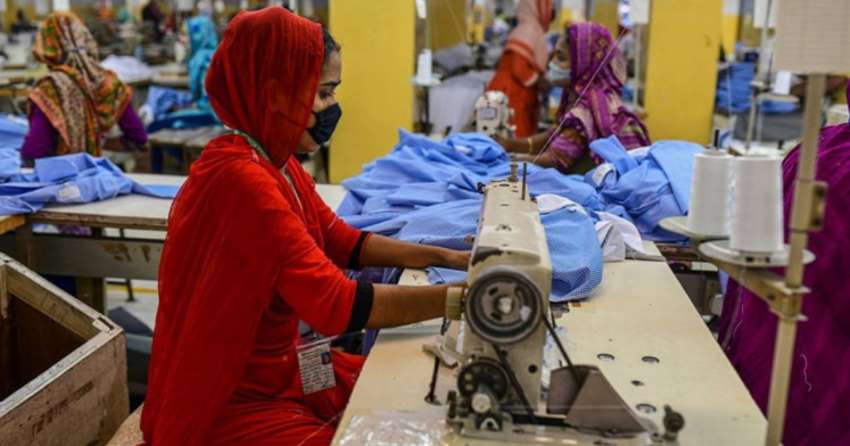
Cambodia’s exports grew 18 per cent in 2016 while imports went up 16 per cent. The European Union is Cambodia’s biggest market. Exports to Japan rose 45 per cent and exports to China by 50 per cent. By contrast, exports to the United States, traditionally a key market for Cambodian garment exporters – remained flat.
The country’s garment and footwear sector accounts for over two-thirds of the country’s exports by value. About 90 per cent of all exports were shipped under GSP and MFN schemes, which allow many Cambodian products to enter markets with reduced tariffs or duty-free. Imports from China – the largest supplier of goods to Cambodia – rose 16 per cent last year. Imports from Thailand and Vietnam increased by 22 per cent and 53 per cent.
Faster export growth helped trim Cambodia’s trade deficit from 11 per cent in 2015 to 10.2 per cent in 2016. But even with preferential trade privileges that have helped swell rice exports to the European market, Cambodian producers must improve quality and slash production costs to remain competitive.
The country still needs to import a lot of machinery and construction materials, which are required for the construction of manufacturing facilities and other business operations.

- 1
- 2
- 3
- 4
- 5
- 6
- 7
- 8
- 9
- 10
Circular Samvaad 2.0 aims to transform Indian textiles from linear waste to glob…
On the occasion of World Environment Day, industry leaders, policymakers, and international experts gathered in the capital yesterday for Circular... Read more
From Sentiment to Sustainability: How Mumbai’s ‘Mega Post Textile Waste Initiat…
Walk into almost any Indian household, and you will find wardrobes harboring clothes that haven’t been worn in years. They... Read more
CMAI launches new initiative to combat waste and formalize textile recovery acro…
In a landmark move to address the mounting crisis of post-consumer textile waste, the Clothing Manufacturers Association of India (CMAI)... Read more
Trends-Fabrics (Denim-Kidswear) trends for Spring/Summer 2026-27 by Drapers
For the Spring/Summer 2026-27 season, the kidswear denim market is defined by a shift toward lightweight comfort, playful aesthetics, and... Read more
Cost spiral across fibers, chemicals and logistics squeezes India’s apparel expo…
India’s textile manufacturing sector has entered one of its most financially strained periods in recent years as increasing fiber, yarn,... Read more
How India’s textile recycling network is becoming a global ESG blueprint
India’s textile industry is mounting an aggressive defence against growing international criticism that developing economies are becoming dumping grounds for... Read more
Cotton trade under pressure as war risks and tariff chaos raise apparel costs
The global textile and apparel industry is entering a high-stakes period of volatility as the ongoing Iran war creates a... Read more
Copenhagen GFA summit 2026 signals reset in global apparel finance
" " The global apparel, textile, and fiber manufacturing industries are entering a decisive phase of financial and operational realignment, as... Read more
Global apparel supply chains realign as India navigates trade volatility
The global apparel and textile sector is experiencing a significant structural shift, as major manufacturers and retailers move away from... Read more
India’s textile sector targets global supply chain shift with $100 bn export pus…
As global brands push up efforts to diversify sourcing beyond traditional manufacturing hubs, India is repositioning its textile industry through... Read more