The 2018 global directory of fiber producers released
The 2018 World Directory of Manufactured Fiber Producers has been released. This is the only desk reference tool providing global coverage of the manufactured fiber industry. The new edition includes an update of the introduction section, which provides a graphic summary of long term trends in production, by fiber type and region, and a worldwide distribution table of manufactured fiber plants by fiber type.
The directory’s digital download includes popular Fiber Cross Index, which offers an easy way to cross-reference fiber types by country and manufacturer. It features an Excel spreadsheet option that offers customers a simple way to personalize marketing campaigns with the ability to generate a mail merge or e-mail broadcast.
The 2018 digital edition provides quick and personal direct access to industry contacts worldwide. It lists almost 1,400 company names in 64 countries with contact details, including 1,100 e-mail addresses and website addresses with hotlinks to provide instant access to company product line information and communication channels. Each World Directory company listing includes products, plant locations, trademarks, contact details and more.
Of importance in the 2018 directory is the only available up-to-date list of over 700 fiber trademarks to facilitate compliance with the US Federal Trade Commission labeling Rule 303.17 – extremely useful to those exporting textile consumer products to the US. Trademarks are cross-referenced by fiber type.
Upcoming Bangladesh Denim Expo to present latest trends
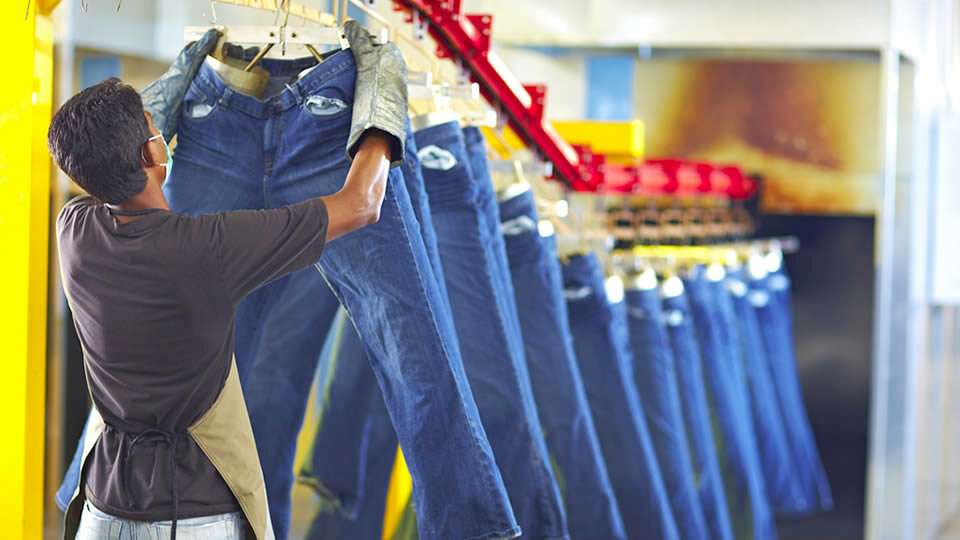
Bangladesh Denim Expo will be held from November 8 to 9, 2017. The aim is to showcase the capability of Bangladesh in innovative design of denim wear.This event showcases products like laundry and washing equipments, auxiliaries, dyes, specialty chemicals, denim fabrics and garments.
This season’s expo will deliver a dynamic environment to welcome all denim lovers offering the perfect platform to develop new business relationships. A large number of visitors is expected. Nearly 63 exhibitors from 12 countries are participating in the denim expo. More than 12,000 visitors from across the world have registered. Pacific Jeans, the largest manufacturer of premium denim in Bangladesh, which is organising the event, will present Denim Innovation Night during the expo.
Denim Innovation Night will help explore all new and upcoming sustainable denim trends, demonstrating the vision for a Bangladesh as an ethical production country. The latest state-of-the-art in denim finishes and production innovations will be on display during Denim Innovation Night.
Bangladesh is well-known for denim and jeans production, for both the niche and mass markets. The show has the spirit of a collective, with like-minded denim players from around the world bringing to life a new vision. It is a comprehensive showcase of the entire denim value chain: fabric, finishes, washes, accessories.
Hong Kong-based garment maker Crystal to launch an IPO
Crystal is going in for an IPO. The company founded in 1970, is a Hong Kong-based garment manufacturer which supplies to customers including Fast Retailing, the owner of fashion chain Uniqlo, Gap, H&M, and L Brands, which operates the brand Victoria's Secret.
The company plans to use 45 per cent of its net proceeds to expand its manufacturing capacity in Vietnam, where it is already larger than in China, and Bangladesh over the next three years. The company also plans to expand into fabric production and repay loans. Crystal will invest over $400 million in capital expenditure from 2017 to 2019, which will improve its production capacity by more than 50 per cent.
Fast Retailing has agreed to subscribe shares worth the equivalent of $20 million, while L (Overseas) Holdings, a subsidiary of L Brands, will subscribe $10 million worth of shares. Crystal's net profit rose 31 per cent in the first half of this year.
Most of the firm’s revenue comes from a handful of big customers, with sales to its five largest customers accounting for almost 70 per cent of revenues last year. It now has 20 manufacturing facilities in China, Vietnam, Cambodia, Bangladesh, and Sri Lanka, producing six categories of product: lifestyle wear, denim, intimate, jumpers, sportswear, and outdoor apparel.
World’s biggest nylon maker Ascend to hike production capacity
US-based Ascend Performance Materials will increase production capacity across its intermediate chemicals and polymers portfolio by 10 per cent to 15 per cent. Ascend, is the world’s largest fully integrated producer of nylon 6,6 resin. Global demand for nylon 6,6 and its intermediate chemicals continues to grow at three per cent to four per cent per year in a range of diverse applications. Ascend has cost effective expansion opportunities that allow it to bring additional capacity online as the market needs it.
Ascend will increase capacity of adiponitrile, hexamethylene diamine, adipic acid and polymers through 2018. Ascend’s unique production process allows for quick capacity additions with high capital efficiency and without disruption to operations.
The group has consistently added capacity through its entire nylon 6,6 value chain since 2015. Unlike many other nylon 6,6 producers, Ascend sells polymers and intermediates into nearly every end use market and geography. It has a 60-year history of serving a wide variety of markets and that has given it an unparalleled understanding of the entire nylon 6,6 value chain.
Earlier this year, the company consolidated nylon fiber production and added compounding capacity to better align its business with the market. The unique qualities of nylon 6,6 have made it the material of choice in numerous innovative applications.
India offers her best at Dubai fair
The International Apparel and Textile Fair is being held in Dubai, November 1 to 3, 2017.
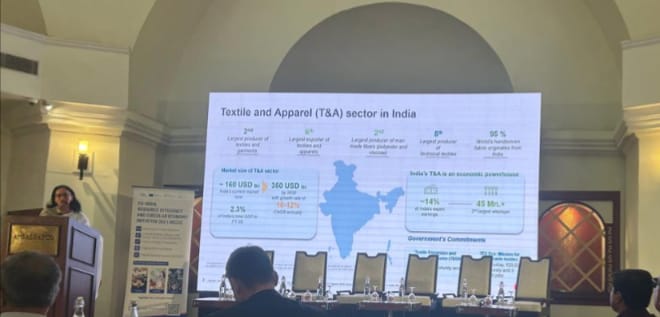
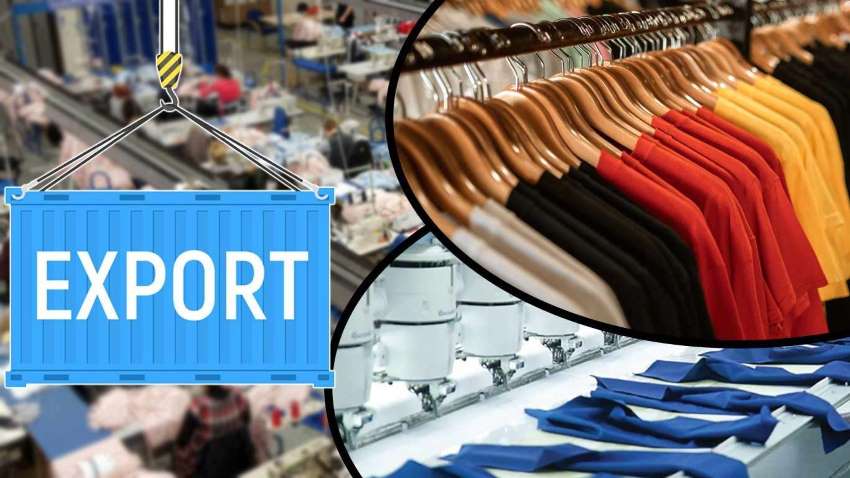
The Indian pavilion comprises 51 leading manufacturers and exporters from the textile and apparel industry who are into various product categories like men’s wear, kids’ wear, high fashion women’s wear, technical textiles etc. and represent the best of what India is offering to the world in the textile industry.
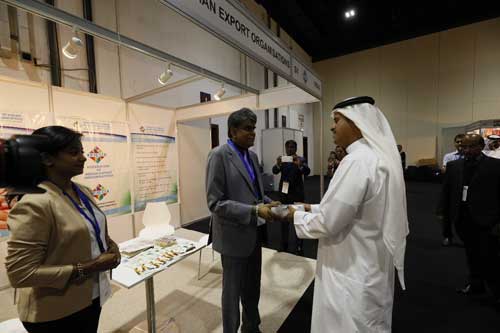
India’s exports to the UAE during the year 2015-16 represented 22.7 per cent of India’s garment exports to the world. Indian companies and businesses have benefited from leveraging Dubai’s position as a supply market to the Gulf and other regions.
India is the UAE’s largest trading partner and its exports to the UAE during the year 2016 touched 32 billion dollars.

The products offered in the exhibition will provide a supply base for UAE garment manufacturers. The unique proposition for both India and the UAE is that both have a well developed textile and clothing industry which can complement each other in faster growth.
India has a huge export potential especially in categories such as women’s wear, kids’ wear, knitwear, home furnishings and technical textiles used in the construction industry, agriculture, medicine etc.
India is in a position to promote Brand India in the UAE and other markets in the region.
Russian trade show CPM Moscow scheduled for next February
CPM Moscow will be held from February 19 to 22, 2018. This is an ordering event that offers a wide selection of top-class brands: a top exhibition that is also an international communication platform in which import export trends and the special conditions of the market all play a key role.
This trade fair fulfils the diversified needs of Russian and other eastern exhibitors and professional visitors: a wide spectrum that not only brings together cultures and international markets but also creates new sales opportunities and therefore serves the ever-growing need to expand existing markets and open up new ones.
All key segments of fashion, Premium, Mode Lingerie and Swim, Accessories and Kids, will be exhibited. Shoes are now also being included in the accessories area. There will be a fur trade show. Germany, Italy, Spain, France and Turkey will have country pavilions. The Russian Fashion Retail Forum will be keeping visitors informed with a large number of lectures, fora and panels. WGSN will support Western European and Far Eastern exhibitors with an overview of the latest trends. There will be inspiring catwalk shows. An app will help visitors navigate their way around the trade show and search for exhibitors.
In 2017, the Russian market for clothing and textiles is expected to grow by five per cent.
South Africa to host Wool Round Table in December
Wool Round Table will be held in South Africa from December 7 to 8, 2017. Organised by the International Wool Textile Organisation, it will look at how the industry can protect wool’s environmental credentials and how wool can supply solutions to retail’s responsibility needs. Experts will shed light on current reports about textile sustainability, wool’s role in protecting its environmental credentials and how the industry can manage its resources to the benefit of the entire wool pipeline.
The wool industry has been proactive in ensuring complete transparency in the growing of wool. Numerous certificates of origin are available to buyers, complete with full detail of how the wool was grown and harvested.
The need for wool education is becoming increasingly important. Sustainability isn’t just a buzzword in the industry. Care for sheep and the land they live on are a part and parcel of best practices in wool production. Throughout the cycle of lambing, shearing, and protecting from pests and predators, wool growers are encouraged to care for their flocks, preserve their precious land resource and bring about a healthy yield of new wool each year.
IWTO is the recognized global authority for standards in the wool textile industry. Since 1930, IWTO has represented the interests of the wool textile trade at a global level. Its worldwide membership encompasses the entire wool textile pipeline, from farm to retail.
Street wear returns at Tokyo show
Amazon Fashion Week Tokyo was held October 16 to 22, 2017.
The menswear collections on display appeared to be marching in step with a global push toward irony-drenched street wear.

Given Tokyo’s formative role in defining the term in the ’90s, it represents something of a homecoming, and a number of brands are fighting to lay claim to the street wear throne now that the old guard has fallen from favor.

Takahiro Miyashita brought his solo project The Soloist back to the runways for the first time since 2009. The Tokyo show allowed him to play to current street wear tastes — patches, logos, graffiti and transparent plastic tech-wear — bringing the collection in line with a new generation. Miyashita’s fans may have been worried by the first couple of garments he presented on the runway, but by the time raw-edged western shirts and dense rock ‘n’ roll-inspired embroidery made appearances toward the end of the show, the sense of relief in the room was palpable.

Akiko Koba aims to support Japanese craftsmanship by using traditional woven silk fabrics in her collections. For her first presentation during Tokyo Fashion Week, she showed tailored suits and preppy cuffed shorts and polo shirts for men, and short suits, tweed jackets, and swing dresses for women. While the silhouettes have been seen countless times before, the textiles were beautiful.

Textile sector wants more relief
The textile sector has got some relief as GST on yarn has been reduced from 18 per cent to 12 percent. Basic customs duty has been increased by 25 per cent to curb imports of undervalued fabrics from China. Filing GST returns has been simplified.
However, the sector feels more needs to be done. For instance, there was no need to reduce GST on yarn to 12 per cent when weavers will not be able to utilize the accumulation of input tax credit. Traders, embroidery unit owners and lakhs of women associated with the embroidery business are unhappy with the five per cent GST. Textile traders from Rajasthan want the GST on manmade fabrics to be scrapped.
In Gujarat, the weaving sector is observing a month-long Diwali vacation. Most small weaving units may never open and around 70 per cent of the textile shops are shut. Many weavers have elementary education. They have to fill forms, observe procedures and other formalities. So far they have been only accustomed to direct selling, either to the regular trader or a customer, and have not dealt with paper work of any sort. Though silk and jute remain at zero per cent, synthetic fiber yarn gets taxed at 18 per cent.
PVH shirts to have Oeko-Tex label
An Oeko-Tex label will be affixed to the men’s dress shirts of brands like Calvin Klein, Tommy Hilfiger, Van Heusen, Izod, and Arrow. These brands are a part of PVH, one of the largest apparel companies in the world. The Oeko-Tex label will appear in more than 25 million garments to be sold in stores and online by major retailers in North America, such as Macy’s, Kohl’s, JCP, Belk, and Amazon. The label communicates corporate commitment to product safety, chemical management, and quality.
Since consumers prefer dress shirts that are tested for harmful chemicals and considerately made, PVH, an industry leader in corporate responsibility, is committed to the responsible production of high quality products. The Standard 100 by Oeko-Tex certification will help it address both of these goals within its dress shirt business and the sewn-in labels communicate this significant commitment to consumers.
Oeko-Tex provides standardized solutions which optimize customers’ manufacturing processes and help deliver high quality, more sustainable products. Some 10,000 manufacturers, brands and retailers in almost 100 countries are working with Oeko-Tex to ensure their products are tested for potentially harmful substances. Millions of consumers around the world look for Oeko-Tex labels before making buying decisions.
More...
Huntsman India continues to grow above industry growth rates
Huntsman Textile Effects is a provider of high quality dyes, inks and chemicals to the textile and related industries. It has operations in more than 90 countries and manufacturing facilities in China, Germany, India, Indonesia, Mexico and Thailand.
In India, Huntsman is a market leader and continues to grow above industry growth rates. It has strengthened its research and technology center in Mumbai and has realigned its regional operations to bring decision-making closer to the customer in India and improve cross-functional synergy to react more quickly to evolving customer and market requirements.
Huntsman Textile Effects uses cutting-edge technology to develop state-of-the-art dyes, chemicals and inks that reduce water and energy consumption and help mills and brands create high-value end products with intelligent effects such as durable water repellence, built-in freshness or sun protection. It also helps mills optimise and standardise their dyeing processes to improve output and profitability.
In the digital printing sector, Huntsman is recognised as a pioneer in the market. It develops digital inks that deliver intense, vivid colors, top quality finishing and optimum print reliability while effectively managing cost and environmental impact. Its digital inks run in the largest digital printing mills globally. The group works only with qualified suppliers with global levels of safety and environmental compliance standards.
Price hinders Bangladesh’s exports to UK
Bangladesh’s garment exports to the UK grew 10.47 per cent in the July-September period of the fiscal year. British retailers have increased the volume of sourcing from Bangladesh. The upward trend in the exchange rate of the pound sterling against the taka is also a major cause for the rise in exports from Bangladesh to the UK.
Also, Bangladesh was able to ride out an image crisis in the garment sector after factory remediation. Overall, European buyers are placing orders for higher volume of garment products as workplace safety has been ensured following the inspections. Although the UK market is attractive, it accounts for only eight to nine per cent of total garment exports from Bangladesh.
The average price level in the UK is extremely low in comparison with other EU markets and is under constant pressure. Traditionally, UK buyers tend to pay far less for similar products than the other EU retailers. This situation will aggravate further with Brexit, the plummeting of the pound sterling and the absence of a bilateral trade deal with Bangladesh.
So Bangladesh should start bilateral negotiations with the UK as soon as possible to secure a future export position or to prevent the current position from sliding further.
Sports brand Goldwin merges with Woolrich
Sportswear manufacturer Goldwin has acquired a minority stake in Woolrich. The transaction is part of a global strategy to develop the Woolrich brand internationally. Woolrich has historically produced the core of its product with wool. It will now increase its offering adding new performance technologies for a new generation of outdoor enthusiasts.
In addition, Woolrich and Goldwin have entered into an industrial and financial partnership that will support Woolrich from the financial and industrial standpoints. Through the new partnership, Woolrich will develop a new and premium outdoor collection named Woolrich Outdoor that will capture the brand’s 187-year history and utilize Goldwin’s technology that is used by brands such as The North Face, Helly Hansen, and Speedo, among others.
The new Woolrich Outdoor line brings a new style of outdoor apparel for the next generation, combining technology applied natural science and the most traditional outdoor brand in US representing the east coast culture.
Goldwin is also considering the utilization of petroleum-free synthetic protein materials co-developed with its partner, Spiber, a Japanese start-up which has recently garnered attention for its revolutionary synthetic protein materials.
The new outdoor collection will provide uncompromising functionality, approaching with an attitude that always looks for the complex and mutual relationship with nature and seeks new discoveries, to design with a modern interpretation and high sensitivity.
Forum to encourage British enterprise
Make it British forum will be held on November 2 in Manchester. The one-day forum will provide delegates the knowledge and expertise required to successfully manufacture, promote and sell a brand that is made in Britain. A host of industry experts, who understand what it takes to successfully negotiate the UK manufacturing supply chain, will be on hand to offer advice along with an inspiring line up of brand owners and manufacturers to help provide solutions to some challenges and set delegates well on the way to developing a great Made in Britain business.
Developing a product that is made in the UK is not always easy, and this forum aims to equip visitors with the expertise required. English Fine Cottons will throw light on how the first cotton spinning mill in the UK now affords businesses the opportunity to have a totally British supply chain. There will be an opportunity to quiz some of the UK’s best fashion and accessory manufacturers.
Founded in 2011, Make it British is the go-to resource for information on UK manufacturing and British-made brands. Make it British believes that a product’s provenance is of the utmost importance. Buying authentic British goods, manufactured by skilled craftsman using the finest materials, can help keep these skills alive in the UK.