Sarah Jessica Parker to design GapKids next collection
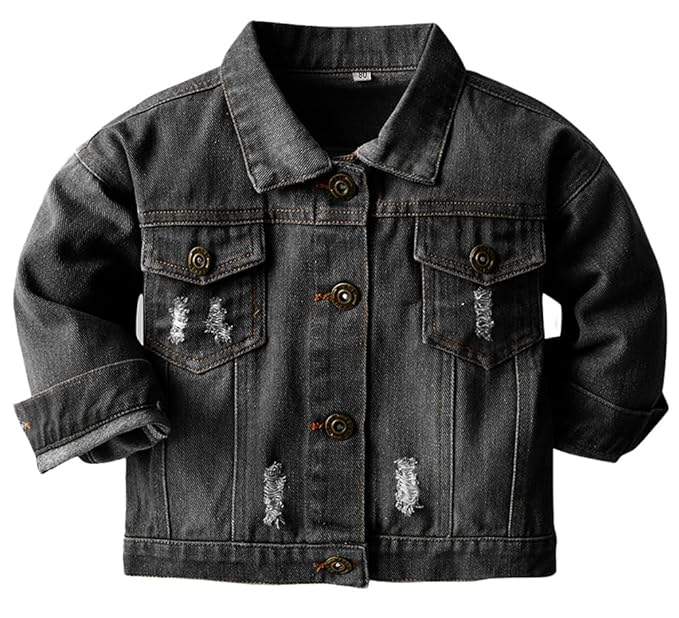
GapKids has announced a new limited-edition collection with actress and former Gap campaign super star, Sarah Jessica Parker, launching in Spring 2018 at GapKids stores in the US, Canada, the UK, France, Italy, Greater China, Hong Kong and Japan and online. Parker became a popular name in the fashion industry following the TV show ‘Sex and the City’.
The actress launched her namesake label, SJP by Sarah Jessica Parker, in February 2014, and also launched collaboration collections with Nordstrom and Tome among others. In 2016, Parker opened the first retail location of her brand and in 2017 opened a store at the Bellagio in Las Vegas and launched a handbag line called, ‘The Seven Essentials.’
Of late, Gap has been increasingly focussing its attention on children’s clothing. The clothing retailer in October launched a ‘Baby Gap Outfit Box’ subscription service which offered five mix-and-match pieces every 3 months and launched a similar service for Old Navy in November offering clothing for children ages 5 through to 12. Gap has recently increased its same-store sales forecasts for 2017 after having reported a 3 per cent increase in overall third quarter same-store sales.
With rising labor costs in China Japanese shifting units to Bangladesh
Japanese companies are looking for cheaper production bases elsewhere in Asia with wage rise in China. And Bangladesh is optimistic investment would increase from Japan, and give boost to the country’s economy. Among rising labor costs, Japan’s garment industry is shifting production from China to Bangladesh and other Asian countries, however, to catch the opportunity is not so easy for Bangladeshi businessman, though, Japanese businesses have shown keen interest in investing in Bangladesh as they have got rid of the fear in the wake of terrorist attack on Holey Artisan Bakery in 2016. Bangladeshi garment manufacturers have been enjoying zero-duty benefit on apparel exports to Japan even if the raw materials were imported
As per Japan External Trade Organization, the number of Japanese companies operating in Bangladesh has more than tripled since 2008, reaching 253 as of May 2017.That’s still far fewer than the number in China or Thailand but their presence in Bangladesh is increasing at a much faster pace. Garment shipments to Japan from Bangladesh began after the adoption of ‘China Plus One’ policy by the Japanese government in 2008 to reduce overdependence on China for goods like apparel, electronic gadgets and home appliances. The ‘China plus One’ policy was supplemented by the relaxation of Rules of Origin by Japanese government for least-developed countries, which worked in Bangladesh’s favor.
Japan Textiles Importers Association says, although Bangladesh only accounts for 2.3 per cent of total imports, its average grows at an annual pace of about 20-40 per cent. Japan imported 65 per cent of its textile products from China in 2015. China at one time accounted for nearly 80 per cent of textile imports but the percentage has been declining gradually due to rising labor costs, among other reasons. Now imports from countries like Vietnam and Indonesia are rising.
Recycled fibres should be made affordable to reach mass market: Study
A recent by Relooping Fashion Initiative, report suggests textile items made from recycled fibres should be made affordable to the masses apart from the environmentally conscious niche consumer segment. The emotional engagement for such recycled textile products has to be elevated, so that consumers are willing to take good care of them, and use them longer.
The report also added the retailers and brands should increasingly apply new circular business models, which are based on product use, rather than sales. Setting up circular material flows will shorten value chains, because brands will have to work closely with all actors of the business ecosystem. The business ecosystem report of the Relooping Fashion Initiative stated brands and retailers are in key position in defining the new circular customer value proposition which is central for profitability of the new circular business models of all business ecosystem actors.
Focusing on the business ecosystem modelling work, the report introduced crystallised vision of a higher-level system that enables the textiles industry to operate according to the basic principles of a circular economy. The main direct opportunities of circular economy relate to resource efficiency, the possibility to replace and reduce usage of virgin materials, elimination of waste, new opportunities for employment, business and innovation, as well as promotion of sustainable consumption habits and fostering socio-economic well-being.
Devan launches new antimicrobial brand line
Devan Chemicals, a Belgian-headquartered provider of finishing technologies and a speciality chemical provider, has launched a new multifunctional antimicrobial brand line. The line consists of their well-known, but recently rebranded quat-silane antimicrobial solution, combined with extra features. This enables textile manufacturers to apply multiple functionalities using only one single treatment.
BI-OME®, Devan’s recently rebranded antimicrobial solution, has been launched with interesting extra features. They have combined its antimicrobial technology with other functional finishes in its product range and now offer a variety of combinations. BI-OME® Quick dry combines the antimicrobial properties (for odour control) with advanced moisture management properties to promote efficient and faster evaporation to aid cooling and comfort.
BI-OME® Stretch combines the antimicrobial solution with stretch recovery properties for better fit. A revolutionary variation is BI-OME® AV, which has an antiviral activity in addition to its antimicrobial properties. BI-OME®, the antimicrobial solution without any extra features, remains available.
The company’s experience with antimicrobial technology goes back a long time where over 25 years of research led to the creation of the BI-OME® product range. Due to a combination of a cross-border support package (mill training, quality control, etc.) and unique product excellence (non-migrating and not using silver), Devan’s antimicrobial technology is used internationally.
BI-OME® is fully BPR and EPA compliant, Oekotex and Bluesign registered, can be delivered worldwide and is applicable for apparel, home textiles, bedding, transport and mobility, among others.
BGMEA urges government to set up wage board to avoid labour unrest
Bangladesh Garment Manufacturers and Exporters Association (BGMEA) has asked government to form a minimum wage board to review existing wages of the RMG workers. Siddiqur Rahman, President, BGMEA explains despite the adverse situation the sector is currently going through, they have requested the government to take necessary measures to form minimum wage board for re-fixing minimum wages for garment workers in line with the provision of labor laws and to uphold the image both at home and abroad. He also suggested every factory owners should look for new markets and invest more in research and development.
Industry owners expect gas, power supply problem will be solved when government sets up LNG terminals. He said the value of taka against dollar, poor infrastructure and shortage of power and gas are the key challenges for the export oriented RMG sector.
In the last FY 2016-17,Bangladesh RMG exports to EU was 63 per cent, while to the US it was 19 per cent, Canada 3 per cent, Japan 3 per cent, Australia 3 per cent, Turkey 1 per cent and others 9 per cent. As per BGMEA, currently 4,482 garments factories are member of the associations where 4.4 million employees are working.
Australian wool segment set for strong growth following Chinese demand
Australia's major wool segment is set for strong growth largely due to record high prices and strong demand from increasingly affluent Chinese consumers. Experts for the non-profit Australian Wool Innovation industry group, says demand is now at its peak since the last few decades, with ‘Chinese influence on the market exerting extreme upward pressure on wool prices in Australia.’
In terms of US dollar wool prices are not as high as they were about five years ago, but the weaker Australian dollar against the USD now meant Australian producers were getting paid more in local currency. Chinese wool buyers were paying about US$14 to US$15. dollars a kilo for wool earlier but the price is about US$12.50 now. Prices have rocketed to over 16 Australian dollars a kilo, industry data indicates. Analysts say China has the capacity to push the market even higher as long as demand remains strong. What is seen at the retail levels is that there's been so much wool at retail and many different products that people are seeing the capacity for the market to hold at these levels or even improve.
Australia is the world's leading producer of wool, with its top-grade Merino sheep helping growth of its annual exports of around AU$3 billion dollars (about US$2.28 billion). Chinese demand makes up over 70 per cent of that market, with its businesses manufacturing wool into a wide range of products such as sportswear and shoes and garments.
Around two decades age, almost 100 per cent of wool that the Chinese imported was used to manufacture products which were then re-exported because Chinese consumers found it expensive and could not afford to pay premium price for wool. Today, around 60 per cent of wool is retained in China for local consumption, as their affluence has grown tremendously and this in turn has only helped wool prices to rise. Thus, the Chinese market remains very important for Australian wool as the Chinese see quality in Australian wool.
Korean textile fair preview in Seoul sees strong domestic, global participation
Nearly 388 local and international companies participated in the Korean Textile Fair Preview in Seoul (PIS), a global textile and fashion fair that is targeted at the export of domestic textiles and fashion. A large number of innovative and creative products representing all aspect of the textile industry were on display. Among them were threads manufactured to meet changing lifestyles of customers, eco-friendly and functional materials, knitwear, accessories, subsidiary materials, digital textile printing (DTP) and sewing machines.
The Trend Forum Hall displayed latest materials at a glance. The fair featured simultaneous events such as a fashion show, seminar, bazaar and job fair. Among the participating companies, 257 were from Korea and 131 from 16 countries and regions also participated in the show. Of these, 94 companies were from Mainland China, 11 from India, eight each were from Taiwan and Southeast Asia, five from Pakistan and two were from Japan. Global fibre companies such as Lenzing (Austria), Shima Seiki (Japan), Everlast (Taiwan), Heng Li and Sheng Hong Group (Mainland China), and many from India and Taiwan were present.
Fashion Fair had a showroom operated by the Korean Apparel Industry Association which featured Ledome’s designer brand, around 50 companies such as Sekanskeen, Doucan, TheAStory and BeBe n BiNo. It also had a common hall for leading Korean fashion companies and association members, and fashion companies popular in China and Korea such as C&C Korea, Noble Mink and Wide International.
3rd Brazil Apparel Sourcing Show in August 2018, a gateway to S American market
"CEMS-Global USA’s ‘3rd Brazil International Apparel Sourcing Show 2018’ (3rd BIAS 2018) will be held from August 28 to 30, 2018 in Sao Palo. This is the leading apparel sourcing marketplace for a colossal market like Brazil to make in-roads into the South American region. The show will be held in a perfect B2B hub at Sao Paulo, showcasing readymade garment collections from leading manufacturers from all over the world including trims and accessories."

CEMS-Global USA’s ‘3rd Brazil International Apparel Sourcing Show 2018’ (3rd BIAS 2018) will be held from August 28 to 30, 2018 in Sao Palo. This is the leading apparel sourcing marketplace for a colossal market like Brazil to make in-roads into the South American region. The show will be held in a perfect B2B hub at Sao Paulo, showcasing readymade garment collections from leading manufacturers from all over the world including trims and accessories.

Brazil’s textile industry has ‘a world of untapped potential’. As a BRICS country, it is the 4th largest market in the world for textiles after the US, China and Japan. Brazil’s textile and apparel industry has finally achieved success in terms of its textile and apparel exports, especially exports to Arabic markets. Brazilian exports of textiles and apparel to Arab countries have surged to $3 million during the first two months of 2017, increasing by 87.5 per cent from the same period a year ago. Currently, Arab countries are some of Brazil’s largest markets for textile and apparel exports, particularly for segments such as party wear, children’s wear, and beach wear. The United Arab Emirates had the highest imports of Brazilian textiles and apparel, followed by Algeria, Egypt, Morocco, and Lebanon.
With strong investments in recent years, Brazil is rising as a leading global technical textile producer. Along with global spotlight on the nation, the economy is booming. In 2009, Brazil imported textiles and clothing worth $2.69 billion and $767.07 million respectively, in 2010 it rose to $3.89 billion and $1.07 billion, in 2011 it further increased to $4.45 billion and $1.72 billion respectively and in the first nine months of 2012, it has reached $3.30 billion and $1.64 billion, respectively. Upcoming sports events are expected to drive future growth, analysts expect the apparel & other market to exceed $154,251.6 million by 2017, thus making it a potential market for textile & apparel exports from Asia.
Brazil’s emergence in world trade
The country’s economy is the largest in Latin America and the second largest in the western hemisphere. Brazil is one of the fastest-growing major economies in the world. In future, Brazil is expected to become one of the five largest economies in the world. Brazil’s place as a leader among the world’s emerging economies was first brought to widespread prominence with its inclusion as one of the BRIC countries – the tag given a decade ago to Brazil, Russia, India and China because of their robust economic growth and tremendous market opportunity. Today, Brazil has fulfilled its promise and remains one of the world’s top prospects for business development and exports with its huge market.
The line up
The 3rd BIAS 2018 while being one of the biggest networking hub for Apparel sourcing in Brazil, will also cater to the requirements of the ever-growing readymade apparel / garment requirements of the South American region itself with visitors / buyers coming to visit from all over the region.
Denim sees an upsurge in the US

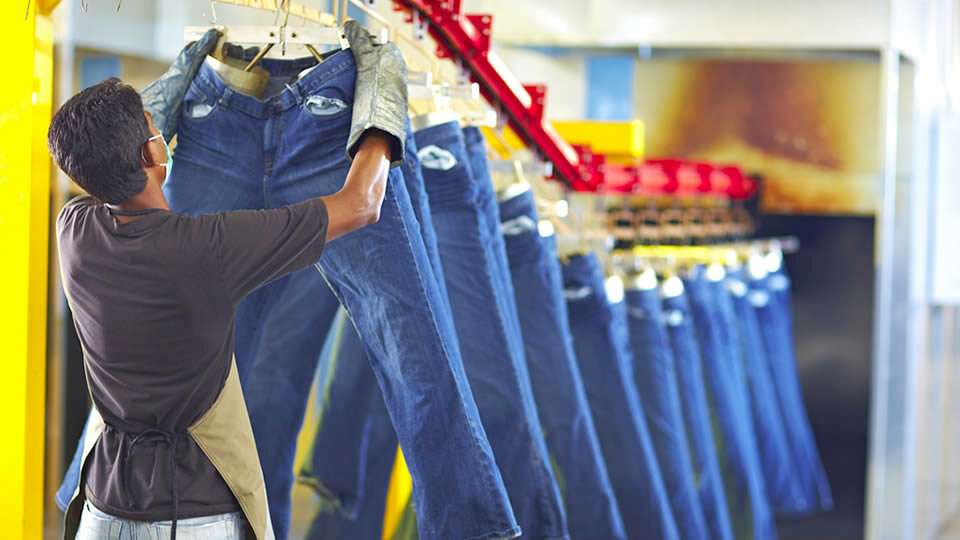
Denim on the rebound yet again, as highlighted by recent statistics. Denim sales in the US grew 4 per cent in 2016, says The NPD Group Inc, rising to $13.5 billion among the men’s and women’s categories. Marshal Cohen, Chief Industry Analyst, NPD Group, points out jeans are representative of retail as a whole, newness and innovation drive growth while the basics maintain volume. In the US, nearly 6 of 10 consumers (59 per cent) say they love or enjoy wearing denim, according to the Cotton Incorporated Lifestyle Monitor™ Survey, and they tend to wear jeans or denim shorts roughly three days a week. On an average, women own six pairs of jeans, one pair more than men who own five on an average.

Skinny jeans used to be a trend some years back just like athleisure is making waves now. This trend actually pressurized jeans manufacturers to come up with something new to entice customers. Roseanne Morrison, Fashion Director, The Doneger Group, says it just keeps evolving in a interesting ways. Right now there are certain designers that are setting the style direction, whether it’s Demna Gvasalia or Virgil Abloh for Off-White. They are definitely street designers setting the tone for denim, and those details are being adopted for both men and women. It’s the look they have to have for the season.
Levi’s, Wrangler, and the Tommy Hilfiger brand in Europe are well on track targeting millennials. In the US, Levi’s (26 per cent) and Wrangler (7 per cent) are the top-selling brands, according to Monitor data, although men are significantly more likely than women to purchase those brands (36 per cent versus 19 per cent for Levi; 16 per cent versus 0 percent for Wrangler). During the recent WGSN Futures conference in New York, Jonathan Cheung, Head of Global Design for Levi’s, shared what went right with the brand. He said that no other piece of clothing has had that much influence. What you see in the pair from the 1870s is the DNA that spawns every pair of jeans today. Half the world’s population wears jeans and has for the last century. It has enormous cultural significance. It has its pure design thing where it’s used by millions of people and any demographic men, women, children, young, old, rich, poor, working in orchards or digging up roads to the Rihannas and Kanyes to Beyonce. It’s truly a special thing and its modest label does not portray the magnificence of its heritage.
Consumers’ preferences
Cohen says, denim manufacturers and retailers are realising the importance of striking a balance between giving consumers the features they know and love, and introducing them to some new elements they didn’t know they needed. Morrison added that rigid denim and straighter legs inspired by the dark Japanese selvedge are influencing the American market. These jeans have a fuller cut, a straighter leg, and the jackets are oversized. But stretch isn’t going away. People are too used to comfort. The rigid and stretch jeans will co-exist. Morrison remarked that men everywhere are getting used to ‘flex’ denim because it provides added comfort. Denim is moving in a cleaner direction, although destructed denim can be seen everywhere. The early adopter will go after the fashion and overpay for it. But denim is moving at all ranges. It’s the base piece in the wardrobe.
China updates garment testing criteria
China’s National Technical Committee of Garments of the Standardization Administration has issued an updated version of product standard GB/T 2662 for clothes with fillings. The 2017 version is the first amendment to the standard since 2008 and will be implemented soon. Despite several changes, the criteria still do not include infant clothing or garments containing down or feathers.
The standard covers mass produced garments that are filled with either natural fibres, chemical fibres or a blend of these materials. It also covers clothing that has animal/artificial fur linings but currently does not cover products containing down, feathers, or clothing for children below 36 months.
GB/T 2662-2017 contains several revisions including; the scope of the standard, information on auxiliary material, appearance defects, sewing/ironing rules, inspections and classification of finished products. New test areas which form part of the amended standard include fibre content, formaldehyde content, pH value, banned azo colorants, odour, dimensional changes after washing or dry cleaning and seam slippage. The latest version of the standard include a new provision that children’s clothing with fillings — for children aged 36 months to 14 years — should comply with the testing methods for finished products and the test method for safety performance of children’s clothing.
More...
Shima Seiki displays impressive Virtual Reality fashion show
Leading manufacturer of computerised flatbed and whole garment knitting machines, Japan-based Shima Seiki celebrated its 55th anniversary and revelled visitors with latest advancements in fashion technology with a Virtual Reality (VR) fashion show. An immersive experience brought about by real-time VR and technological flair, prevailed at the fashion showcase presented by Shima Seiki at its 55th anniversary, held recently at The Big Whale (Wakayama) Japan.
The show combined real-life models with spectacular virtual renditions of models created on Shima Seiki’s SDS-ONE APEX3 which is set to differentiate the gap between the tangible and the intangible. The key focus on technology is targeted at educating the audience on the next game changer in the world of fashion with background and side-view full-length screens, providing a close-up view of garments.
Making use of their traditional flatbed knitting machine and whole garment knitting machine, the company presented a wide range of regular and seamless garments across product categories comprising of tops and blouses, jackets, knits, denim, dresses, trousers, and T-shirts. The show, beside forecasting future fashion trends, it also presented an extensive range of products from anti-fit clothing such as tunics and fluid wide-leg trousers and pants, to oversized patterned knit sweaters, jerseys and maxi coats, through to business casuals.
Shima Seiki stretches the points of imagination in garment construction with an more emphasis on details such as frayed hemlines, utilitarian elements and intricate pattern play. Looking at performance fabrics on saw the creation of pieces that emanate properties of water-repellence, wind-resistance and flexibility in the athleisure, ski-inspired and sports-core categories.
The brand showcased a plethora of materials ranging from formal to activewear, where fluidity and movement merged with high performance and ease which was key underlying aspects while fabric and comfort was also of importance.
Bestseller records lower than expected growth this fiscal
The last financial year, Bestseller experienced lower than expected growth in turnover at 3 per cent. At the same time, a 23 per cent increase in bottomline revealed overall positive trends for the company. Bestseller's annual report reveals a net turnover of €3.15 billion and a result before tax of €337 million.
Anders Holch Povlsen notes, the key figures show a 23 per cent increase in result before tax, and we are seeing positive trends throughout our business – especially in our largest market, Germany, and in our e-commerce business. At the same time, a 3 per cent increase in net turnover leaves room for improvement. To a large extent, the moderate growth is a result of our focus on closing down loss-making stores. He says they need to be persistent in their efforts and dare to set the bar higher if they want to keep up and prepare the company for future. Their ambition is to boost revenue over the next few years.
One of the key aspects to growth is a sharp focus in retail business. He believes they must create a simple, solid and efficient operation. And continue retail turnaround and change the company from often being more of a wholesale one also doing retail to being a retail company also running a successful wholesale business.
The Ellen MacArthur Foundation launches circular report
Global Fashion Agenda (GFA) released the report ‘A New Textiles Economy; Redesigning Fashion's Future’, by Ellen MacArthur Foundation in London this week. Co-hosted by Stella McCartney, the event boasted of a speaker line-up consisting of the foundation's Circular Fibres Initiative partners, including their CEO Eva Kruse.
The report, presents a positive new vision for a circular system that works, summons the creative power of the fashion industry to build that system. The vision calls for a new textiles economy in which clothes are designed differently, worn longer and recycled and reused much more often. With contributions and endorsements from industry leaders, including C&A Foundation, H&M, Lenzing, NIKE Inc. and GFA, the report calls on the entire industry to innovate and collaborate towards a circular vision to unlock economic opportunities.
Global Fashion Agenda CEO, Eva Kruse says, "We're extremely happy about our collaboration with the Ellen MacArthur Foundation. Both their and our initiative on circular fashion complement and enhance one another. We don't have all the answers yet, but we have the necessary knowledge to start systemic change, so it's time for the fashion industry to commit and push towards a new textiles economy. A joint effort is vital if we are to move the industry in the right direction,"
The report finds the equivalent of one garbage truck of textiles is wasted every second, while less than 1 per cent of clothing is recycled into new clothes. If nothing changes, the fashion industry will consume a quarter of the world's annual carbon budget by 2050. "Today's textile industry is built on an outdated linear, take-make-dispose model and is hugely wasteful and polluting. The circular report presents an ambitious vision for a new system, based on circular economy principles that offers benefits to the economy, society and the environment. We need the whole industry to rally behind it," says Ellen MacArthur.
The Ellen MacArthur Foundation is a knowledge partner for Global Fashion Agenda, which is an affiliate partner of the Ellen MacArthur Foundation's Circular Fibres Initiative.
Sourcing 4.0 the talking point at USFIA annual conference
Growth in retail has slowed globally and this downward trend may not end till sourcing completes its transformation. That was the message Esquel Group CEO and vice chairman John Cheh delivered at the US Fashion Industry Association’s (USFIA) Annual Apparel Importers Trade and Transportation Conference in New York City recently. Retail sales in the US have fallen in recent years and the sluggish trend has deteriorated further, notes Cheh. What’s more, e-commerce players are taking more and more market share from physical stores and getting into their own private label lines, further increasing competition, further, discounting has reached an all-time high or low, depending on how you look at it.
Last year, Cheh disclosed, citing a 2016 Cotton Incorporated Retail Monitor survey, fast fashion retailers were selling an average of 8 per cent of their apparel product at a discount, for mass stores it was 16 per cent, specialty stores 42 per cent and department stores were selling a whopping 73 per cent of their apparel at a discount.
“What’s the point of lowering your cost, squeezing your suppliers for 5 cents or 10 cents or 30 cents,” which rarely ever amounts to much more than a 1 per cent discount, Cheh explained and all the while the discounts at retail are closer to the 30 per cent to 40 per cent off mark. “The markdowns are so much bigger, so what are we talking about in terms of keeping your costs down?”
These factors all considered, Sourcing 4.0 will be the way forward for retail to work its way out of this rut. There are four key elements to Sourcing 4.0, Cheh explained: product, quality, time and price.
Where many retailers have missed the mark while they’re busy scrambling to ward of Amazon and fast fashion, is that they’re not delivering a product consumers actually want to buy. Next the focus should turn to quality, another area that for some has fallen by the wayside in the hunt for ever cheaper product from whichever country can make it. When it comes to timing, suppliers can’t be left to bear the brunt of doing everything faster. In Supply Chain 4.0, speed comes with partnership. On price, Sourcing 4.0 will mean companies consider unit labour cost, rather than labour cost alone.