AAFA demands Congressional approval of Outdoor Act legislation
The American Apparel & Footwear Association (AAFA) recently sent a letter to the Senate sponsors of the Outdoor Act demanding quick enactment to lower duties on outdoor apparel and support research programs for the industry. This legislation will help lower business costs for US companies that produce or sell recreational performance apparel.
Recreational performance outerwear is high-tech apparel specially designed for outdoor recreation in challenging conditions such as hiking, biking, skiing/snowboarding, hunting, fishing, mountaineering, and other recreational activities. High tariffs, some as high as 30 per cent, do not protect domestic industry and strangle product development and hamper growth, AAFA announced in a press release.
A 2007 study by the International Trade Commission found there was no commercially viable manufacturing of recreational performance outerwear in the US. The Outdoor Act will help make these products more affordable for companies to produce, encourage more Americans to get outdoors and power innovation.
Bangladesh needs to work on RMG sector to boost exports
"America holds the prime position for Bangladesh when it comes to textile exports but after the Rana Plaza tragedy, exports were greatly impacted. A look at the stats, in fiscal year 2016 reveals, $530.56 crore worth of RMG products were exported to the US and in 2015, $540 crore worth of clothing was exported from Bangladesh. As a result, the rate of garment export to US decreased 1.7 per cent in 2016. China is the top garment exporter to the United States. China exported $2,316 crore worth of clothing in the first 10 months of current year (2017). This export was 3.64 per cent less than the same period of previous year."
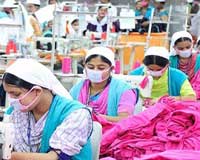
America holds the prime position for Bangladesh when it comes to textile exports but after the Rana Plaza tragedy, exports were greatly impacted. A look at the stats, in fiscal year 2016 reveals, $530.56 crore worth of RMG products were exported to the US and in 2015, $540 crore worth of clothing was exported from Bangladesh. As a result, the rate of garment export to US decreased 1.7 per cent in 2016. China is the top garment exporter to the United States. China exported $2,316 crore worth of clothing in the first 10 months of current year (2017). This export was 3.64 per cent less than the same period of previous year. Vietnam is the second largest exporter to the US.
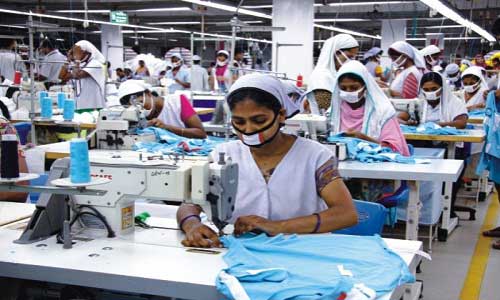
The country exported clothing worth $984 crore and registered 6.79 per cent growth. Holding the next respective positions are Bangladesh, Indonesia and India. From January to October 31, 2017 Indonesia exported $393 crore and marked 2.81 percent negative growth. At the same time, India exported $321 crore achieving 2.6 percent growth. Bangladesh has exported US$ 435 crore worth of apparel items in the first 10 months of 2017 marking 4.93 per cent negative growth comparing to the same period of 2016.
Issues faced by Bangladesh
Besides lost faith owing to Rana Plaza incident, there are complexities of the Chittagong Port, which is increasing lead time. Besides, the industry people said some labour organizations and representatives of NGOs are spreading propaganda that Bangladesh does not have labour rights. President of Bangladesh Garment Manufacturers and Exporters Association (BGMEA) Md Siddiqur Rahman says the lack of efficiency in Bangladesh’s ports is largely responsible for the decline in earnings from the RMG export to the US.
During a recent meeting with US Ambassador to Bangladesh Marcia Stephens Bloom Bernicat, said that the great problem facing Bangladesh’s RMG sector lies with lead time. In today’s competitive markets, buyers want their goods delivered within a very short time. But manufacturers in Bangladesh require unreasonably longer lead time compared to other countries. As a result, exports to the US have declined. In order to reduce the lead time, it was necessary to improve the efficiency in the ports to make sure products are delivered on time. Additionally, there is a need to establish more textile mills to meet the local demands to reduce the lead time.
US Ambassador Marcia Bernicat also emphasised on enhancing the capacity of the country’s existing ports. If Bangladesh does not make the ports more efficient, it will fall behind other competitors. The RMG sector would remain an important part of Bangladesh’s economy for years to come, it is a crucial period for the sector for which the US wants to work together as a partner of Bangladesh to make sure the industry is strong and that both labour rights and safety of RMG workers are ensured.
Uzbekistan exported textile worth over $1 bn in 2017
The year 2017 proved to be very fruitful for Uzbekistan textile industry as they managed to notch up $1.1 billion worth exports. Uzbekistan’s export basket covered over 50 countries and a significant portion of their textile exports fell under the value-added products category. In fact, the value-added products accounted for 40 per cent of the total exports.
The phenomenal export growth was attributed to the proactive measures adopted by 64 trading houses that were set up on foreign soils. The figures were provided by Association of Textile and Clothing and Textile Industries Enterprises (Uztekstilprom).
In 2017 alone, the number of textile exporting units rose steeply from 293 to 350 before the year-end. The annual production of happened to be 1.4 million tonnes. Nearly, 60 per cent of this produce caters to domestic consumption. In all, the country witnessed the swinging into action of 34 investment projects for purposes of modernizing existing units and founding of new units. This enabled Uzbekistan to create an export potential of $151.7 million. The aggregate value of export potential as of 2017 stood at $356 million.
Industry experts in the country along with help from the ministry have drawn out a draft proposal for development. The draft plan envisages a medium-term perspective for cotton textile clusters. The experts were able to draw from the rich experience of existing clusters in Navoi region of Uzbekistan. The cotton industry in Uzbekistan is facing a boom with 7000 industrial units operating in the country which are mainly handling natural fibers like cotton, wool and silk.
The government in collaboration with industry plans to create 112 modern high –tech factories. In addition, the plan envisages expansion, modernization and technological upgrade of 20 of its operating capacities. The plan once set into motion will yield an export surge of nearly $2.5 billion per year besides creating 25,000 new jobs.
US apparel imports to increase 1.04 per cent in 2017
Apparel Resources’ forecasts the US will significantly improve apparel imports in 2017, in terms of volumes. The country may record a 1.04 per cent rise in volume terms during the January to December 2017 period. The largest apparel importer in the world may import 27,164.17 million SME of apparels during the review period when compared to 26,927 million SME in the prior-year period. In addition, the US is likely to put a hold on rising import values in 2017 and note a 0.68 per cent decline on Y-o-Y basis. The UVR for the said period is estimated to be US $ 2.95 as against US $ 3.00 in the same period of 2016.
China’s a leader as the apparel powerhouse to the US is expected to see a drop from January to October period, China recorded a surge in volume of exports by 1.93 per cent; however, the country dropped the unit prices of apparel to enable it to stay competitive in international markets. Apparel Resources’ predictions indicate China’s export of apparels to the US valued at $27.04 billion would drop by 3.14 per cent on the Y-o-Y basis in December 2017. India and Vietnam, on the other hand, are likely to gain in both volume and value terms to the US during January to December 2017 period. Vietnam is set to record $11.43 billion (up by 5.79 per cent) from its apparel exports in the year 2017 ending 31st December.
India is expected to see a marginal rise of 1.79 per cent (with an export value of $3.70 billion in 2017 as against $3.64 billion in 2016) in its apparel exports value to the US. Through 2017, Bangladesh’ apparel exporters faced many challenges such as the fluctuation in the currency value (appreciation of Taka against US dollar), longer shipping time, the rise in production cost and safety issues which pushed the country towards the declining trend in the US clothing market.
Pakistan textile makers slam government for not paying refunds
Pakistan's home textile makers are frustrated with the soaring cost of business to compete with highly incentivized Indian towel manufacturers in the global markets. The country's towel export continues to remain stagnant at $317.357 million during July-November 2017, which textile makers blame the government for not paying refunds that crippled exporters' financial backups.
The issue of a six percent DLTL and other refunds that the government holds up have hurt the financial supplies of towel makers and other nations are now strong competitors for Pakistan. Comparatively India received huge government support on all grounds to expand their exports to the global markets and Pakistan is even unable to compete with its products against those produced by Bangladesh. In term of towel quantity export, Pakistan exported 73,670 metric tons in July-November 2017 from 76,962 metric tons in July-November 2016, down by 2 per cent or 3292 metric tons.
Pakistan Economy Watch demands promotion of local leather industry
As immense quantities of raw leather is available in Pakistan. There exists a huge scope for the country to become a leading exporter of leather products. Consequently the Pakistan Economy Watch (PEW) has demanded the government develop and promote local leather industry to ensure growth of the economy.
Policymakers have been urged for additional relaxations in the tax system so that Pakistan leather industry could regain its prime position in international markets. PEW President Dr Murtaza Mughal noted the availability of infrastructure facilities for ease of doing business such as skilled labour, power supply at an affordable rate and lower production cost among others. Further the development of local leather industry will enhance the scope of employment. He says Pakistani leather is the best in the world outside Italy but countries like India and Bangladesh are grabbing their share because of active support from their governments. Potential of the leather sector can be doubled in few years to become the second largest export earner after textiles.
Apparel Textile Sourcing Miami (ATS-M) to be held in Miami in May
Small businesses, retailers, manufacturers and designers across the US and Latin America will get a boost for the summer when the Apparel Textile Sourcing Miami (ATS-M) trade show, a one-of-a-kind event expands to Miami from May 21 to 23, 2018, at the Mana Wynwood Convention Center in Miami.
The event will bring to Florida hundreds of international apparel and textile manufacturers from China, India, Bangladesh, the US, Turkey, Pakistan, Mexico and many other countries and territories from across Central and South America and all around the globe. Moishe Mana, Miami-based billionaire developer and CEO of the Mana Group says, “We are committed to making Miami the nexus for commerce between Asia, North America and Latin America.” He continued, "We’re excited to have ATS Miami join this initiative as the fashion and apparel industry is one of our core verticals.”
The ATS brand established itself internationally with Apparel Textile Sourcing Canada, held every August in Toronto. In 2017, the event grew by 50 per cent in terms of attendees and international exhibits. Attendees will gain new insights and information to best navigate and profit in the international sourcing process. “The expansion of the ATS Brand to Miami is a direct response to the market demand and fills a significant gap for the US and Latin American markets,” said Jason Prescott, CEO of JP Communications, organiser of the event and parent-company to TopTenWholesale.com and Manufacturer.com, the most expansive network of business-to-business sourcing platforms in the US. Millions of international members use these brands to locate wholesalers and manufacturers.
ATS-M will feature seminars, panels and runway shows featuring acclaimed industry and government experts, covering topics from trade agreements to best practices with an eye on the changing Latin American market, as well as tips on how to choose overseas producers, plus new approaches on succeeding in the US market.
Bangladesh garment industry seeks no unrest during elections
The last general elections in Bangladesh and the following year had cost apparel manufacturers of the country dearly, causing them to lose market and buyers in a number of countries mainly because of the violence taking place all over Bangladesh and discouraging retailers.
Five years have rolled over and Bangladesh would again go through a national election by the end of this month. The election year 2018 is drawing concerns over the potentiality of being a rough and violent year.
Dhaka-based think-tank South Asian Network on Economic Modelling (Sanem) has identified 2018 as a key year riddled with challenges and looming “political uncertainty,” inflation and sluggish exports and remittances for the economy of Bangladesh. Bangladesh’s apparel makers and exporters, who contribute to roughly 82 per cent of the economy, fear another such crisis with political parties gearing up in full swing for the oncoming elections.
Apparel and textiles park to come up near Patna: Sushil Modi
Bihar Deputy Chief Minister Sushil Kumar Modi has stated that an apparel and textiles park will be set up on the outskirts of the state capital for which more than 100 acres has been earmarked. Speaking at the inauguration of a three-day fair organized by the Bihar Readymade Garments Association, Sushil Modi said 115 acres of land have been earmarked in Bihta for the proposed park.
The park will be set up as part of the state government's policy to promote textiles, leather, Information Technology and food processing. The Deputy CM, who also holds the finance portfolio, said a number of incentives were being offered to those willing to invest in the state, which include exemption from land registration and conversion fees and a 10 per cent grant on interest payable on bank loans.
He further added on offer are 100 per cent refund on SGST (state goods and services tax), 50 per cent assistance on the amount payable towards EPF and ESI and a skill development subsidy of Rs 20,000 per employee from Bihar.
The Deputy CM appealed to readymade garment producers to invest in Bihar, stating that the sector had immense potential for job creation and pointing out that 90 per cent workers employed in the sector at places like Mumbai and Bengaluru hail from the state.
Tirupur exporters seek IGST exemption on accessories import
India’s largest knitwear and readymade garment exporters organisation, The Tirupur Exporters’ Association (TEA), has asked for exemption of IGST levy on imports of accessories, early clearance of accumulated input tax credits, permanent deletion of Reverse Charge Mechanism (under Section 9(4) of GST) and incentives for investments made in labour accommodation.
A TEA delegation which met Finance Minister Arun Jaitley recently, and presented him with a memorandum which stated that till June 30, 2017, apparel exporters were importing accessories such as zips and tags without any customs duty, using the Export Promotion Certificate (EPC). But post GST, imports using EPC is being subjected to IGST, however, as most accessories are taxed at 18 per cent, this tax is blocking huge working capital resulting in immense hardship to the trade.
The memo went on to note that similar problems were faced by exporters in import of capital goods under the Export Promotion Capital Goods Scheme and raw materials through the Advance Authorisation Scheme, and the Government had resolved these issues by bringing out a notification, dated October 13, which exempts imports under the two schemes from levy of IGST. TEA noted the EPC scheme which was omitted should be included.
TEA has asked for a separate notification to be issued in line with the notification exempting imports of accessories using Export Promotion Certificate from the purview of IGST. Quick release of refunds due to exporters is another issue before the FM. The original plan under the GST compliance framework was filing of GSTR 1, 2 and 3 by all taxpayers resulting in matching of tax credits, thereby facilitating release of refunds due to exporters within seven days of the claim.
More...
Scientists create stretchable textile-based biobattery
A research team led by faculty at Binghamton University, State University of New York, has developed a textile-based, bacteria-powered biobattery that could someday be integrated into wearable electronics. The team, led by Binghamton University Electrical and Computer Engineering Assistant Professor Seokheun Choi, created an entirely textile-based biobattery that can produce maximum power — the same as that produced by his previous paper-based microbial fuel cells.
These biobatteries are said to exhibit stable electricity-generating capability when tested under repeated stretching and twisting cycles. Seokheun Choi said that this stretchable, twistable power device could establish a standardised platform for textile-based biobatteries and will be potentially integrated into wearable electronics in the future. “There is a clear and pressing need for flexible and stretchable electronics that can be easily integrated with a wide range of surroundings to collect real-time information. Those electronics must perform reliably even while intimately used on substrates with complex and curvilinear shapes like moving body parts or organs. We considered a flexible, stretchable, miniaturised biobattery as a truly useful energy technology because of their sustainable, renewable and eco-friendly capabilities. Compared to traditional batteries and other enzymatic fuel cells, microbial fuel cells can be the most suitable power source for wearable electronics because the whole microbial cells as a biocatalyst provide stable enzymatic reactions and a long lifetime,” Choi noted.
Sweat generated from the human body can be a potential fuel to support bacterial viability, providing the long-term operation of the microbial fuel cells. Choi elaborated, “If we consider humans possess more bacterial cells than human cells in their bodies, the direct use of bacterial cells as a power resource interdependently with the human body is conceivable for wearable electronics.” This work was supported by the National Science Foundation, the Binghamton University Research Foundation and a Binghamton University’s Analytical and Diagnostics Laboratory’s Grant.
Nepal begins construction of garment processing zone
The government of Nepal has initiated construction of a Rs 2.5 billion garment processing zone in the Simara Special Economic Zone (SEZ). As production costs in Nepal are relatively high in the region, this project, which is expected to be completed by 2018-19, will lower the cost of production and increase exports. The services offered at the processing zone will make the price of Nepali products competitive in international markets.
The SEZ, located in Bara district, will be spread in over 300 bighas of land and is expected to house at least 30 apparel production units. Chandika Prasad Bhatta, Executive Director, SEZ development committee says garment manufacturers can purchase the plot at Rs 20 per sq. mt. with infrastructure such as electricity, drainage and other such logistics at an affordable price. Firms exporting at least 75 per cent of their production can also benefit from the services.
"Companies with a history of being a large exporter, providing jobs to a large number of people and making large investments will be given priority to operate their production units inside the processing zone," Bhatta disclosed. The garment processing zone is expected to compensate for high transport and shipment costs due to Nepal's landlocked status because the proposed zone is located near the country's only rail-linked dry port in Birgunj.
The garment processing zone went full steam ahead post the US extending zero tariff preference for 66 products, including apparels, into its market through the 'Trade Facilitation and Trade Enforcement Act'.
Myanmar raises minimum wage for garment workers by 33 per cent
The Myanmar’s National Tripartite Committee on the Minimum Wage has announced a 33 per cent hike in minimum wage for the country’s garment workers. The new minimum wage will now be 4,800 kyats/day, effective March 2018.
Garment factory owners are of the view that a 33 per cent increase in the minimum wage would be difficult for them to ensure. Further, Myanmar’s law requires 200 per cent wages for working overtime, the highest when compared to any other manufacturing country in the Southeast Asian region. However, in spite of the hike, the new minimum wage is still lower than 55 per cent increase demanded by many unions. SMART Myanmar, that promotes and supports the sustainable production of garments in Myanmar, will be updating the content in its app ‘Shwe Job’ by February this year to reflect these changes in the wages.
Shwe Job is a Myanmar language educational app that was launched to teach factory workers and managers about occupational safety and health and information on the country’s labour laws. Myanmar reported a strong year for the garment export sector during the seven-month period from April-November in 2017. During this period, Myanmar exported garment products valued at US $ 1.5 billion.
Mumbai to get its first textile museum
Mumbai is ready to get its first textile museum to document, archive and showcase Mumbai’s textile legacy. The Brihanmumbai Municipal Corporation (BMC) will start constructing the textile museum in February this year. The building will include a live, functioning mini-textile mill and a representation of the old world chawl life. In addition, landscaping is planned around a lake inside the compound, an amphitheatre and a musical fountain.
The entire complex will be spread across 16.3 acres of land at the shuttered United Mill compound in the Kalachowki area in Mumbai’s Eastern suburbs, of which 14 acres will be used for construction and the remaining for beautification. Mumbai’s Municipal commissioner, Ajoy Mehta said the planning committee is to make the museum interactive for the public and accessible to all. Mehta said he has asked the committee to restore the mills, the water body in the compound. The BMC has also appointed JJ School of Arts, Mumbai's premier art institute established in 1857, to prepare a vision document for the museum and to design its architecture.
Part of the United Mills compound are three ring and spinning structures, a chimney, a semi-automatic loom and a pond, all of which are protected by varying heritage status levels. Restoration work on some of the structures has already begun. All the heritage structures will be restored to its past glory.
The new museum will include fashion galleries that display traditional Indian textiles as well as the life and culture of the mill worker communities over the ages and education about India's and specifically Mumbai's once thriving textile industry.