Uzbekistan to have South Korean textile techno park
South Korea is planning a textile techno park in Uzbekistan. The new facility will be created on the territory of the Tashkent Institute of Textile and Light Industry and the project is being financed through grant funds provided within the official development assistance program of the Korean government. About $15 million will be spent on construction, acquisition and installation of technological equipment, as well as training of personnel.
The main objective of the techno park is the introduction of brand new South Korean innovations and conduction of joint research works in the sphere of material science, dyeing and finishing production, fabric design as well as development of alternative energy sources.
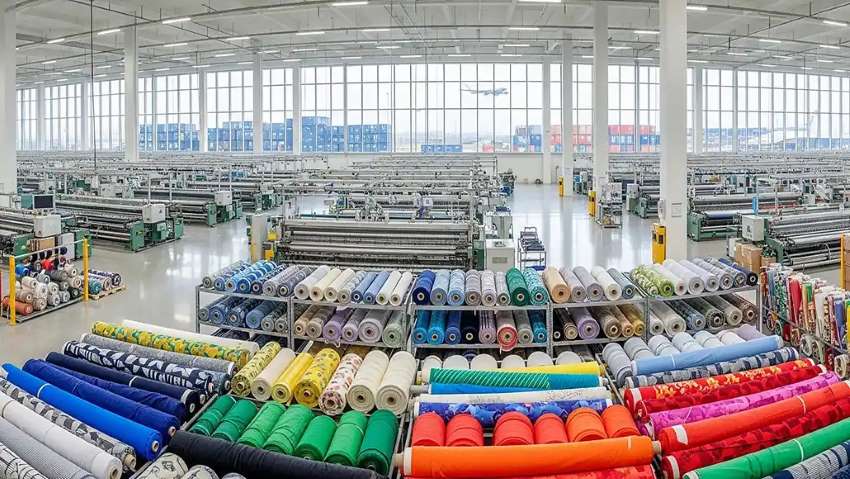
A modern experimental and scientific laboratory will also be located nearby. It will be equipped with the latest samples of the leading weaving, knitting, dyeing and finishing equipment and sewing equipment. The park may be commissioned in September 2018. It is expected to raise the Uzbek light industry to a qualitatively new level of development and improve the training system for the sector, which is considered to be one of the most dynamic and socially important sectors and ranks high among export-oriented industries of the country’s economy. The Uzbek textile industry is mainly focused on cotton, silk and wool.
US apparel market facing tough times
A Bloomberg report recording changes in US consumer behaviour of income spending on apparel shows early signs of big trouble ahead for the apparel industry. The US apparel industry has been seen a dip since last few years and it seems to be true if one looks at the number of bankruptcy cases filed by apparel retailers. One was doubtful that this was largely due to the E-commerce marketplace where E-companies giants, such as Amazon, roamed the streets like a Titian resulting in brick and mortar stores failing to attract customers.
However, that is not the big picture. Systemic changes are happening in consumer spending behaviour which is narrowing the leverage space. Post ’96, the share of clothing spend for US households was 6.2 per cent, however today, the share has shrunk by 50 per cent to about 3.2 per cent despite the fact that income and spending by Americans has significantly increased during this period.
The report discloses apparel’s share has been chewed into by travel, dining out and other adventure sports which offered more satisfaction to consumers. The expenditure on ‘consumer experience’ – largely travel and food – has zoomed to 18 per cent of spending. Expenses on technology itself accounts for 3.4 per cent of spending — which is more than that of apparel .
The choice and the flexibility to wear any kind of casual clothing during most occasions, including office, has been one of the reasons for the falling expenditure on clothing. To add to chaos, price of apparel has been going south as production cost fell due to the moving of manufacturing in less expensive labour markets and its consequent price competitiveness have become the silver bullet of success.
PRGMEA urges government to set up display centres abroad
Chief co-ordinator of Pakistan Readymade Garments Manufacturers and Exporters Association (PRGMEA) Ijaz A Khokhar has requested the government to set up display centres in Dubai and Rotterdam to enhance export. Ijaz said foreign businessmen and professionals globally will be encouraged to conduct business through easier and trouble free visa processing as foreign investors are reluctant to visit Pakistan. He asked the government should give Pakistani visa to businessmen, on arrival, enabling them to stay in Pakistan while they are travelling to South Asia and the Middle East.
Following a negative travel advisory, foreign buyers are reluctant to visit Pakistan for business and marketing because of harassment of Immigration staff at airports amongst other issues. The government should focus attention on establishment of proposed display centre, he assessed and went on to state that there is a felt need for reversion of visa policy to help foreign buyers and investors by making the country trade and business friendly.
He said that to enter into high priced market segment a Product Development Centre and Packing Training Centre should be established with technical assistance from the EU and Turkey to help the business community align with the garment sector. Ijaz feels there is a need for an aggressive marketing plan for garment export to gain the maximum benefits of GSP Plus status. Unfortunately we don't have formulate any marketing plan so far and at this juncture we simply need to implement a marketing plan.
Ijaz said due to non-availability of latest fabric locally the garment sector currently have a limited product line for export as foreign buyers were demanding new garments on G3, G4 and technical fabric raw material which are not available and neither is it produced by Pakistani weavers. Currently over 30 per cent cash flow is blocked as in sales tax refund and custom rebates which is seriously affecting cash liquidity.
Maharashtra allows privatisation of spinning mills, powerlooms
The Maharashtra government has decided to permit privatisation of spinning mills and powerloom societies that are operated as a cooperative in the state. The state’s new textile policy permits cooperative spinning mills and powerloom societies to change land use which permits them to start operations in other than industrial purposes. As per the policy, cooperative spinning mills and powerloom societies will be allowed to be privatised, provided they are agreeable to return to the government the equity, loan and interest. The new policy will be in effect from 2018 to 2023.
A government official disclosed, “If there is any change in the industrial use of the land, then an amount will have to be paid to the government as per the prevailing rules under the ‘one time exit policy’.”
Of the 136 societies and mills in Maharashtra, that had asked for funds in the form of a share capital, out of which 66 are running, while others are within the installation stage and a few are into liquidation while three are closed.
To encourage cooperative mills, the state government’s textile department provides funds to cooperative cotton mills 45 per cent of share capital, while 50 per cent are required to be raised in the open market and 5 per cent is borne by the mill board. In the case of mills run by Scheduled Caste (SC) members, the state textile department will provide fund up to 45 per cent of share capital, 50 per cent by the social justice department and 5 per cent will be raised by the mill board.
A textile department official says, “There were no options available before loss making or under liquidation powerloom societies or cooperative mills for their revival. Now, they will have an option by changing the use of land provided following the rules under one-time exit policy.”
ICAHT to be held in Delhi this September
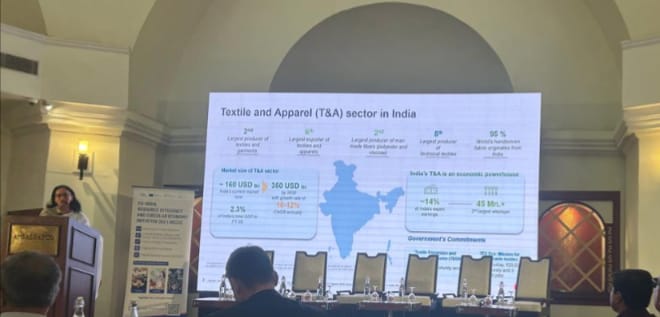
ICAHT (International Conference on Apparel and Home Textiles) will be held in New Delhi on September 8, 2018. The theme of the event is 'Creation of ten million jobs in Apparel sector'. It is a cross-disciplinary event and the idea is to explore creativity and the creative process through the lenses of imagination and innovation. It provides an environment for academics, researchers and practitioners to exchange ideas and recent developments in the field of apparel manufacturing. The conference is also expected to foster networking, collaboration and joint effort among conference participants to advance the theory and practice as well as to identify major trends in apparel manufacturing.
Workshops are a special feature of ICAHT. These have been found extremely beneficial to the industry in terms of specific skill upgradation and creation of general awareness and helping the move toward a knowledge economy. Each year India has dipped further behind both competitors and its own previous performance due to no or low capacity building and the lack of a liberal import policy regime for apparel exports. From a peak in 2005, year-on-year market share percentage change has not moved upwards.
But high labor costs in China and low compliance standards in Bangladesh are again providing an opportunity. About 12 million young people in India enter the workforce annually. If the size of India’s garment sector is doubled another 10 million jobs can be created.
China’s homegrown companies eye acquisition of global brands
Chinese firms are buying well known brands in the hope of upgrading their own image. Buying famous foreign brands is seen as helping them build up their own brands, and proper management and deployment of sales channels may help them gain more popularity with domestic consumers.
Chinese textile giant Shandong Ruyi has announced plans to buy Bally. Shandong is also a joint owner of The Carloway Mill in Scotland, one of the few remaining makers of Harris Tweed. Fosun is said to have already clinched a deal to buy Lanvin, after having nabbed a majority stake in the Italian tailor Caruso in November. It’s doing due diligence on the lingerie label La Perla.
Chinese e-commerce players are also moving quickly into western markets. Secoo, China’s largest luxury e-commerce platform, is looking for opportunities to expand in Europe, while VIP has become an official London Fashion Week sponsor and plans to work with London-based brands throughout the year to help them enter the Chinese market.
But there are concerns about whether a brand like Bally might be devalued after being acquired by a Chinese firm. The management model and the deployment of sales channels will matter if Bally wants to win further recognition in the domestic market in the future.
Alliance aims at improving supply chains and sutainability
Sustainable Apparel Coalition (SAC) and the Partnership for Sustainable Textiles will cooperate to create better working conditions and increased environmental protection across global textile supply chains. Both parties will align requirements, tools, and verification systems. In addition, joint member companies can make use of joint activities and shared information in future.
Over the next four years, SAC and the Partnership for Sustainable Textiles will collaborate based on the due diligence approach as defined by the United Nations Guiding Principles on Business and Human Rights and specified by the Organization for Economic Co-operation and Development for the garment sector. Members of the SAC and the Partnership for Sustainable Textiles will develop and test joint verification and reporting systems and explore opportunities for a joint methodology to measure impact.
This strategic collaboration is seen as a step toward a leaner industry with more efficient practices and, ultimately, creating greater impact throughout the supply chains. It will provide companies in Europe with tools and coherent guidance to successfully implement environmental and social sustainability practices along their supply chains. It will create synergies for member companies in implementing supply chain due diligence. Members of both initiatives will benefit from reduced administrative reporting efforts.
Global cotton production on rise, NCC signals cautious outlook
"Improving global economy and stronger growth forecast for coming years will have a positive impact on cotton production globally. World cotton demand is increasing with current estimates calling for an increase of approx five per cent in 2017, which is more than double the previous five-year average. China will begin the next round of reserve auctions next month. A successful auction series in 2018 could easily position China to become a larger cotton importer again."

Improving global economy and stronger growth forecast for coming years will have a positive impact on cotton production globally. World cotton demand is increasing with current estimates calling for an increase of approx five per cent in 2017, which is more than double the previous five-year average. China will begin the next round of reserve auctions next month. A successful auction series in 2018 could easily position China to become a larger cotton importer again. Jody Campiche, VP, economics & policy analysis, National Cotton Council (NCC), says world mill use is expected to exceed world production in the 2018 marketing year, and global cotton stocks are projected to decline by 5.4 million bales in the 2018 balance sheet. In NCC’s annual Economic Outlook, she noted global stocks decline is due to reduced inventories in China. China’s stocks are declining with USDA estimating a drop of 8.0 million bales in 2017. In 2018, there is a possibility of an additional 10.0 million bale reduction in total stocks.

According to Campiche, global production is projected at 119.3 million bales in 2018. World mill use is projected to increase around three per cent in 2018 to 124.8 million bales with most of the growth from China, Vietnam and Bangladesh. While projections of global consumption exceeding production normally would be supportive of prices, the implications for the coming year may not be as clear cut as stocks outside China are projected to increase by 8.6 million bales in 2017 and 4.6 million bales in 2018.
Regarding domestic cotton mill use, Campiche said 2017 US mill use is estimated at 3.4 million bales, up 100,000 bales from 2016. The Economic Adjustment Assistance Program continues to be an important source of stability allowing mills to invest in new facilities and equipment. For 2018, the NCC is projecting a modest increase in US mill use of 60,000 bales. She noted that export markets continue to be US raw fiber’s primary outlet. The US will remain the largest cotton exporter with a market share of 39 per cent in 2017 as compared to 40 per cent in 2016. China is currently the top export market for the 2017 crop year, followed by Vietnam and Pakistan. World trade is projected to be higher in the 2017 marketing year, but increased competition from other major exporting countries has led to a decline in the US market share.
Trends Forecast
Looking ahead to 2018, increased competition from other cotton-producing countries is expected to reduce both US exports and US market share. With exports pegged at 14.3 million bales, Campiche projects total US offtake of 17.7 million bales in 2018, leading to an increase in ending stocks of 1.5 million bales. In China, cotton mill use has increased, but competition from lower-priced man-made fibre remains a limiting factor for the continued growth of cotton fibre use. Although internal cotton prices are still strong relative to polyester prices, polyester prices increased in 2017 and are currently at the highest level since 2014. China’s new environmentally-friendly policies could also affect man-made fibre production and use.
Although cotton prices have improved slightly compared to other crops, cottonseed prices have dropped significantly, thus leading to an increase in net ginning costs. Many producers will continue to face difficult economic conditions in 2018. Production costs remain high, and unless producers have good yields, current prices may not be enough to cover all production expenses.
IAFs releases position statements for 2017-18
Following is the International Apparel Federation’s (IAFs) new mission statement: “To unite all stakeholders of the fashion and apparel industry, including brands, retailers, manufacturers, suppliers and country associations worldwide to enable and promote smarter, stronger and more sustainable supply chains.” the IAF Board of Directors has decided on a joint IAF position and agenda on the following issues: 1. Responsible Business Conduct. 2. Innovation and industry growth. 3. Industry development and education.
1. The IAF Board agrees that Corporate Social Responsibility and Sustainability (Responsible Business Conduct) is a major strategic issue for the fashion industry. Global problems need global solutions. SMEs, making up a major part of the industry and represented by national and regional associations that are members of IAF, must be part of the solution. Currently, IAF’s position on three major sub-themes, audit effectiveness, due diligence and recycling are as follows: Audit effectiveness. The IAF emphasises that the proliferation of social, safety and environmental audits carried out on apparel manufacturers is a major problem for the industry, actually taking away resources from making real improvements in working conditions. As a signatory, IAF supports the Sustainable Apparel Coalition’s Social and Labour Convergence Project.
2. IAF will closely cooperate with like-minded industry trade associations on the issue of improving audit effectiveness and eliminating unnecessary or ineffective audits.
Due diligence: To put it in a nutshell, the due diligence approach asks companies to commit to a reasonable effort in ensuring responsible business conduct across their supply chains. It is not reasonable for small companies to do as much as big companies nor is it reasonable to ask either the supplier or the buyer to do all the work and absorb all the costs related to ensuring responsible business conduct.
3. To foster a globally unifying approach to due diligence that ensures a fair sharing of responsibility among larger and smaller companies and among buyers and suppliers, IAF and its member associations pledge to support global implementation of the OECD due diligence guidance provided its members’ interests are safeguarded and provided industry associations are involved and (financially) supported.
Recycling: The IAF recognizes that recycling or ‘circularity’ is a major issue for the apparel industry and that positive results can only be achieved through global cooperation.
Trade is centre stage in the Trump era, sourcing suffer get affected
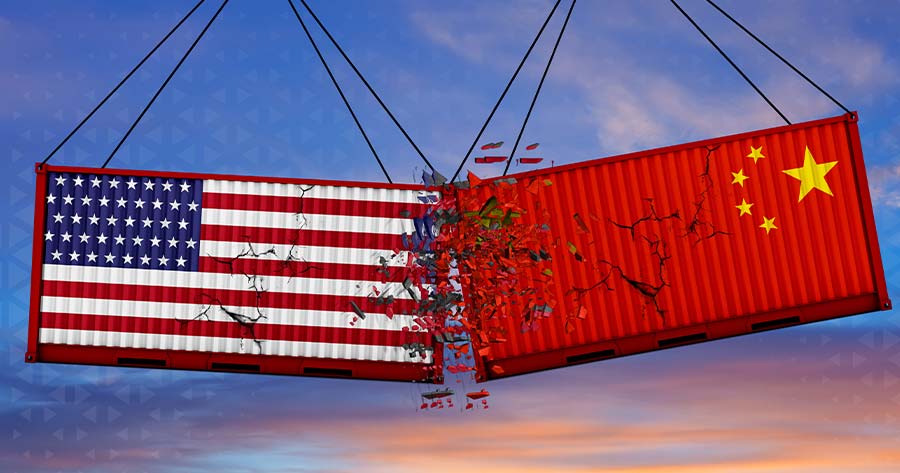
US President Trump has thoroughly revamped the country’s trade policies. Josh Teitelbaum, Counsel for international law firm Akin Gump Strauss Hauer & Feld, explained during a panel discussion at Sourcing at Magic, the key indicator for what’s working or not in a trade deal, is the trade deficit. In this case, the losers are those on the negative end of a trade deficit, and the winners are those reaping the benefits. President Trump has been trumpeting the most when it comes to his reasoning for reworking a trade deal. He is very clear that the US will not be on the losing end of anything.
Trump has walked out of the TPP deal, threatened to pull out of NAFTA and checkmated talks on the Transatlantic Trade and Investment Partnership (TTIP), among other things. The US has also proposed eliminating the agreement’s tariff preference levels which provide duty free access for certain raw materials that Canada or Mexico source outside of the NAFTA nations for their apparel exports. “The initial US proposal was for the US to eliminate all 24 tariff preference levels,” Teitelbaum said. The move did not go down well in the talks as it would hurt Mexico’s and Canada’s competitiveness and may see US consumers spending more for goods with higher-priced inputs.
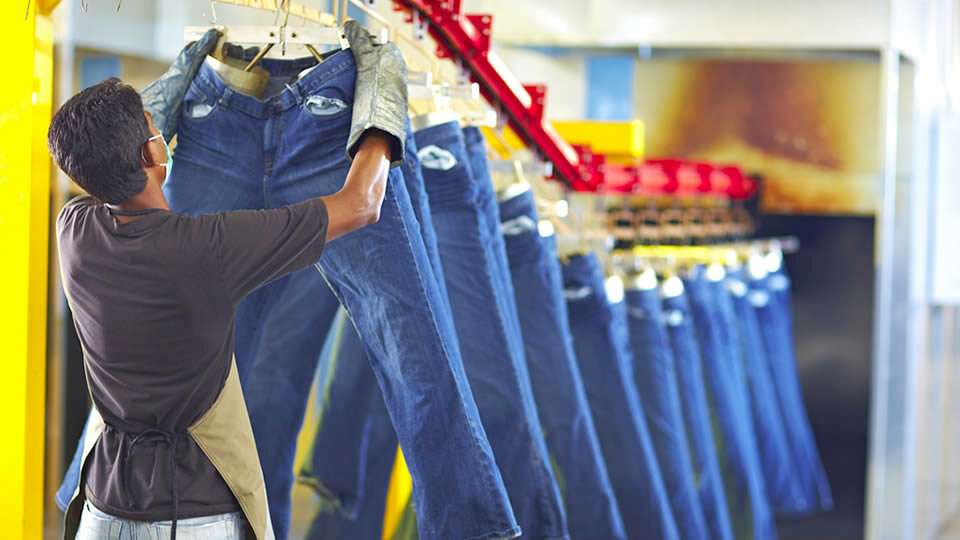
Teitelbaum explains, what’s at stake, if NAFTA goes belly up, is $682 million worth of apparel imports from Canada and $3.13 billion from Mexico as well as US manufacturing for brands like Levi’s. Anna Walker, global policy and advocacy at Levi Strauss & Co, said during a separate panel on trade, “We’ve been using NAFTA since day one and we designed our sourcing model to really capitalise on what NAFTA has to offer. We know that with NAFTA—that should the President follow through on some of his threats, we’ll continue to make those products, we just won’t do it using US inputs. Those products will move to countries that have their own supply chains.”
More...
VF Corp to sell apparel brand Nautica
VF Corp. the parent company of Timberland, The North Face, Wrangler etc. is in discussions to sell its apparel brand Nautica as it continues to focus on best-performing brand. The sell out is due to the company’s sale of its Licensed Sports Group business to Fanatics in April 2017 and the divestiture of its contemporary brands businesses which included 7 For All Mankind and Splendid, to Delta Galil Industries in August 2016. This was announced by the company in its Q4 earnings statement. Steve Rendle, Chairman and CEO, VF Corp, told investors during the company’s quarterly conference call, “While we do not yet have a definitive agreement, we are actively engaged with several parties, and we’ll update you as conditions warrant.”
VF’s revenues went up by 20 per cent to $3.62 billion for Q4, below forecasts of $3.7 billion. It reported $247 million in revenue from its Williamson-Dickie subsidiary which it acquired in October. Earnings per share on an adjusted basis came in at $1.01, a penny below forecasts. For the full year, revenues went up by 7 per cent to $11.8 billion. Earnings per share on a reported basis dropped 30 per cent to $1.79, including a negative impact from recent U.S. tax legislation. Adjusted earnings per share increased 4 per cent to $2.98.
Uzbekistan, Hungary looking at JV for textiles export to EU
Uzbekistan and Hungary plan a joint venture for production of finished textile products and its export to EU markets. This issue was brought up during past negotiations of the association's leadership with the Ambassador of Hungary to Uzbekistan, Peter Santo. Both sides discussed issues of further expansion of cooperation in the textile, sewing and knitting industry by supplying the products of Uzbek producers to the Hungarian market.
The Uzbek Association also invited foreign partners to cooperate in attracting specialists to the joint development of innovative activities in the industry. The expansion of trade and economic cooperation is another area of interest of both sides. The meeting addressed the unused potential in this segment. Last year, export of Uzbek textiles to Hungary amounted to $33,800 although this figure could be much higher. Both have decided to strengthen cooperation and actively participate in international exhibitions and fairs held in both countries.
Hungary is looking at the possibility of organising a national stand of their country at the forthcoming exhibition CAITME 2018 and Textile Expo Uzbekistan, which will be held in autumn in Tashkent.
US’ ultimatum to African nations to reverse ban on used clothes imports
Rwanda, Tanzania and Uganda have been given an ultimatum by the US to reverse their ban on used clothes imports or face trade sanctions. The three East African countries have been given a week’s ultimatum. The acting head of economic and regional affairs at the Africa Bureau of the US State Department, Harry Sullivan issued the ultimatum ahead of the East African Community (EAC) Heads of State Summit in Kampala, Uganda next week. “I believe the results of the meeting next week will determine how we proceed. While we understand the East African Community’s desire to build a domestic textile sector, we firmly believe the EAC ban on imports of used clothing will not achieve that.”
The EAC comprising Kenya, Uganda, Rwanda, Burundi, Tanzania and South Sudan had come to a decision to ban imported second-hand clothes and shoes by 2019, arguing it would help member countries enhance domestic manufacturing of clothes. As signatories to the AGOA trade programme which offers them duty-free access to the US, their decision violates the conditions including eliminating barriers to US trade and investment, among others.
The US was petitioned by the Secondary Materials and Recycled Textiles Association (SMART) which complained that the ban “imposed significant hardship” on the US used-clothing industry and violated AGOA rules. Rwandan President Paul Kagame stated his country will proceed with the ban on used clothes and will choose to grow its local textile industry at the expense of being a member of the AGOA.
Uganda and Rwanda have already raised taxes for used clothes and offered incentives to manufacturers to invest in their local textile industry. US imports from Rwanda, Tanzania, and Uganda was around $43 million in 2016, up from $33 million in 2015 while exports were $281 million in 2016, up from $257 million in 2015.
Indian textile exports fall 13 per cent in January
India’s textiles exports dropped by 13 per cent year-on-year (y-o-y) to Rs 9,704 crore in January following a sharp fall in cotton textile exports. Cumulative exports of textile and apparel products dropped by 4 per cent y-o-y to Rs 1.87 lakh crore in April-January 2018. Data from the Confederation of Indian Textile Industry (CITI) recorded, while cotton textile exports fell by 1 per cent y-o-y to Rs 53,818 crore during the above period, apparel exports dropped by 5 per cent y-o-y to Rs 88,709 crore.
Sanjay Jain, chairman, CITI says, “The share of textile and apparel exports (overall exports) has also declined from 14 to 12 per cent in January 2018 as compared to the corresponding period the previous year. “One of the key factors for decline in exports is embedded duties, which are more than 5 per cent and the same is not getting refunded at any stage.” The slide in exports comes at a time when there has been a rise in imports of textile products post GST. Import of textile yarn, fabric and made-ups has increased by 15 per cent y-o-y to Rs 9,914 crore during April-January 2018.
“This is posing a big threat to the Indian textile industry as post-GST the effective import duties have come down sharply, thus, making imports cheaper for the domestic industry by 15 - 20 per cent,” Jain added. He requested the government to provide export incentives for cotton yarn as it is the most vulnerable sector. Cotton yarn exports dropped over 26 per cent between 2013-14 and 2016-17 in spite of the textile industry adding over 3 million spindles and 62,000 rotors in spinning capacity during the period under review. Jain noted that the country can retain its competitiveness in the international markets by including cotton yarn under the merchandise exports from India scheme (MEIS ) and providing RoSL for fabric and cotton yarn.