Marty Moran becomes new NCTO chairman
Marty Moran is the new chairman of NCTO for 2018-19. He is a 26-year veteran of the textile sector committed to finding solutions to the challenges facing US manufacturers. The National Council of Textile Organisation represents the entire spectrum of the textile manufacturing sector in the US, from fiber and yarn to fabric and finishing – and everything in between. NCTO strives to bring a clear, strong and aggressive voice of support for US textile manufacturers in the national policy arena.
NCTO is an advocacy organization. Moran will place the highest emphasis on identifying key policy matters that hold the potential to impact the textile sector. He believes if the US textile industry can get customers to focus their business models on actual profit earned rather than on theoretical profit margins on items not yet sold, more textile supply chain jobs and production will be reshored in the United States.
Moran is CEO of Buhler Quality Yarns, a fine-count spinner of premium, innovative and sustainable yarns – most notably Supima, MicroModal and Tencel. Beyond spinning high-quality yarns in the US, Buhler is known for supply chain management, expertise and consultation. In particular, it works with customers to develop nimble, speed-to-market supply chains.
Indian cotton exports up 45 per cent
In February 2018, Indian cotton exports were down 13.3 per cent from January, but up 45.2 per cent year on year. Cotton imports were up 37 per cent year on year and up 8.3 per cent month on month. In the first two months of 2018, exports were up 7.2 per cent year on year.
Bangladesh, Pakistan and Vietnam continued to be the major consumers of Indian cotton in February 2018. But exports to Bangladesh were down 17 per cent from January, those to Pakistan were down 34.2 per cent and those to Vietnam were flat from January.
From August 2017 to February 2018, imports were down 46.1 per cent year on year and in the first two months of 2018, imports were up 27.1 per cent year on year. Cotton imports have seen steady growth for four months, which is mainly pushed by the strong demand for quality cotton from Indian spinning mills.
In February 2018, the major cotton suppliers for India were US, Egypt and Mali. US cotton remained the largest volumes, taking a share of 49.14 per cent. Egyptian cotton continued to the second largest import origins, but its proportion declined to 21.44 per cent. Cotton imports have seen steady growth for four months, which is mainly pushed by the strong demand for quality cotton from Indian spinning mills.
India makes strong showing at Dubai fair
Index Dubai fair is being held from March 26 to 29, 2018. The fair features a comprehensive range of furniture, furnishing, decorative accessories, interiors and fittings by a diverse portfolio of 1.000 quality exhibitors from more than 27 countries across Asia and all over the world. A total of 37 Indian companies are participating at this fair, showcasing interiors and decorations, handicrafts, furniture, home furnishing and textiles.
Launched in 1990, Index Dubai is Middle East and North Africa’s largest gathering for the design community. The UAE is one of India’s top trading partners. India and the United Arab Emirates enjoy a strong bond of friendship founded on millennia-old cultural, religious and economic intercourse between the two regions.
Export Promotion Council for Handicrafts (EPCH) is a nodal organization responsible for the promotion of exports of handcrafted products from India to various global destinations and projecting India’s image abroad as a reliable supplier at competitive prices. The India pavilion at the fair was set up by EPCH.
Exports of Indian handicrafts to Dubai were Rs 2757 crores in 2016-17. The hope is that such fairs will give a further boost to Indian handicraft exports to Dubai in the near future.
H&M's pile of unsold garments grows, affects bottomlines
Swedish fashion retailer Hennes & Mauritz AB has stated that it's increasing markdowns this quarter after accumulating a record pile of unsold garments worth more than $4 billion. Operating profit fell 62 per cent to the lowest level in more than a decade as clearance sales failed to reduce quantities of T-shirts and jeans that customers had passed over.
H&M's already-downbeat forecast for the start of 2018 was exacerbated by unseasonably warm European weather in January followed by February's cold snap, whipsawing the clothing retail industry. That forced the company to slash prices even more. CEO Karl-Johan Persson stated the company made mistakes by narrowing its assortment last year, though he expects sales to improve in the second half.
He further adds that H&M plans to reduce markdowns in the second half, when sales should improve and a weaker dollar will reduce garment costs.
Ethiopia harvests 40,000 tons of cotton
Ethiopia has over 2.4 million hectares of land are suitable for cotton production. And this fiscal, over 40,000 tons of cotton were harvested. The aim is to reach 5,02,000 tons in five years and 2,596,000 tons by 2032.
Ethiopia wants to be the top cotton producer in Africa from tenth place as of now. Sustainable production practices will be promoted through awareness raising campaigns about soil erosion, efficient use of irrigation water and inputs and integrated pest management, protection of biodiversity, forests and limitation of waste.
The strategy would help enhance the development of the country’s textile and garment sector. It is targeted to attain various goals including improving textile and garment products, earning better foreign currency, job creation, utilizing the full potential of industry and increasing the contribution of the industry for GDP. It would also contribute to attracting investments, providing adequate inputs for industries and supplying cotton products for foreign markets.
The strategy would promote integrated value and help bring the cotton sector into the industrialization process and will benefit all stakeholders in general and cotton farmers in particular as it would make them more profitable. An independent entity will be established with authority to coordinate activities by various stakeholders through improving policy and institutional framework.
China misusing WTO, says US
The US plans to bring a case to the WTO arguing that China is favoring domestic companies for licensing. China has been a big target for cases brought by the US, Japan and the EU, and the US hopes to sign up allies for its planned WTO action.
The EU wants to change WTO rules to permit swifter action against dumping and subsidies. The WTO was founded in 1995 as successor to the General Agreement on Tariffs and Trade, forged in 1948. In 2001, the year China joined, members launched talks to update and rewrite global trade rules but those efforts died a decade ago.
Since then, members have cut side deals to open markets. The EU, a vocal champion of free trade and the WTO, has struck or is seeking deals to liberalize trade with Canada, Japan, Mexico, Australia and Singapore. Such bilateral deals are allowed under WTO rules if they are deemed complementary to the multilateral trading system, cover substantially all trade and facilitate the freer commercial flows without raising barriers to non-parties.
US allies say a bigger problem for WTO is that China has taken advantage of the body’s rules to promote itself at the expense of other members. The Geneva-based body was designed before the rise of Chinese state-backed capitalism.
China may soon release retaliatory tariffs on US goods
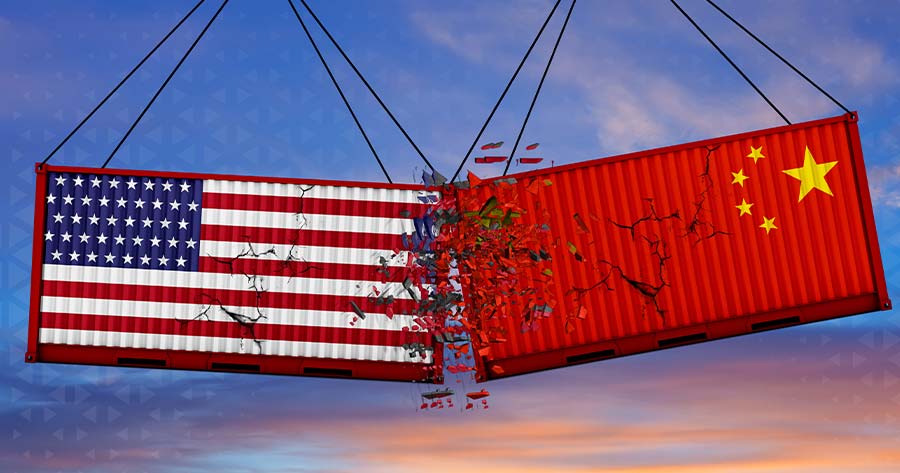
China is ready to talk to the US about trade frictions while preparing counter measures for the forthcoming list of tariffs on Chinese imports. China has nearly completed its list of retaliatory tariffs on US products and may release it soon.
US President Donald Trump signed a presidential memorandum on March 22 proposing tariffs on up to $60 billion of Chinese goods. The tariffs would follow a 30-day consultation period that starts once a list of goods is published. The US measures follow a so-called 301 investigation led by US Trade Representative Robert Lighthizer.
Lighthizer's office will publish a list of targeted products within 15 days from the signing of the memorandum, and there will be a 30-day period for public comment. Chinese officials have raised the US move at a meeting of the WTO's disputes settlement body and indicated that China strongly opposes the unilateral action. On Monday, China's Ambassador to the WTO Zhang Xiangchen called on other WTO members to oppose the Section 301 tariffs and "lock this beast back into the cage of the WTO rules.
Tu Xinquan, Professor at the University of International Business and Economics, says limiting China's exports to the US would affect US domestic customers and retailers, and if the US list includes production equipment, US downstream enterprises would be affected.
Western buyers want to source closer home
Buyers in Europe and the US want to source their products either domestically or at least somewhere closer home. Buyers are always looking at ways to reduce lead times from order deliveries. Having a supply base closer to home allows greater flexibility in ordering as well as the opportunity to respond quickly to changes in market demand and emerging trends.
So, while Bangladesh manufacturers, for instance, produce apparel with six weeks’ lead time retailers could easily place an order closer to home and receive their goods sooner. A cotton spinning company based in England has established a niche for itself in the UK and Japan with customers who appreciate both quality and locality of resource.
Unlike old-fashioned retailers, most online based marketing companies are looking for and placing orders of smaller quantities while looking for high quality products. Purchasing products from the Far East carry with it risks of unfavorable currency exchange rate fluctuations, particularly with the shadow of Brexit looming over Europe which is affecting the exchange rate of both the pound sterling and the euro.
End consumers in the US, UK and Europe are attracted by the tag of domestically produced items and are even willing to pay a premium to purchase them.
Atlas silk, Uygur’s pride on the decline
Atlas silk is famous for its rich and bright colors and distinctive changing zigzag patterns. It has been used by Uygur women for clothing and interior design for centuries. Northwest China's Xinjiang Uygur Autonomous Region is the birthplace of Atlas silk.
Folklore has it during the Han dynasty a princess who came to the region for marriage brought a silkworm cocoon with her. Local residents since began to produce silkworms and weave silk.
The manufacturing techniques of the ancient cloth have barely changed over the last 2,000 years. Reeling silk, spinning thread, dyeing and weaving... It takes much more time to produce Atlas silk by hand than producing artificial silk by machine. Even the most skilled hands can only weave three meters a day.
Fashion designers have also started using the material in their creations, creatively mixing the traditional art and modern techniques and bringing the fabric to the catwalk. Atlas silk products have been sold to about 25 countries and regions, attracting merchants from countries including the United States and Germany. The product has also become a hit on e-commerce platforms.
Due to low output, meager profits, and the impact of the modern textile industry, Atlas silk started declining. Many villagers whose families had been weaving for generations turned to other lines of work to make a living. To rejuvenate the industry, villagers got free silk weaving machines. Experienced craftspeople give free training to villagers.
Arvind launches Gravity denim
Arvind has launched Gravity, a range of new denims that embody power, stability and comfort. A pioneer of the denim revolution in India, Arvind has introduced many firsts in the denim industry including IP-led designs and technologies. Arvind is taking steps to leverage innovative technologies to create the best fabrics across performance, fashion, and functionality. It constantly pushes limits to redefine denims every season and offers customers products that are aesthetically elevated, technologically innovative, and sustainable.
Another of Arvind’s new product ranges is Ikat Denim. This range uses a path breaking new indigo dyeing technology, which is not only substantially more sustainable compared with traditional dyeing techniques, it also imparts a completely new and aspirational aesthetic appeal to the finished product. The technology creates unique and controlled patterns on the fabric that resemble the traditional textile art form of Ikat. Arvind takes pride in being the first textile company in India to exclusively offer this product to the domestic market.
The woven knit denims category has been driving the Indian denim market for the last few years but has now reached a saturation point. Gravity was launched by Arvind in association with Invista, one of the world's largest integrated producers of fibers.
More...
Pakistan wants no export duty from China
Pakistan is going to seek zero-rated duty on exports to China. Massive under invoicing on imports from China would be checked so that Pakistani exporters get equal benefit.
Chinese companies have shown interest in relocating their textile units to Pakistan or are interested in entering into joint ventures. The Chinese are keen to bring their machinery for producing quality textile goods in return for local set-up, like factory premises. Issues like market access, high cost of doing business and exchange rate are retarding the growth of Pakistan’s exports. However, the country is working on these issues and has already devalued the currency by up to ten per cent.
The extension given by the European Union over GSP Plus has helped Pakistan increase exports of value-added textile goods by up to 90 per cent. As a result, total exports grew by 13 per cent during the July-February period of the current fiscal.
Also, the package given to exports in the shape of duty drawback on taxes has helped boost textile exports between January and February. Pakistan and China will have a second round of discussions on the free trade agreement next month. Pakistan needs foreign investment and would encourage any sector which helps increase external trade and boost exports.
Bangladesh minimum wage board for garment industry seeks proposals
The Minimum Wage Board for the garment industry in Bangladesh has asked the representatives of workers and factory owners to submit their proposals by April 25. The directive came at the board’s first meeting presided over by its chairman Syed Aminul Islam. It was formed on January 13 to formulate a minimum wage structure within six months.
Syed Aminul Islam says the board will send its recommendation to the government as soon as possible. Several trade unions staged demonstrations in front of the board’s office demanding taka 16,000-18,000 as the minimum monthly wage while the meeting was under way. To set the minimum wage Inflation, living standards, risks, cost of production and the capacity of the owners will be taken into account. In 2013, the minimum wage was set at taka 5,300 with a basic starting wage of taka 3,000 for entry-level garment workers with a 5 per cent annual raise.
Using Indian yarn, fabrics becomes mandatory for apparel exports to India
In 2006 under SAFTA, India was allowed duty free import of readymade garments from Bangladesh and this facility was limited to eight million pieces. However, in 2010, this quantitative restriction was lifted. According to CITI India, India's garment imports from Bangladesh increased from $106.72 million during April-December 2016 to $124.14 million in the corresponding period of 2017.
Confederation of Indian Textile Industry (CITI India) chairman Sanjay K Jain says that duty-free facility given to Bangladesh on grounds of it being a Least Developed Countries (LDC) was actually benefiting China's textile exports. He further add India too has accepted sourcing restrictions imposed by Japan that hurt its apparel exports to Japan under India-Japan CEPA, and in the Goods and Service Tax (GST) regime, the industry has been under severe stress with increasing imports of garments from Bangladesh and other countries.
Indian domestic garment manufacturers have to pay a 20 per cent import duty if they use the same Chinese fabric. India has now extended this duty-free quota-free facility to all 49 LDCs on a non-reciprocal basis and again without any sourcing restrictions. So, it is expected that in future, we may have more Bangladesh-type situation, says Jain.
Jain added in the seminar on "Recent Trends on Eco-Friendly Textiles and Sustainable Fashion organised by the J D Birla Institute have demanded tweaking of SAFTA rules of origin to make the use of yarn and fabrics of Indian origin mandatory for allowing duty-free quota-free market. So that China cannot take any undue advantage of a facility that is meant for LDCs.
Meanwhile the Indian textiles industry is seeking "tweaking of South Asian Free Trade Area (SAFTA) rules of origin" to make use of yarn and fabrics of Indian origin mandatory for exporting apparel to India, amid a fast increasing import of garments made of Chinese fabrics from Bangladesh.
Denim may face margin pressures in India
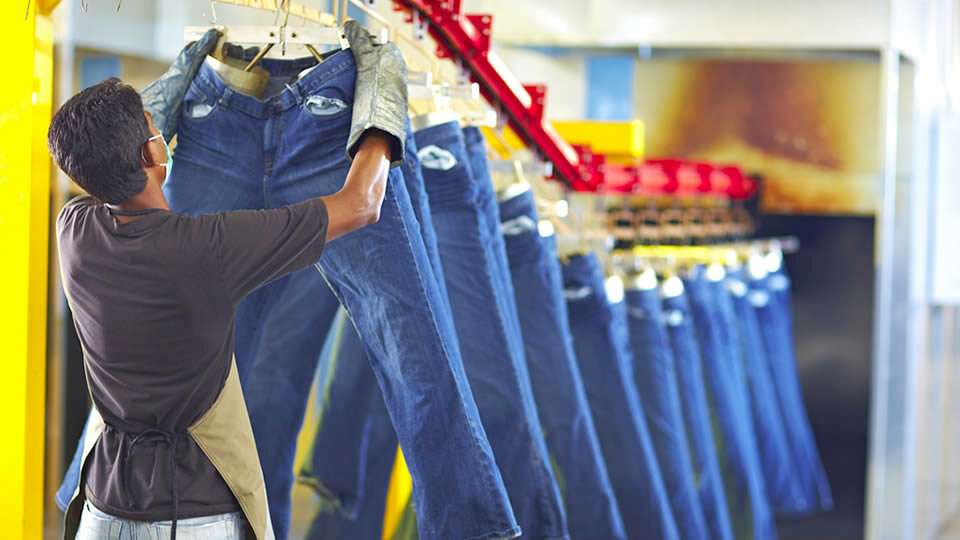
The denim fabric industry in India may face margin pressures during fiscal ’19 due to oversupply. About 15 to 20 per cent of the total capacity is underutilised. Additionally competition will intensify as several players have undertaken capacity additions. This will translate into a continued denim fabric surplus in the market.
India is a leading denim fabric manufacturer in the world. The last leg of the denim value chain, comprising activities such as stitching, washing, garmenting, sewing etc, is characterised by high labor intensity. A sizeable chunk of these activities is undertaken by small scale industries which are yet to get fully accustomed to the formal banking system and the GST regime.
Operating margins are expected to remain in the range of ten per cent to 11 per cent in fiscal 2018 to ’19. The downturn may be relatively prolonged, partly on account of the regulatory disruptions that the industry underwent in fiscal 2017 to ’18.
Exporters will see some impact on margins because of reduced duty drawback, notwithstanding the increase in availability of input tax credit. However, the long-term demand potential for the segment remains intact due to denim’s versatile fashion appeal among the young populace, rising disposable income and the untapped semi-urban pockets of the country.