AEPC hails MEIS extension
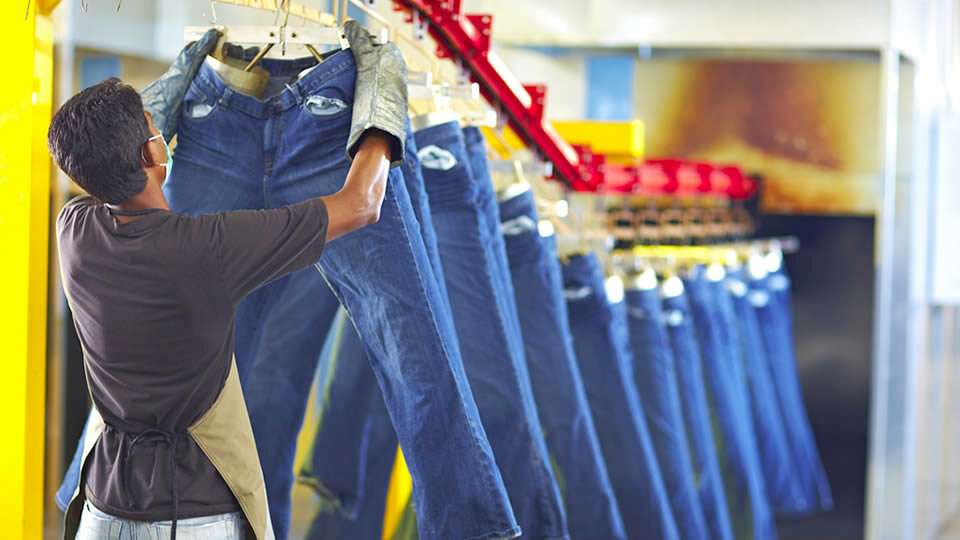
AEPC has welcomed the extension of the Merchandise Exports from Indian Scheme beyond June 2018.
Earlier the Ministry of Commerce and Industry through a notification extended the applicability of the MEIS scheme on garments and made-ups beyond June 2018.
On behalf of the apparel export industry, AEPC gratefully acknowledges the support given by the government by extending the MEIS scheme indefinitely beyond June 2018. This will ensure that all embedded, non-reimbursed central and state levies will be refunded which will help in restoring the competitiveness of Indian exports. This will also increase India’s share in the world market and given its high employment intensity create significant employment opportunities across India.
Incorporated in 1978, AEPC is the official body of apparel exporters in India that provides assistance to Indian exporters as well as importers/ international buyers who choose India as their preferred sourcing destination for garments.
In recent years AEPC has worked tirelessly in integrating the entire industry - starting at the grass root level of training the workforce and supplying a steady stream of manpower to the industry; identifying the best countries to source machinery and other infrastructure and brokering several path breaking deals for its members and finally helping exporters to showcase their best at home fairs as well as be highly visible at international fairs the world over.
Wage board for Bangla garment workers likely
Bangladesh will have a wage board for readymade garment workers by 2018.
The minimum monthly wage for garment workers in Bangladesh is 68 dollars, compared with about 280 dollars in mainland China.
Apparel workers in Bangladesh receive the lowest wage compared to all other countries in Asia.
The majority of garment workers in Bangladesh earn little more than the minimum wage, far below what is considered a living wage, which would be the minimum required to provide a family with shelter, food and education.
In Bangladesh, 3.5 million workers in 4,825 garment factories produce goods for export to the global market, principally Europe and North America. The Bangladeshi garment industry generates 80 per cent of the country’s total export revenue. However the wealth generated by this sector has led to few improvements in the lives of garment workers, 85 per cent of whom are women.
Garment exporters worry about profit margins being squeezed due to increased compliance costs in the wake of the 2013 Rana Plaza factory collapse and a push from buyers to further reduce costs. It’s estimated most of Bangladesh's garment exporters are operating with a profit margin of just three per cent.
Employees’ associations have asked for ten per cent increment in salary every year, six months’ maternity leave and three months of apprenticeship period with basic salary.
Valentino revenues up seven per cent
For 2017 Valentino’s revenues rose seven per cent. The Italian fashion house was founded in 1960. It is preparing to list on the Milan bourse sometime from late 2018, with its Qatari owner planning to sell around a quarter of the company in an initial public offering.
Valentino has become synonymous with elegance and uniqueness. Based in the heart of Rome, the Italian powerhouse focuses on artisanal design, exquisite craftsmanship and individuality. Season upon season, ready-to-wear, covetable accessories, cult shoes and one-of-a-kind haute couture creations continue to pinpoint Valentino as the ultimate trendsetter.
Lines issued by the company include Valentino (haute couture and ready to wear), Valentino Garavani (shoes and accessories), Valentino Roma (women’s ready to wear) and RED Valentino (contemporary women’s).
Valentino is known for its haute couture evening dresses. It manufactures not only clothes but also the context for the clothes. The intention is to show its clientele how to be glamorous.
Kim Cattrall, Jennifer Aniston, and Gwen Stefani have worn Valentino to the Golden Globes. Jennifer Aniston went to the Oscars in a Valentino ready-to-wear V-necked black gown. Four of the hobbits from The Lord of the Rings were in Valentino tuxedos.
There are currently 35 Valentino boutiques in 16 countries.
Torino show to present Islamic fashion
Torino Fashion Week (TFW) will be held in Italy, June 27 to July 3, 2018. The official mainstream Italian fashion week will partner with the Islamic Fashion Design Council (IFDC). The last three days of the show will be dedicated to modest fashion.
So modest fashion players will get exposure to the fashion world in the country deemed the global hub of fashion.
Modest fashion exerts a tremendous influence on the global fashion world and IFDC’s focused strategies aim at building on this impact. The global demand, business value, and proven spending power are a bonus and today’s industry players cannot overlook the value of this sector of fashion.
Italy has the fourth largest Muslim population in Europe and there is a strong demand for modest fashion among the Catholic, Jewish, and general mainstream population.
Hence TFW is a strong opportunity for fashion industry players, in general. It allows IFDC to promote promising talent while also discovering new talent that has good potential for their global market.
Last year IFDC showcased 30 modest fashion designers from over 23 countries. It is the world’s leading modest fashion and design council representing the Islamic economy and its stakeholders. IFDC has an array of products, services, and effective training programs for all levels.
Noni B acquires Australian retail assets
Fashion retail group Noni B recently acquired five Australia loss making brands from Specialty Fashion Group for $31 million. The brands acquired by the company include Millers, Katies, Crossroads, Autograph and Rivers.
These businesses recorded earnings before interest tax depreciation and amortisation (EBITDA) losses of $6.2 million for 2017.
The acquisitions will make the company one of the largest specialist women's apparel retailers in Australia with more than 3,500 stores across nine brands including Noni B, Rockmans, W.Lane and BeMe with total annual sales predicted of around $1 billion.
It will be funded by an equity capital raising of $40 million which will also raise additional capital to fund transaction and restructuring costs and to provide working capital for the five new businesses.
Court rejects Monsanto patent plea
A Division Bench (DB) of the Delhi High Court recently invalidated a patent granted to Monsanto Technology LLC for its invention related to the gene sequence responsible for the Bt trait eradicating pests afflicting cotton plants. As per the Court, the gene sequence has been held to be a part of the seed, and hence unpatentable in terms of Section 3(j) of the Patents Act, 1970.
The verdict of the DB is likely to adversely affect the jurisprudence of patentability of biological inventions in India. The judgment appeals for integrating scientific and technical expertise into the judicial processes, especially in patent disputes that inherently involve perplexing scientific issues. Monsanto has appealed against the DB judgment in the Supreme Court which has posted it for July.
Spinning mills get solar subsidy
Maharashtra will give spinning and textile mills subsidies to set up solar power plants.
Details of the proposed subsidy, the criteria to declare units eligible for subsidy and a plan for implementation are being worked out.
In the new Textile policy 2018-23, approved in February, the decision was taken to give a power subsidy of Rs 3 per unit to cooperative spinning mills for three years. Within this period of three years, the cooperative spinning mills and textile projects are expected to set up non-conventional power projects in their premises to fulfil their power needs.
The subsidy will be reviewed every year to reduce the overall burden.
One of the major reasons spinning mills incur losses is the higher power tariffs in Maharashtra compared to other states. So spinning mills are being encouraged to set up solar power plants. These, it is hoped, will reduce the power bills.
Maharashtra has a capital subsidy for upcoming self-financed projects in the state. Spinning mills, cotton ginning, processing and printing units will get a 35 per cent capital subsidy, technical textiles and composite units will be given a 30 per cent capital subsidy, and powerloom and other textile related units will get a 25 per cent capital subsidy.
Chinese infiltration affects Bangladesh market
According to the Bangladesh Textile Mills Association (BTMA), over Tk 25,000 crore worth of yarn and fabrics have remained unsold in the last five months due to sudden deluge of low-cost Chinese and Indian substitutes in the local markets ahead of Eid.
The majority of the demand is being met by the Chinese and Indian yarn and fabrics, which are imported under bond licences and illegally sold in the domestic market by a section of unscrupulous traders enabled by the lax monitoring by the customs department.
These yarns and fabrics are used to make saris, salwar suits, bed sheets, scarves, lungis, the local yarn makers and weavers sell Tk 25,000 crore to Tk 30,000 crore worth of products ahead of Eid-ul-Fitr and Eid-ul-Azha.
The goods imported under bond licences are not allowed to be sold in the local market as those are imported duty-free for exporting to different countries after processing in factories.
Korean FDI in textiles increases
According to the Central Bank Statistics, net inflow of FDI from South Korea in the textile and weaving sector surpassed $100 million.
Korean companies invested $103.05 million in Bangladeshi textile and weaving sector in 2017, which was $100.83 million in 2016.
Total FDI in net terms from South Korea stood at $179.80 million in the past year, which was $151.33 million in 2016.
FDI stock from the country had reached $1088.52 million up until 2017. Out of this total stock, around $877.71 million went to the textile sector alone during the period under review.
RMG exports from Bangladesh to India up by 115 Per cent
According to the data from Export Promotion Bureau , China’s export earnings from India in the July-April period of the current financial year 2017-18 surged by 20.73 per cent riding on a 115.18 per cent growth in readymade garment exports.
However, India’s export earnings from China, plunged by 30.59 per cent during the period due to the poor performance of leather and leather goods sector.
Overall export earnings from India in the first 10 months of the FY 18 increased to $701.55 million from $581.10 million in the same period of FY 17. Readymade garment export to India in the July-April period of FY grew to $225.57 million from $104.83 million in the last fiscal.
The export of leather and leather products t to China decreased as the country was relocating its labour intensive production to other countries and importing from there due to increase of production cost in China.
More...
Pak industry wants incentives continued
Garment manufacturers and exporters of Pakistan want an extension of the incentive package for another two years.This is in view of the ballooning trade deficit.
The incentive package, announced in 2017, is aimed at achieving the objective of export-led growth. The removal of customs duty and sales tax on the import of cotton is the major attraction of the package. Customs duty on man-made fibers, excluding polyester, and sales tax levied on the import of textile machinery have also been scrapped.
The issue of delay in release of tax refunds has also been raised by the industry. As a result of the delay in refunds, more than 30 per cent of the cash flow is blocked now.
The textile industry in Pakistan contributes 57 per cent to the country’s exports.
The country is working on upgrading its supply chain, improving productivity, and maximising value addition.
The growth in textile and clothing exports of Pakistan has enhanced the country’s overall exports. These results have been achieved due to export-friendly policies and renewed efforts toward seeking better market access. The positive trend in the international demand and exchange rate correction are also expected to help sustain this rising trend in the coming months.
Indorama acquires stake in Avgol
Indorama will acquire a 65.72 per cent stake in Avgol. Avgol Industries, based in Israel, is a hygienic fabric company. Indorama is a chemical fibre producer and a manufacturer of yarns.
The deal is expected to be completed during the second half of 2018.
Avgol manufactures nonwoven fabrics for diapers and feminine hygiene products. The company employs around 900 people across 18 global manufacturing plants, including in North Carolina, Russia, and China, with a combined production capacity of 2,03,000 tons a year. In July 2017, the company sold one of its Israeli factories.
The acquisition is intended to strengthen Indorama’s leadership position in the personal hygiene-oriented nonwovens market, which it considers a high growth segment. Indorama will build on Avgol’s established client base, capabilities and substantial presence in high-growth markets.
Avgol has already made some significant investments to grow the business by expanding its production capacity and geographical footprint.
The hygiene industry is the largest consumer of disposal nonwoven fabric.
Founded in 1994 by Indian businessman Aloke Lohia and employing over 15,000 people, Indorama reported revenues of 8.43 billion dollars and ebitda of around a billion dollars for 2017.
The acquisition gives Avgol a company valuation of around 480 million dollars.
Over 140 Indian companies invest in South Africa
According to a recent CII-PwC report, over 140 Indian companies have collectively invested close to $4 billion in South Africa, leading to the employment of over 18,000 people.
Companies have contributed beyond foreign direct investment (FDI) and have also taken initiatives for skill development and corporate social responsibility.
The report has predicted an increase in the Indian business footprint in South Africa.
According to the report, bilateral trade between India and South Africa had increased to $11.79 billion in 2014-15 from $2.5 billion in 2003-04.
The trade had reduced slightly in 2015-16 to $9.5 billion owing to factors like credit rating downgrade of South Africa, political, economic and policy uncertainty and fluctuations in exchange rate.
GST affects Surat textile processors
GST has hit not only the power loom sector in Surat but even the textile processing sector.Most textile dyeing and printing mills have reduced the production of finished fabrics by almost 40 per cent due to recession, money crisis and weavers’ drastically reducing the production of grey fabrics.
The cost of raw material required for processing of grey fabrics has shot up by almost 30 per cent. Besides textile mill owners were compelled to increase wages of textile workers on May 1. Much of the textile workforce has moved out of the city to attend marriages and other social events in their hometowns.
The workers who stayed back demanded a wage hike as they had to work full-time to meet production needs in the factories.
Textile processors have been facing a severe liquidity crunch as textile traders have been delaying payments up to 100 days for various reasons, including recession, slowdown in fabric demand etc. Processors have increased job charges by almost 15 per cent to cope with the losses.
Power loom weavers are operating their units for just eight hours, which means the production of grey fabrics has come down to just 15 million meters a day.