Merino wool brand Toorallie growing from strength to strength
Written by FWAustralian brand Toorallie, is emerging as one of the bright stars of Australia's wool industry and it is the younger consumers who are propelling its growth. Run by two identical twins Simon and Steve Smith, Toorallie is well aware of this emerging market.
The brand flourished for a decade — making colorful, bulky knit jumpers and classical knitwear. But by 2004, cheap Chinese clothes were flooding the Australian market. Sales of woollen clothing had stagnated. Fashion, ever fickle, had moved on. The business collapsed under a mountain of debt. But Steve and Simon Smith had devoted their prime years to the brand and never considered walking away.
The brothers brokered a business partnership with Peter Small, a veteran woolgrower who had spent decades processing Australian wool into fine yarn. Small became a co-owner with two other silent partners and the re-born Toorallie has gradually gone from strength to strength.
The company now supplies more than 250 retail outlets in Australian and New Zealand markets. All its fleeces are sourced from Pooginook, a famed wool growing property near Jerilderie in southern New South Wales. The Smith brothers are excited about the growth prospects for Merino clothing, domestically and in emerging markets such as the Asian middle class.
US denim customers prefer comfort over cost and style”, says research
A recent research from ‘YouGov Omnibu’ indicates that 46 percent of U.S. consumers prefer comfort over style and cost when buying a pair of jeans. Around 56 percent of Americans have at least one pair of jeans that no longer fit. While one in 10 consumers reported having just one pair of non-fitting jeans in their closet, while 17 percent reported owning two pairs that don’t fit.
Meanwhile, 8 percent said they have six or more pairs of jeans in their closet that don’t fit them. According to the report, around 46 per cent of women, despite services like personal shopping and fit guides and wider availability to brands with inclusive sizing, do not know their size when they step into a store. As against this, only 24 percent of the men do not know their sizes.
Of the women surveyed, 63 percent are not confident about finding the right size when shopping at an online retailer for the first time, compared to 43 percent of men. Around 81 percent of Americans are “very” or “somewhat” confident that they will know the clothing size that will fit them best from somewhere they’ve shopped before.
Textile special package goes only so far
The special package for India’s textile and garment sector, launched in June 2016 and hailed by many as a potent tool for creation of decent jobs, has met with limited success.
Just .265 million workers have till date enrolled under the Pradhan Mantri Paridhan Rozgar Protsahan Yojana (PMPRPY) for the textile-garment sector. And not all of these are new employments either.
Just 788 units have availed themselves of the benefit so far.
The scheme’s objective was very ambitious: to achieve a cumulative increase of 30 billion dollars in export of textiles and garments and Rs 74,000 crores ($US 10.79 billion) of investments in the employment-intensive sector over three years. The package for the sector included making EPF optional for employees earning less than Rs 15,000 ( $US 219) per month.
While the PMPRPY for the textile sector has had only some success, the PMRPY, aimed at accelerating job creation in the formal sector, has done relatively better as 75,753 units have availed themselves of the benefits of the scheme and the number of beneficiaries (workers) stood at 608.1 million.
Under the scheme launched in August 2016, the government is obliged to pay the entire employee pension scheme (EPS) component of the employer’s EPF contribution for workers with a salary up to Rs 15,000 ( $US 219) per month for the first three years of their employment.
Mexico and Canada optimistic of clinching the NAFTA deal
Mexican and Canadian officials are optimistic of clinching the NAFTA trade deal with the U.S. in the next several months even amid sticking points on car production, an automatic expiration clause and President Donald Trump’s threats to impose tariffs on foreign vehicles.
The nations will try to work an agreement before U.S. mid-term elections in early November. Some of these negotiations will result in meetings between the two nations. While the U.S. has expressed a preference for bilateral deals, Mexico and Canada remain committed to a trilateral agreement.
Many of Trump’s senior economic advisers expect him to impose a 25 percent tariff on about $200 billion in foreign-made automobiles later this year. Canada has termed this as absurd and expressed its confidence that US will follow common sense and refrain from imposing these tariffs.
Archroma’s Denisol for spectacular denim effects and colors
Archroma has a unique combination of technologies for denim effects and colors, from fiber to finish, from the authentic roots of indigo to the most innovative and eco-advanced solutions.
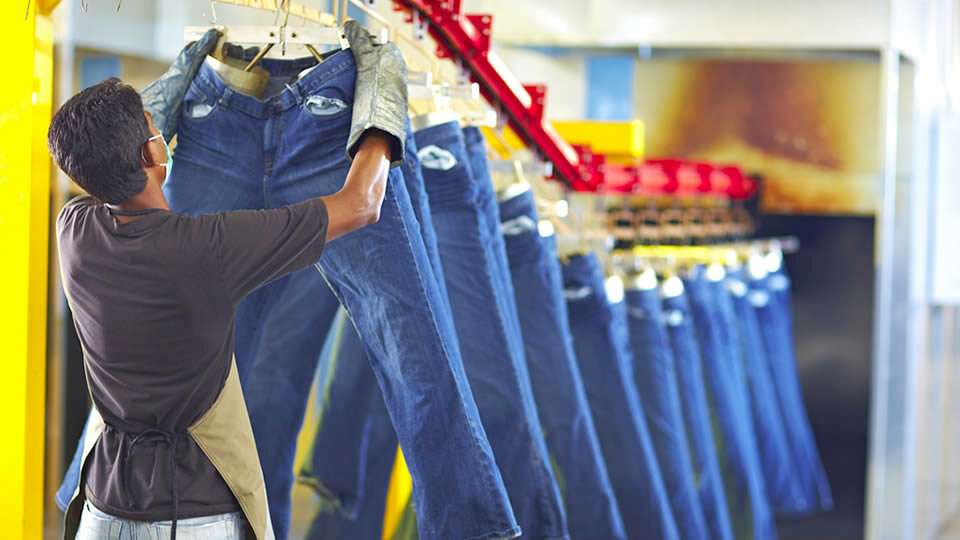
Denisol is a newly developed pre-reduced liquid indigo solution. It is compliant with major official eco-standards and requirements from retailers, brands and fashion leading companies and helps to produce fabrics suitable for current eco-labeling such as bluesign and GOTS. Denisol is a non-toxic alternative to dyes that are used for the iconic and traditional indigo blue that consumers associate with denim and jeans.
Archroma is a global leader in color and specialty chemicals. Its coatings and washing solutions are aimed at bringing denim creativity to a whole new dimension. The company’s advanced denim dyeing technology allows savings of up to 92 per cent in water, 87 per cent in cotton waste and 30 per cent in energy compared to a conventional denim dyeing process. The technology has been adopted by brands like Patagonia.
Diresul RDT Ocean Blues is a collection of vibrant, ocean-themed bright sulfur blue dyes. These best-in-class dyes and their auxiliaries bring out the best of indigo, improve workability, dyeing consistency and process safety.
Archroma’s dye and chemical specialties portfolio allows the creation of exciting colors and effects.
Jeanswear brands launch Spring ’19 collections at Liberty Fairs
Men’s brands at Liberty Fairs in New York launched their Spring ’19 collections from manufacturers like Parasuco Jeans, John John Denim, Hudon, Neuw Denim and Swonne.
Parasuco Jeans introduced a black velvet denim set for men which gives a brushed effect layered over a deep shade of indigo that seeps through the plush fabric. The brand also offered stretch linen denim in off-white for a lighter look. The brand John John Denim focused on 3-D effects and clear washes in its Spring’19 collection while Hudson’s introduced a new chino denim in an array of relaxed, summery colors in both pants and shorts. For edgier looks, Hudson offered skinny cargo pants in army green and camouflage.
Neuw introduced the Kerouac, its widest fit yet with a 15.25-inch opening while new brand Swonne presented its full range of comfort stretch jeans, button-down shirts and hand-painted dead stock parkas.
Outland Denim, added four new pieces to its tight collection of denim essentials for Spring ’19. Eddie offers a regular straight fit with a slightly wider leg. The Ava, a slightly cropped jean jacket, is Outland’s first jean jacket made specifically for women. The jacket is offered in clear blue, as well as an on-trend patchwork style. The collection also introduces white denim, jean skirts and women’s cuffed shorts.
COTTON USA licensed to over 51,000 product lines
According to the 2018 Global Lifestyle Monitor, 81 percent of the global respondents preferred cotton over other fibers. Cotton was perceived as most comfortable by around 69 percent, sustainable by 65 percent and longest lasting by 55 percent.
COTTON USA is the label that brands and retailers use to denote that over 50 percent of a product’s material is made from U.S. cotton. A hang tag study conducted in 2016 showed that nearly two-thirds of consumers surveyed would pay more for a product with the COTTON USA hang tag. The 2017 consumer survey also showed that over half of all global consumers associate the COTTON USA trademark with comfort, quality, reliability, a premium brand and trust – leading attributes in purchase decision-making.
Licensees may utilise the COTTON USA mark to highlight U.S. cotton products throughout the supply chain and at retail. Since 1989 the COTTON USA brand has been licensed to over 51,000 product lines representing more than 3.8 billion apparel and home textile products. The licensees span the entire global supply chain from 31 countries.
Brands and influencers at Pure London
Pure London was held July 22 to 24. The event welcomed thousands of buyers and influencers, new sectors and new brands, inspiring speakers and leading change-makers mulling the future and how to make it sustainable, circular and inclusive top of the agenda.
Topics included diversity, body shape, ethics and environmental issues. One was on how brands can be more representative of society and the role they play in changing people’s perspectives on body image and the beauty standard.
A huge increase in brands with an ethical standpoint and environmentally-made collections exhibited this season as part of the new Pure Conscious section, demonstrating the pace of growth and interest in this sector as it drives to become the norm. Future trends by WGSN were brought to life on the catwalk with a special appearance from Graduate Fashion Week winners and graduates.
Pure London invited everyone to adopt one of five simple pledges - Get Dirty, Turn It Down, Pass It On, Ethicool, and Actually I Can to advance the UN’s Global Goal 12 for responsible consumption and production.
Pure London is the UK’s leading trade fashion buying event, representing women’s wear, men’s wear, footwear, accessories and young fashion. The show offers buyers from department stores, etailers and mail order the opportunity to discover collections launching for the season ahead.
ISPO Textrends Forum to provide easy access to new products and innovations
The next edition of ISPO Munich from February 03-06, 2019 will house the leading textile innovations in the ISPO Textrends Forum. The forum will enable its visitors to easily access new products and innovations that define the season. Awardees at the forum will be automatically included into the seasonal Trend Book with photos of the winning products combined with direct contact info and full descriptions.
The products will be judged by an international jury of textile experts from all aspects of the market in November 2018. The selected products will be awarded Best Product, Top 10 and Selection for each sector, with all awarded a place within the ISPO Textrends forum plus the additional benefit of marketing.
This year, two new areas will be highlighted for the Fall/Winter 20/21 edition at ISPO Textrends. The first of these include the Performance Finishes developed to highlight the development from chemical finishing companies. More brands are looking to using layering technology in their fabrics, and through the latest scientific developments many functional factors can be added to a fabric through finishing.
The second segment to be highlighted includes the Natural Generation that has been incorporated to cater to the growing demand for natural fabrics with performance. Applications to this new sector must have a minimum of 80 per cent natural ingredients as the proprietary fiber.
Bangladesh pushing for LDC benefits beyond 2024
"One of the fastest growing nations, Bangladesh is looking to becoming a developing nation from Least Developed Country (LDC); however, its tensed economic situation is giving opposite signals. Some economists say, given the country’s rate of progress, it is expected to graduate from being an LDC to developing nation by 2024. The healthy indicator of the country’s socio-economic progress, making it to the league of the developing nations would come at some cost, the cost of losing trade benefits that it currently enjoys. It will have to give away its competitive edge which it was getting owing to many trade privileges."
 One of the fastest growing nations, Bangladesh is looking to becoming a developing nation from Least Developed Country (LDC); however, its tensed economic situation is giving opposite signals. Some economists say, given the country’s rate of progress, it is expected to graduate from being an LDC to developing nation by 2024. The healthy indicator of the country’s socio-economic progress, making it to the league of the developing nations would come at some cost, the cost of losing trade benefits that it currently enjoys. It will have to give away its competitive edge which it was getting owing to many trade privileges.
United Nations’ resident coordinator in Bangladesh Mia Seppo recently maintained the country’s exports on graduating to developing nation status will face 6.7 per cent tariff, which could result in an estimated export loss of about $2.7 billion in a year. As an LDC, Bangladesh enjoys 12 per cent preference margin for its apparel exports to biggest export destination Europe under the European Union’s Everything but Arms (EBA) Initiative.
The possible fallout
At present, Bangladesh is a major user of duty-free and quota-free market access, with shipments under this facility accounting for 72 per cent of the total exports in fiscal 2015-16. Upon graduation from LDC, exports will be subjected to additional tariff as duty-free and quota-free benefits from different countries and trading partners will be withdrawn. With this, the preferential market access to more than 40 countries in varying degrees that Bangladesh currently enjoys would be gone on becoming a developing nation. And lastly, as per the United Nations Conference on Trade and Development, Bangladesh’s exports may decline from 5.5 per cent to 7.5 per cent on becoming a developing nation. This list is quite unnerving to say the least, and more so if one is into apparel exports.
If the government on one hand is reportedly working on signing new preferential and free trade agreements with major trading partners, it is also planning to push for enjoying LDC-related benefits for an extended period through various platforms. During a media conference, Secretary of the Economic Relations Division Kazi Shofiqul Azam, stated they are assessing challenges and opportunities after graduation under the high-powered taskforce headed by the Prime Minister’s office. Further this, the taskforce will recommend action plans for off-setting any probable bad impact on overseas trade.
Going by recent measures, it seems Bangladesh will push for LDC-related benefits for an extended period by co-hosting an international event on ‘Supporting Smooth Transition of the LDCs towards a Sustainable Graduation’ during the upcoming ‘High Level Political Forum’ at New York. Commerce Minister Tofail Ahmed says after graduation from the LDC, the country will go for Free Trade Agreements with other countries. By 2021, its export will cross $60 billion and the government will work to achieve the goal.
More...
VF Corp revenues up 23 per cent
VF Corp has had a 23 per cent surge in overall revenues in its latest quarter. There was a 46 per cent uptick in net income. VF is the parent company of fashion retailers Vans, Lee, Timberland, The North Face and Wrangler. Gross margin from continuing operations increased to 50.3 per cent on an adjusted basis.
VF’s first quarter results were strong, driven by continued broad based acceleration across its core brands and platforms. VF is executing well against its 2021 growth plan and continuing its journey to reshape the portfolio and transform VF into a purpose-led, performance driven, consumer-centric organization focused on and committed to delivering superior returns to shareholders.
For the quarter, Vans’ revenue grew 33 per cent. Revenue for The North Face grew by 21 per cent. Lee’s revenue grew by seven per cent, while Timberland and Wrangler recorded a five per cent uptick each. VF, based in the US, is an apparel, footwear, and accessory company and has more than 1,500 owned and operated retail locations around the world across its brand portfolio. The company’s Responsible Sourcing program is a global collaborative approach to sourcing products responsibly including collaborating with industry partners and multi-stakeholder organizations across 50 countries.
US and EU ease disputes
The US and the European Union will work towards zero tariffs, zero non-tariff barriers and zero subsidies on non-auto industrial goods. The EU will buy billions of dollars worth of American exports, including soya beans and natural gas, and work to reform international trade rules.
Both sides will resolve the steel and aluminum tariffs imposed by the US which started the dispute. The EU-US negotiations will be led by an executive working group aiming to make trade more fair and reciprocal. The US and the EU, which have a trillion dollar bilateral trade relationship, will also work together to reform the World Trade Organisation and cut down on unfair trade practices.
However, all this is the resumption of some basic dialogue. Individual items like soybeans and liquefied natural gas are not very significant. It is unlikely the EU would agree to a major revision of trade terms without steel and aluminium being taken off the table first.
But to the extent they’ve agreed to continue to talk and take a joint approach to Chinese trade practices, it’s significant. This puts everything on a slightly more stable footing. The US also remains on the edge of a full-on trade war with China and has yet to step back from conflicts with Mexico and Canada.
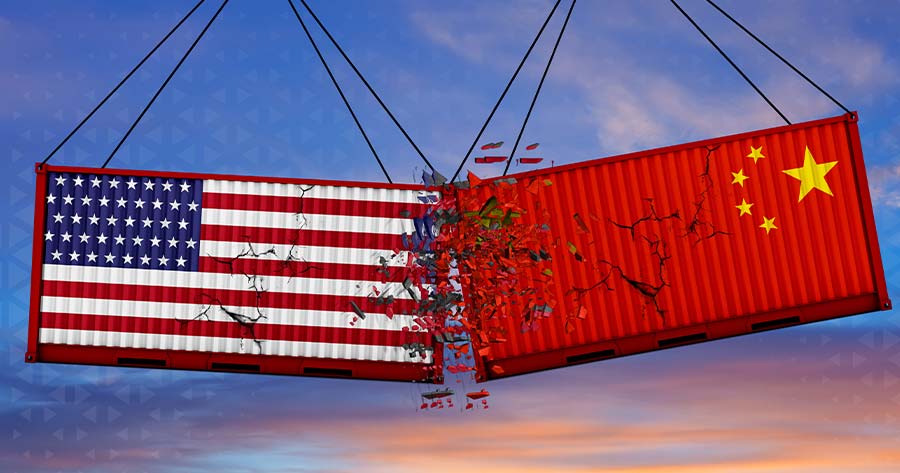
Trade in both China and US oppose tariffs
Tariff increases are not just a tax on consumers, they will also bring uncertainty to the stable global supply chain for top brands. Chinese and US textile and apparel organizations have expressed concern about escalating trade tensions and their opposition to protectionism.
Around a 1,000 types of products listed in the textile and apparel category are part of the 200 billion dollars in Chinese imports potentially subject to ten per cent tariffs imposed by the US. The products, mainly raw materials such as yarns and fabrics, range from silk to cotton, to lace to embroidery.
For the second year in a row, a protectionist trade agenda in the US is the top concern for the US fashion industry. Companies are very concerned about the broader implications of protectionism for the US economy, consumers and the global economy.
One strategy for US companies is to find other sourcing opportunities. Companies are sourcing from many other countries, including Vietnam, Bangladesh, India, Indonesia, as well as countries in the western hemisphere. But American brands and retailers also feel there is nothing to replace China for the quality sourcing they are looking for. In order to not hurt consumers, the US tariffs have been focused on manufacturing inputs rather than clothing, footwear and home textiles.
Pakistan textile exports decline by 2 per cent
Textile exports in Pakistan in June 2018 declined 2 per cent despite government’s efforts to boost shipments in an attempt to reduce trade deficit and rein in the runaway current account deficit. This fall in textile exports, which accounts for around 60 per cent of Pakistan’s total overseas sales, is attributed to rise in cotton prices this year and heavy sales in June last year.
Textile exports were recorded at $1.19 billion in June 2018, down 2 per cent on a year-on-year basis compared to $1.22 billion worth of shipments in the same month of 2017. This decline was primarily due to a significantly higher cotton price that went up in the past one year from around Rs 6,500 per maund (37.324kg) to Rs 9,500.
Cotton price have increased 22 per cent in the world market, but in Pakistan, it has gone up nearly 40 per cent due to rupee depreciation during the last year.