BGMEA expects RMG exports to India to reach $1 billion
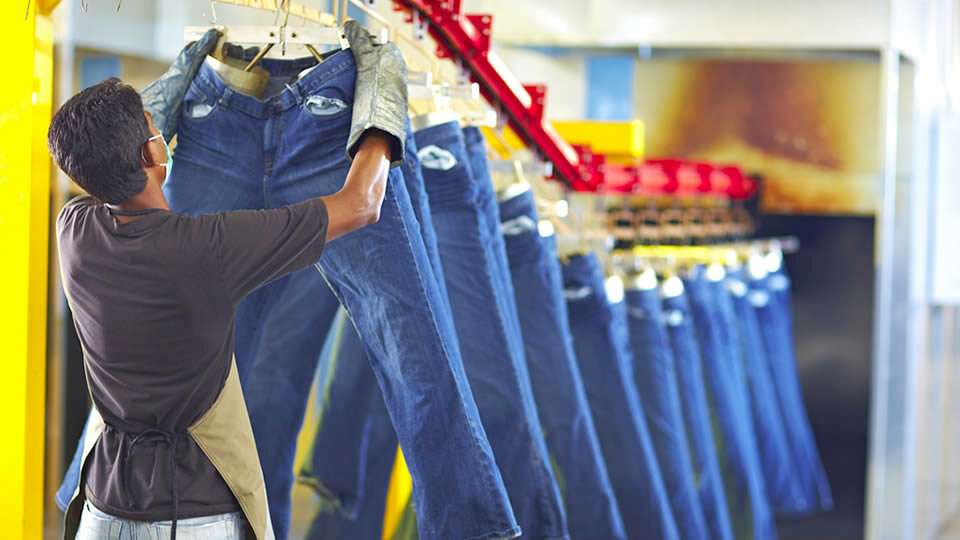
The Bangladesh Garment Manufacturers and Exporters Association (BGMEA) sees India as the biggest export destinations for the country’s apparel sector. The current export volume of readymade garments is $279 million but BGMEA expects it to grow to $1 billion in future. Bangladesh is the second largest RMG exporter globally and sourcing of raw materials from India for its RMG industry provides a win-win situation to both countries.
BGMEA imports most of its cotton, dyes, chemicals and other auxiliary items from India to produce garments. Since India is the second largest producer of Manmade Fibre and Filament based textiles, Bangladesh is a big potential market for it. Around 60 percent of the total world trade in textile and clothing is done “Intra Asia” and is bound to increase in coming years owing to expansion in installed capacities and requirement of fiber to apparel amongst the Asian countries.
Pakistan’s trade deficit for 2016-17 reaches all time high
All Pakistan Textile Mills Association (APTMA), Sindh-Balochistan Region has revealed that the trade deficit for the fiscal year 2017-18 has reached an all-time high at $36 billion, imports are around $60 billion while exports are around $23.5 billion. The Current Account Deficit for the year 2017-18 is also at an all-time high at $18 billion. In addition the government has to pay $38.224 billion and Rs 15.883 trillion against external and domestic public debt respectively including principal amount and interest in the next seven years.
To increase exports therefore, the PTI government led by Imran Khan should address major odds hurting the industry and exports such as high cost of doing business, availability of energy both gas and electricity at an affordable price as compared to our regional competitors, adequate supply of raw cotton, timely payment of sales tax and income tax refunds to avoid liquidity problem, rupee dollar parity, shortage of skilled manpower, lack of institutional support/infrastructure facilities, etc.
Global Lyocell fiber market to touch $1.5bn by 2024
"As per a new research report by the market research and strategy consulting firm, Global Market Insights, Lyocell fiber market will reach over $1.5 billion by 2024. Fashion trends have changed rapidly over the past few years and will continue to do so in the coming years, which will drive industry growth. Modern technology and fibers have been developed which have escalated the use of better quality materials and has driven lyocell fiber marker demand. Brands have started focusing on fibers that can be recycled and reused after the end of a product’s lifecycle."
 As per a new research report by the market research and strategy consulting firm, Global Market Insights, Lyocell fiber market will reach over $1.5 billion by 2024. Fashion trends have changed rapidly over the past few years and will continue to do so in the coming years, which will drive industry growth. Modern technology and fibers have been developed which have escalated the use of better quality materials and has driven lyocell fiber marker demand. Brands have started focusing on fibers that can be recycled and reused after the end of a product’s lifecycle.
Government has taken various initiatives to adopt sustainable fibers. The apparels segment in North America accounted for a major chunk of the product share (over 40 per cent) in 2016. The environment friendly production process of the material also acts as a major driver to boost the lyocell fiber market. There has been a significant impact through social media on the apparel segment, which in turn has positively influenced the industry.
Lyocell fibers emerge as a strong alternative
Petrochemical fibers have been substituted by cellulosic man made fibers, which has spurred product adoption in manufacturing processes. The pressure on synthetic fiber manufacturers has increased due to increasing demand for naturally derived fibers. The product finds its application in various segments such as baby diapers, home textiles, apparels, automotive filters, surgical products and many more. The healthcare and wound care textiles segment is likely to grow at a robust pace, owing to the evolving technologies for recovery of surgical wounds, thus propelling lyocell fiber market.
Despite numerous opportunities, lyocell fiber market will face challenges due to its expensive pricing compared to eco-friendly alternatives. Extra caring of delicate fabrics such as cold rinse, hand wash, and dry-clean can increase maintenance costs as well. Also, the product shrinks up to 3 per cent after the first wash. These factors will act as restraints for lyocell fiber market in coming years.
Cellulose fibers are used for the manufacturing of superior quality textiles which have boosted the lyocell fiber market. The fiber is biodegradable, natural and economical, obtained from natural cellulose found in wood pulp. Also, the fabric has natural breathability and with a superior moisture absorption capacity than cotton. Moreover, due to its moisture management properties, lyocell is anti-bacterial by nature. These properties will open up new growth vistas in new products for lyocell fiber in coming years.
Some major industry players in lyocell fiber market include: Birla Cellulose, Lenzing AG, Baoding Swan Fiber Co, Acegreen Eco-Material Technology, China Populus Textile, Chonbang, Qingdao Textiles Group Fiber Technology, Acelon Chemicals & Fiber Corporation and smartfiber AG.
Riopele order new Monforts Montex stenter installation
Having invested in the largest Monforts Montex stenter installation in Europe three years ago, Portugal-based Riopele has placed a new order for a further machine of similar dimensions to be delivered before the end of 2018. This next ten-chamber Monforts Montex stenter, currently being built, will be operational in 2019, as part of a new €10 million investment plan.
A long-standing partner with Monforts, Riopele has a variety of the German machine builder’s equipment, and dominating the finishing department is the Montex stenter, with 12 chambers and a full installation length of some 70-metres. The line was installed as part of a €14 million investment programme between 2014-16. This stenter combines production efficiency with excellent energy efficiency, ensuring a continuous production flow with a positive impact in terms of delivery time.
The machine boasts of unique features designed according to their specifications. These include special J-boxes at the stenter’s inlet and outlet, for the gentle storage of a high volume of material. The special heat recovery system was also tailored specifically to the company’s needs.
PwC’s seminar recommends eco-friendly apparel factories in Bangladesh
PricewaterhouseCoopers BD and the BGMEA recently organised a seminar on ‘Driving Transformation in Bangladesh’s apparel industry’ in Dhaka. It was inaugurated by Mamum Rashid, Managing Partner, PwC Bangladesh, who made the welcome address. This was the first ever PwC-organised seminar in the port city. Experts at the seminar were positive about achieving the target of $50 billion apparel exports by 2021. They believe there is no significant change in the market share of RMG exports in the EU countries over the last few years and export diversification to non-traditional markets including India and Russia can provide a big opportunity for growth.
Experts at advised the Bangladesh government to establish environment-friendly apparel factories by ensuring 9.0 per cent interest on loans. These loans will be disbursed to entrepreneurs who intend to establish green factories, raise local textile plants with modern machinery, management practices, infrastructure development and enhance port facilities for efficient logistics in this fiscal year.
Transport strike causes losses to the textile industry
The ongoing indefinite transporters strike has resulted in a staggering loss of upto 1,500 crore for the textile industry. The knitwear export has been declining since October 2017, and in the second half of 2017-18, the decline was to the tune of 21 per cent as compared to the corresponding period in 2016-17. In the first quarter of the current financial year also, the export has declined by 21 per cent as compared to the same period in 2017-18.
The strike has affected the entire textile industry hitting its production, fund flow, employment, credibility and reputation. It has forced the units to suspend their production in the absence of no supply of raw material. Many units work on the basis of just-in-time arrival of raw material, and this strike would lead to loss of livelihood for lakhs of casual workers. Even regular workers would have to do with lower wages in the absence of production incentives and overtime.
T-Shirt & Sons orders for second Kornit Vulcan System
T-Shirt & Sons has placed an order for a second high-productivity, low cost-per-print Kornit Vulcan system. The company is a producer of quality printed clothing and accessories for high-profile clients across the globe within retail, art, music and charity markets. It offers dropship production services to garment retailers. It has been one of the largest direct-to-garment printers in Europe over the last few years, with an impressive installation of 16 Kornit Avalanche 1000 systems, spread over two locations in the UK and the Netherlands.
On an average, T-Shirt & Sons produces 9,000 garments per day, with peak time deliveries amounting to 18,000 garments per day. In May 2018, the company invested in its first Kornit Vulcan System to offer high-definition prints with an unparalleled color gamut and exceptionally soft hand feel to its customers. The smooth installation process, quick ramp-up and fast ROI of their new direct-to-garment workhorse, convinced T-Shirt & Sons to invest in a second unit quickly. The second Kornit Vulcan system will be installed in the third quarter of 2018.
French textile machinery makers to display at ITMA Asia
French textile machinery manufacturers are leaders in long fiber spinning, yarn twisting and control, space dyeing, heat setting for carpet yarns, carpet systems, dyeing and finishing, felts and belts for finishing processes, nonwovens, air conditioning of textile plants and recycling processes of textile materials. These technologies will be on display at ITMA Asia + CITME 18.
Among the exhibitors will be Laroche a major player in the textile waste recycling and airlaid nonwoven fields and is now involved in new technologies for turning post-consumer goods into valuable products. NSC Fibre To Yarn has made technological advances to its product range: a new GC40 family drawing machine, the GN8 intersecting drawing machine, an evolved ERA comber.
Superba TVP3 heat-setting line offers the highest pinpoint definition with a saturated steam process. Improvements have been made in Superba’s space-dyeing technology, like bicolor printing, or dyeing polyester yarn.
Fil Control has been developing and producing electronic devices for both machinery manufacturers and textile industrialists. The company stands as one of the market leaders for yarn cutters, which can satisfy all kinds of bespoke demands, yarn sensors, utilizing capacitive, optical, reflective and piezoelectric technology, and quality control devices, such as the tension sensor and the digital length meter. The new tension sensor MYT-T is a load cell sensor devoted to assembling, winding and texturing operations. The sensor delivers an analog signal proportional to yarn tension. This information can be used by the machine controller to keep yarn tension constant or stop the spindle if the tension is out of the normal operation range.
Kering to not sell any more fashion brands
Other than the ones that have already been sold, luxury group Kering does not intend to sell off any more of its smaller fashion brands.The Paris-based luxury conglomerate is currently negotiating with Christopher Kane to sell the eponymous label, in which it had a 51 percent stake, back to the British designer. It is also ending a joint venture with Stella McCartney.
Earlier this year Kering spun off the majority of its stake in German sportswear label Puma to its shareholders, and also sold its skatewear brand Volcom, as it refocuses purely on luxury.
Currently, Kering is focused on building up its business organically, rather than through acquisitions.
Indorama Ventures acquires Avgol Industries
Indorama Ventures (IVL), a global chemical producer, has completed the acquisition of Avgol Industries, a leading global manufacturer of nonwoven hygiene fabrics. The acquisition is well aligned with IVL’s strategy of pursuing accretive growth opportunities in the high value-added hygiene segment.
It offers extensive value creation and synergy within Indorama Ventures, including growth opportunities in adjacent segments through the strong innovation pipeline. The addition of Avgol reinforces IVL’s existing leading position in this segment. IVL is now able to offer a full suite of personal hygiene-oriented nonwoven products that best serve customer needs.
Avgol offers a comprehensive range of nonwoven fabrics and has broad expertise in developing and manufacturing customised solutions to address consumer requirements. It has six production sites globally in Israel, the US, Russia, China and India, with a combined production capacity of 203,000 tonnes/annum, and has around 900 employees worldwide.
More...
Geralyn R Breig appointed to Hanes Brands’ board of directors
HanesBrands, a leading global marketer of everyday basic apparel, has appointed consumer products industry veteran Geralyn R. Breig to the company’s Board of Directors. With an accomplished 35-year CPG career in executive, marketing and omnichannel business development roles, Brieg is the founder and chief executive officer of Anytown USA, an e-commerce marketplace that sells certified American-made consumer products.
Prior to launching AnytownUSA, Breig held leadership positions with C & J Clark as President, Clarks, Americas; President of Avon North America and General Manager of Avon USA; President of Godiva Chocolatier International among others. She has also held marketing and brand management positions with Kraft Foods., General Foods Corporation and Procter & Gamble.
Breig also serves on the board of directors of 1-800-Flowers.com., and Welch Foods. She has a BSc degree in Economics from the University of Pennsylvania.
GTTES 2019 to tap opportunities in global textile industry
India ITME Society will organise GTTES 2019, an exclusive show to display the strengths and opportunities in global textile industry, with special focus on industry segments from January 18-20, 2019 in Mumbai. The ITME Society Team organized a series of successful road shows in Chennai, Coimbatore, Tirupur, Salem and Erode, the five best known textile belts of South India. The aim of the roadshow was to provide a platform for investment and brand promotion and for the industry leaders to interact with the SMEs providing new business and extensive market opportunities in this flourishing industry.
GTTES aims to assimilate and disseminate more knowledge and power for industry through the futuristic technology topics at the conference sessions by Society of Dyers & Colorists International India on ‘Educating the Technology Innovations in Textile Coloration’ & ‘International Conference on Nonwoven Technical Textiles’ by Indian Technical Textiles Association.
GTTES 2019 has reiterated its position not only in the South, but also amongst India’s regional Textile hubs Bhiwandi, Ichalkaranji, Faridabad, Vapi, Surat, Umargaon, Panipat, etc as a key sourcing platform for the textile business. The mega event is a growth catalyst and optimum business platform with more business leads new customers offering the best sourcing solution to India’s surging demand for textile industry in India and across the globe.
Burberry faces flak for burning inventory
Burberry has come under fire for burning unsold clothing and beauty products worth millions in order to protect its brand and maintain exclusivity. Many on social media have criticized the company for wastefully destroying clothing instead of putting it on sale or donating it to charitable causes. The British brand was advised not to waste perfectly good clothes.
The fashion industry is in the center of an environmental crisis and is said to cause ten per cent of global carbon emissions. However, Burberry says the energy that was released from burning the clothing was captured, making it environmentally friendly. The brand says it has careful processes in place to minimize the amount of excess stock it produces and that on occasions, when disposal of products is necessary, it is done in a responsible manner and that Burberry continues to seek ways to reduce and revalue waste.
Designer Riccardo Tisci was recently appointed the new chief creative officer of the brand, and will debut his first runway collection for Burberry during September's London Fashion Week. Over the past 16 years, Burberry has enjoyed strong growth and evolved into one of the most valuable luxury brands in the world.
Pure London attracts an ensemble of brands and buyers
Pure London was held from July 22 to 24. The event welcomed thousands of buyers and influencers, new sectors and new brands, inspiring speakers and leading change-makers mulling the future and how to make it sustainable, circular and inclusive top of the agenda. Topics included diversity, body shape, ethics and environmental issues. One was on how brands can be more representative of society and the role they play in changing people’s perspectives on body image and the beauty standard.
A huge increase in brands with an ethical standpoint and environmentally-made collections exhibited this season as part of the new Pure Conscious section, demonstrating the pace of growth and interest in this sector as it drives to become the norm. Future trends by WGSN were brought to life on the catwalk with a special appearance from Graduate Fashion Week winners and graduates. Pure London invited everyone to adopt one of five simple pledges: Get Dirty, Turn It Down, Pass It On, Ethicool, and Actually I Can to advance the UN’s Global Goal 12 for responsible consumption and production.
Pure London is the UK’s leading trade fashion buying event, representing women’s wear, men’s wear, footwear, accessories and young fashion. The show offers buyers from department stores, etailers and mail order the opportunity to discover collections launching for the season ahead.