APTMA condemns yarn shortage propaganda
Asif Inam, Chairman, APTMA-Sindh-Balochistan Region has strongly condemned mala-fide propaganda about shortage and unavailability of yarn despite imports being allowed from all over the world except India. He said, yarn is currently being imported from 59 countries and the customs data has been fabricated to magnify a slight decline by comparing exports of 28 days in February 2021 to 29 days in February 2020.
As per Inam, the downstream industry is creating a hue and cry over unavailability of cotton yarn even though they are provided all facilities including subsidized Export Refinance Facility, Duty Local Taxes and Levies (DLTL), etc. Moreover they are also allowed to import duty free cotton yarn under DTRE, Export Oriented and Manufacturing Bond Schemes if they find the local yarn expensive. On one hand, the downstream industry is pushing the government to introduce long term policies, and on the other, it is urging it to rescue them from the forward selling of foreign exchange, non-selling of foreign exchange and higher commodity prices all over the world. Inam urged the government not to allow import of cotton yarn, from India until trade relations between the two countries are normalized.
Intertextile Shanghai Apparel Fabrics Spring 2021 postponed to March 17
Intertextile Shanghai Apparel Fabrics Spring 2021 edition has been postponed and will be held from March 17 to 19 2021 at the National Exhibition and Convention Center. The fair has attracted a diverse line-up of global companies to join in-person, and seize business opportunities in China’s recovering textile market. International exhibitors will satisfy their visitors’ sourcing needs with quality products and extensive offerings.
Buyers who cannot attend the fair in person can access its online business matching platform, Connect Plus two weeks before and four weeks after the fair. Users can search for products from over 4,500 global exhibitors through AI-driven matching recommendations. They can chat via instant messaging and video call functions, and schedule online or onsite meetings.
Online exhibitors can also join the fair’s Hybrid Showcase to display their products for onsite buyers to touch and feel. Located in hall 5.1, SalonEurope zone at the fair will present the finest European fabrics to cater to the increasing market demand for high quality solutions. Swiss exhibitor Alumo will highlight the rising trend for luxurious casual looks with its fine Swiss cotton and leading shirting fabrics. First-time Spanish exhibitor Sidogras will offer finest fabrics for shirting, including the Continuity collection with permanent stock, the Season collection for responding to fast changing fashion trends, as well as its Bottom Up line for pants, jackets, dresses and drapery.
The Verve for Design zone will feature studios from Argentina, Denmark, Italy, the Netherlands and the UK who will showcase their innovative designs. Participating exhibitors in this zone include Fairbairn & Wolf Studio and Anteprima Designs.
ITM 2021 postpone due to COVID-19
Originally planned from June 22-26, 2021, the ITM International Textile Machinery Exhibition has been postponed to June 14-18, 2022 due to the ongoing COVID-19 pandemic. ITM 2022 will be held in partnership with Tüyap Tüm Fuarcilik INC, Teknik Fuarcilik INC and Temsad. It will be organized at the Istanbul Tuyap Fair and Congress Center a week before Techtextil and Texprocess, to be held from June 21-24, 2022 in Frankfurt.
The organizers aim to prioritize the security of exhibitors and visitors and hope that participants will support its decision. The latest ITM Exhibition hosted 1,200 exhibitors from 64 countries and 60,000 visitors from 94 countries. It is one the largest exhibitions held in Turkey and the adjoining region with over 1,000 textile technology producers presenting their latest models in operation.
Gap to sell China business
Apparel retailer Gap Inc plans to sell its China business. Bloomberg reports suggest, the parent company of Old Navy has appointed an advisor to hive off China business and is exploring various options. Betting on rising incomes to boost sales, Gap forayed into the Chinese market about a decade ago. However, last year, the retailer shifted focus to North America and stopped selling Old Navy apparel in China.
Its latest regulatory filing says, Gap‘s Asian market accounts for about 5 per cent of its overall net sales. The company was founded in 1969 to provide consumers with a well-fitted pair of jeans. Since then, it has grown into seven brands, with a global ambition to champion equality, inclusivity and sustainability.
The company expects net sales in fiscal year 2021 to reflect mid- to high-teens growth. It expects to deliver operating margin of approximately 5 per cent in 2021. The outlook for 2021 is consistent with the company’s Power Plan 2023 objective of achieving at least a 10 per cent operating margin by the end of 2023.
H&M halts new orders in Myanmar
Shocked by the use of deadly force against protesters in the country, H&M has stopped placing orders in the Myanmar. The brand has been facing practical difficulties and an unpredictable situation in the country, which is limiting its ability to continue operating there. It has around 45 direct suppliers in Myanmar and has sourced in the country for seven years.
According to the United Nations, police and military killed over 50 people to quell daily demonstrations and strikes against a February 1 military coup. Two protesters were killed by gunshot wounds to the head while shops, factories and banks were closed in the main city Yangon as part of the uprising against the country's military rulers.
Myanmar's garment industry is smaller than neighboring Bangladesh, China and Thailand. However, its 600 factories are significant employers, providing jobs for around 450,000 workers in 2020, according to the Myanmar Garment Manufacturers Association.
Vietnam’s textile and apparel makers to focus on sportswear, yarn
The Vietnamese textile and apparel industry plans to focus on sportswear and yarn in future as demand for masks and PPE is likely to shrink rapidly, says Le Tien Troung, General Director, Viet Nam National Textile and Garment Group. Many textile and footwear enterprises plan to find new markets post COVID-19. For such companies, sportswear is the most lucrative avenue as awareness of physical fitness grew during the pandemic. Euromonitor International estimates demand for sportswear to have declined by just 8 per cent in 2020, the lowest in an industry which saw an overall decline of 16 per cent.
The compounded annual growth rate for the sportswear market in the last five years was 6.5 per cent, 1.5 times the industry average, and it is expected to be worth $479 billion globally by 2025. One of the most successful Vietnamese businesses in 2020, The Thanh Cong Textile Garment Investment Trading JSC has stopped taking orders for medical protective gear and antibacterial masks and is focusing on traditional products such as T-shirts and sportswear.
Many businesses have bagged orders until April end, mainly for sportswear, says Viet Nam Textile and Apparel Association. The Ky Yarn Joint Stock Company also plans focus on yarn with high quality and competitive, said Dang Trieu Hao, General Director.
Tailored Brands closes $75 billion investment
Three months after exiting bankruptcy, Tailored Brands has closed a $75 million investment. The specialty menswear retailer received financing including $50 million of mandatorily convertible notes and $25 million in additional senior secured debt from a group of existing shareholders and lenders.
The transaction will provide additional liquidity for the company to meet the evolving needs of customers following the pandemic. Tailored Brands has been experiencing solid momentum across all brands and aims to enhance its omni-channel experience by launching Men’s Wearhouse Next-Gen stores, and evolving its merchandise assortment.
The Texas-based retailer is struggling with a shift to online shopping before the pandemic, cutting off its staff by 20 percent and shutting of 500 stores. The parent company of Men’s Wearhouse, Jos.A Bank and Moores men’s stores in the US and Canada filed for Chapter 11 bankruptcy protection in August, and emerged from it in November.
New retail model to add 12 million new jobs
The emergence of the new online-offline retail model is expected to add 12 million new jobs besides boosting exports to $125 million, says a new Nasscom-Technopak report. The report titled, 'Retail 4.0: India story - Unlocking Value through Online and Offline Collaborations', state the Indian retail sector has successfully navigated the COVID-19 crisis by accelerating digital adoption and shifting to online operations. The market is likely to reach up-to $1.5 trillion by financial year 2030 and add more than 25 million new jobs by financial year 2030, the report said.
Of this, the 'Offline+Online' model will account for 50 per cent of total retail employment addition - almost 12 million, enable $125 billion worth of exports and account for 37 per cent of total retail tax contribution amounting to approximately $8 billion incremental GST contribution by 2030, it added.
The increasing use of data-driven advanced analytics, and prediction technology to tailor customer-centric product/service offerings and digitization of oint-of-sale (PoS), in-store operations, and inventory tracking will create enormous potential in terms of job growth, exports, and an inclusive retail ecosystem with great participation of MSMEs (Micro, Small and Medium Enterprises), Amitabh Kant, CEO, Niti Aayog added.
The government is in process of formulating the National Retail Trade Policy which will not only create a conducive environment for retail trade but also simplify its growth policies, he added. Debjani Ghosh, President, Nasscom said, to enable new retail models to bring incremental economic contribution, job growth, and exports, a greater collaboration among retail stakeholders, policymakers, and supporting sectors for tech-awareness is needed.
M&S launches online stores in 46 global markets
Reviving its global ambitions post pandemic, M&S is launching online stores in 46 new international markets. The brand plans to launch stores in countries like Nepal, Bolivia and Uzbekistan to boost its Clothing & Home operations. The clothing retailer’s international sales rose 75 per cent in the first half of the year due to the pandemic. The company aims to explore underlying demand in these markets without making any significant upfront investment and fulfilling orders via its existing distribution network.
While M&S expanded outside its core UK market but has also closed stores as sales failed to meet expectations. Operating profit in the international division has fallen to a little over £110 million at the last count, although its revenue increased to around £1 billion.
As per Steve Rowe, CEO, the company has been transforming its international ops to a franchise and joint-venture model and is also localizing ranges and developing online.
Chic Shanghai 2021 postponed to March 17
Due to the ongoing pandemic, CHIC Shanghai 2021 has been postponed to March 17-19, 2021. The event will be held at the National Exhibition & Convention Center parallel to Intertextile Shanghai, Yarn Expo and PH Value. Around 95,000 trade visitors including relevant online sales platforms are expected to attend the event.
Focusing on "CHIC Garden" theme, the fair will be transformed into an inspiring garden paradise with the help of garden design experts. The fair will include 10 shows namely: CHIC Men´s, CHIC Women´s, CHIC Impulses (designer), CHIC-YOUNG BLOOD (streetwear), CHIC KIDZ (kidswear), CHIC Accessories, Shoes and Bags, CHIC Tailoring, CHIC Winter´s (Fur & Leatherwear, CHIC Sourcing – Superior Factory/Denim, CHIC Sourcing – Future Link (innovations for fashion and retail), etc.
To be co-organized with IMG, the CHIC Wonderland will display special collections of sneakers that were designed in collaboration with contemporary artists. A special professional forum for the shoes industry will be held by CHIC and FN (Footwear News) and give important industry insights into important hot topics such as design, sports, entertainments, and sustainability. Furthermore, CHIC X FNAA awards will be held on site.
International participation at the fair will be reduced to companies that can participate on-site with local partners due to their already established infrastructure, such as Calpierre, Duedi, Rossonapoli from Italy in CHIC Tailoring and, LangerChen from Germany in CHIC Women´s, Mannylonq from Korea in CHIC Young Blood etc.
CHIC will connect visitors and exhibitors through the CHIC APP. Representatives of all relevant distribution channels from multi brand shops to boutiques, ecommerce platforms, department stores: Wanda Plaza, Wangfujing Department Stores, LiQun Shopping Center, JD.com, amazon, TMall, you .163.com, xiaomi.com, etc will participate in the event. CHIC events CHIC TALK and CHIC SHOWS will also take place both offline and online. All seminars, workshops and shows are organized as hybrid events. The designers' show "Reach & Touch" will present well-known brands like Hua Mu Shen, Jie Mo Yuan Chuang, Si Chou Hua Yuan, Yvonne Choi, Dumpty as well as QZ SHEN, the young streetwear label from Beijing. In addition, the men's fashion label HLA and the Hong Trade Development Council will be present at the CHIC shows CHIC schedule.
More...
Pandemic fuels launch of new categories: Glossy and Modern Retail study
The pandemic compelled brands and retailers to launch many new categories, says a survey by Glossy and Modern Retail. The survey says 98 brand and retailer employees, 57.3 per cent of respondents said their employers launched new categories over the last year. Around 49.4 per cent respondents said their employers upgraded to an e-commerce platform while 27 per cent reported employers abandoning retail leases or locations and 19.1 per cent said their employers on-boarded a new 3 PL or logistic provider.
In the last 12 months, retailers launched many new categories in fashion and beauty segment such as Solid & Striped launched activewear and cosmetics brand Morphe forayed into skincare. Kohl’s launched an activewear line, which it expects will contribute 30 per cent to the company’s revenue in the next few years. DTC players like La Ligne and large textile manufacturers like Chargeurs forayed into facemasks.
Growth in these categories is likely get a boost with an increase in e-commerce and advertising spend over the next six months, as 67.3 per cent of them plan to increase investments in e-commerce while 61.2 per cent plan to boost advertising spends.
BGAPMEA urges for a reduction in source tax and corporate tax
Bangladesh Garment Accessories and Packaging Manufacturers and Exporters Association (BGAPMEA), a platform of backward linkage industries crucial for the apparel industry, urged the government to reduce source tax to 25 per cent and corporate tax to 12 per cent in next fiscal. Currently, apparel accessories makers in the country have to pay 0.5 per cent source tax and 32.5 per cent corporate tax.
As per Abdul Kader Khan, President, BGAPMEA, the pandemic has severely impacted the country's apparel sector and as a backward linkage industry, the accessories industry has also suffered. The industry suffers from fund scarcity in running factories. Moreover, it did not get the desired funds from the government's stimulus package offered for the apparel sector to pay workers' wages, Khan said.
Since the last national budget, garment exporters enjoy 12 per cent corporate tax, which is 10 per cent for apparel manufacturers with certified green factories. But the accessories exporters have to pay 32.5 per cent corporate tax. As per BGAPMEA data, there are more than 1,700 small and medium accessories and packaging makers, who are capable of providing 95 per cent of the demand for accessories products to the country’s $28 billion apparel industry and other export-oriented packing industries, including frozen foods and pharmaceuticals.
Cotton trade suffers as India-Pakistan political standoff continues
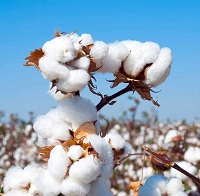 The political standoff between India and Pakistan is causing India a loss of around 15 lakh bales of cotton exports. India discontinued the Most Favored Nation status granted to Pakistan after the Pulwama attack in 2019, resulting in 11 per cent duty being imposed on Pakistan’s cotton imports from India.
Fall in Indian cotton prices to benefit Pakistan
Currently, cotton prices in Pakistan are going through the roof. As per Hindu Business Line, raw cotton (kapas) costs Rs 5,560 per maund in Pakistan, the highest in 11 years. Meanwhile production for the current marketing year (August 2020-July 2021) has declined by 24 per cent to 60.19 lakh bales (of 170 kg), says an USDA report. Farmers have reduced cotton cultivation by 10 per cent, while the crop has also been hit by a heavy monsoon and severe pest infestation.
Global cotton prices have also increased sharply since June last year to Rs 50,050 per candy of 356 kg now. Since the beginning of this year, cotton prices have increased by over 11 per cent in the global market. On the other hand, prices of Shankar-6 cotton, India’s major export crop have fallen below Rs 47,000 a candy. Pakistan can benefit from this fall by acquiring cotton at competitive prices and saving freight charges by transporting the required cotton by trucks or shipping it from one of the western ports.
However, February 2019 Pulwama blast has halted trade between India and Pakistan. In retaliation to India withdrawing its Most Favored Nation status, Pakistan discontinued imports from India. PK Agarwal, Chairman and Managing Director Cotton Corporation of India (CCI) has urged Pakistan to withdraw this duty on cotton.
Ample stocks available for exports
CCI currently has 65 lakh bales of cotton stock with it. It is also well-placed to meet export demand as it carries record cotton stocks from last year. Cotton Association of India (CAI) also has carryover stocks of 125 lakh bales. Hence, ample cotton is available with India for exports. However, no one from the Pakistan government or trade has yet approached it for supplying cotton to Pakistan, said Atul Ganatra, President, CAI.
Besides cotton, India can also supply cotton yarn to Pakistan. Its garment manufacturers have been urging the government to allow import of cotton yarn from India. Value-added textile manufacturers have also demanded permission to import cotton yarn from India as the currently available cotton yarn is not of good quality and is expensive. However, the spinning mills have opposed this move as they believe it would prove disastrous for the domestic spinning sector.
Sleepwear to be more feminine with matching accessories in future
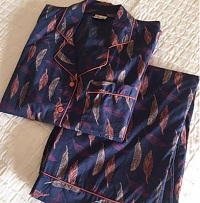 Year 2020 was defined by growing demand for comfort fashion. Data from Edited estimates sleepwear sellouts to have increased by 46 per cent Y-o-Y in Q4 FY2020. The latest Technavio report expects demand for sleep and loungewear to continue growing at 9 per cent CAGR by 2024 globally.
Studies suggest consumers preferred sleepwear made from modal fabrics by mid and mature labels in soft shades with grey tones. Slogans, plaids and Disney licensing were the most popular prints especially in matching mini-me sets. Gowns with fuzzy textures in pink and grey tones also dominated demand while the celestial patterns were seen across various retailers’ Instagram feeds.
Brands line up new collections
Fast fashion retailer Zara launched its new spring collection featuring a blue striped PJ set and 100 per cent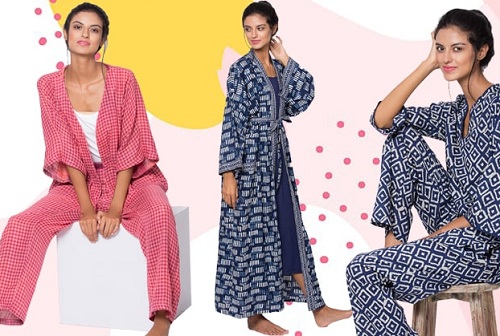 cotton separates, while RIXO’s debut collection comprised pajamas made from silk cotton in the label’s signature playful prints. Fitness brand Athleta launched a sleepwear range comprising pajamas, sleep bras and rompers while cult label Ganni partnered with luxury retailer Browns on an exclusive pajama set complete with ruffle sleeves and an embroidered logo. Many fast-fashion brands increased their sleepwear offerings during the year with The Style’s range growing notably from just 0.2 per cent to 5.4 per cent.
Fabric and design trends
Sleepwear in satin gained popularity as it offered the comfort of silk at an affordable price. Popular brands Nasty Gal and I Saw It Fist launched multi-piece satin sets with matching sleep masks, scrunchies and travel bags. For fall 2020, retailers used ribbing to update categories such as basics and knitwear. The trend continued with nightwear during spring 2021. Pink was the most popular color during the year with pink arrivals outpacing neutrals.
Newly launched at Lulu’s and Boux Avenue, bralette sets are perfect for occasions like the Valentine’s Day. Their lace trims add a touch of femininity to sleepwear. Boohoo uses the eyelash lace while others opt for elastane blends. One of the popular retailers of eco-friendly sleepwear, Esprit incorporates 100 per cent organic cotton and LENZING™ ECOVERO™ into its garments.
John Lewis & Partners offers online consultation on topics such as choosing the right mattress, bedding, technology and general sleep wellness while the newly launched app Wave offers real-time sleep sessions every 30 minutes.
Evoking childhood memories with styling cues
Sleepwear trends emerging from most recent collections include pastels, candy stripes, oversized button-up sets and vintage-inspired nightdresses. Silk and satin have emerged as the most important fabrics as is evident from the recent Pinterest searches and new season arrivals. In future sleepwear is likely to incorporate feminine details and colors with matching headscarves, sleep masks or slippers. To tap into this trend, brands need to emphasize on the fit and feel of their garments by focusing on the fabric quality and technology. They also need to evoke customers’ childhood memories by using styling cues like pairing sleepwear with high heels and statement jewelry.