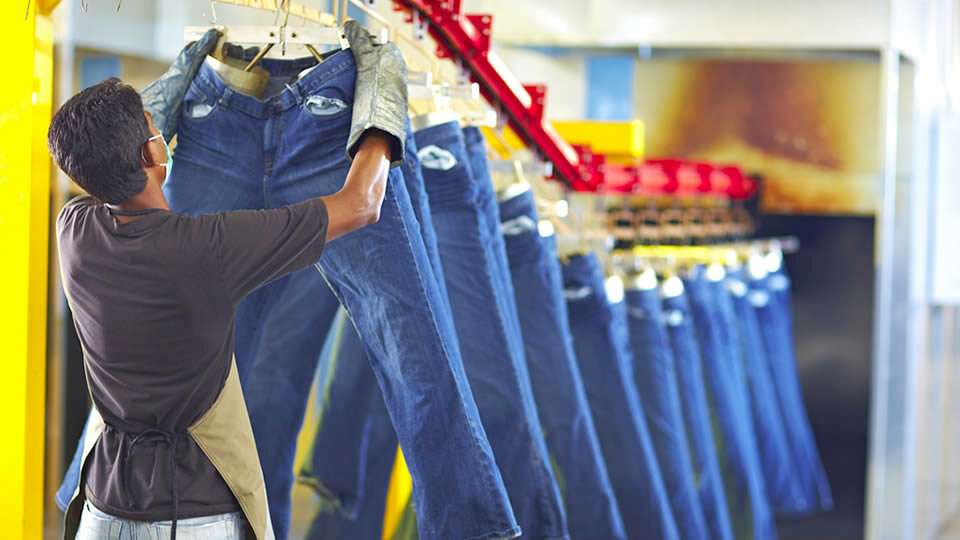
Denim is getting to be one part rebellious teen and one part sensible dad. Wacky denim trend is not about to implode anytime soon, feel Denim Dudes founder Amy Leverton and contributor Sam Trotman. New factors like the emerging weed industry in the United States and nostalgia for Y2K are adding their own unique flavor to the table.
Sharing their Spring/Summer 2020 vision at Kingpins Amsterdam the duo said denim is oversized and layered with technical fabrics and silhouettes from the athleisure world. Practical zips and pockets, coatings and super-light-weight fabrics like nylon are among the key ingredients. Camouflage and ikat prints offer an outdoor feel. Brands can recreate these dye effects through laser printing for a more sustainable solution. The story’s color palette—soft indigos, natural indigos and natural vegetable shades—are well-suited for brands’ eco stories as well.
The overall earthy feel is enhanced with up cycled fabric remnants, Baja surfaces, textured weaves, patchwork leather, homespun quilting and deadstock fabrics. Frayed and undone finishes give a lived-in feel to new pieces. Based on last season’s Millennium Blues story, Leverton explained Ironic Oughties as the more ironic and cheesy offshoot that’s being led by youth-driven brands.
The story’s holistic side is expressed through the use of natural fibers and yarns, slow-made fashion and boutique dressing, while upsized silhouettes, refined fabrics, high-end finishing, soft layers and unstructured looks encapsulate the theme’s utility-meets-lounge styling. Draping, off-the-shoulder and conceptual cutouts elevate denim. Workwear details and A-line silhouettes add structure. Oversized twills, linen, summer blanket materials with a handloom look, feminine quilting and patchwork jacquard add texture and visual interest.

- 1
- 2
- 3
- 4
- 5
- 6
- 7
- 8
- 9
- 10
Red Sea crisis reshapes textile trade routes, challenges India’s export margins,…
Global apparel trade is now in a new operational phase where geopolitical stability and logistics reliability are as important as... Read more
EU’s textile waste rules enter enforcement phase, raising alarms across fashion …
Europe’s apparel and textile industry is approaching one of its most significant regulatory transitions in decades. As the European Union... Read more
Corporate fashion adopts reverse logistics to unlock the $367 bn resale market
Global fashion retailers are rapidly changing their business models around resale, repair, and textile recovery as the secondhand apparel market... Read more
Tariff Shock 2026: Forced-labor enforcement is repricing global fashion trade
Washington’s latest trade intervention signals a break in the global apparel sourcing patterns. The Office of the United States Trade... Read more
Circular Samvaad 2.0 aims to transform Indian textiles from linear waste to glob…
On the occasion of World Environment Day, industry leaders, policymakers, and international experts gathered in the capital yesterday for Circular... Read more
From Sentiment to Sustainability: How Mumbai’s ‘Mega Post Textile Waste Initiat…
Walk into almost any Indian household, and you will find wardrobes harboring clothes that haven’t been worn in years. They... Read more
CMAI launches new initiative to combat waste and formalize textile recovery acro…
In a landmark move to address the mounting crisis of post-consumer textile waste, the Clothing Manufacturers Association of India (CMAI)... Read more
Trends-Fabrics (Denim-Kidswear) trends for Spring/Summer 2026-27 by Drapers
For the Spring/Summer 2026-27 season, the kidswear denim market is defined by a shift toward lightweight comfort, playful aesthetics, and... Read more
Cost spiral across fibers, chemicals and logistics squeezes India’s apparel expo…
India’s textile manufacturing sector has entered one of its most financially strained periods in recent years as increasing fiber, yarn,... Read more
How India’s textile recycling network is becoming a global ESG blueprint
India’s textile industry is mounting an aggressive defence against growing international criticism that developing economies are becoming dumping grounds for... Read more