In a year marked by tariff escalations, geopolitical brinkmanship and a recalibration of global trade flows, the international cotton market showed an unexpected performance: stability. While the broader commodities complex oscillated sharply amid fragile diplomatic signals between the US and China cotton prices largely held within a narrow trading corridor throughout 2025.
At the annual meeting of the Discover Natural Fibres Initiative (DNFI) in Frankfurt in January 2026, analysts described the year as a revealing stress test for the fibre economy. According to Jon Devine, Senior Economist at Cotton Incorporated, the global cotton sector endured what he termed a “supply chain squeeze”, a complex mix of tariff shocks, increased supply and downstream margin decline that collectively defined the industry’s operating environment.
The result was a paradox: a commodity facing intense geopolitical disruption yet demonstrating remarkable price discipline.
Tariff pressure redraws trade
The defining storyline of 2025 was the abrupt return of aggressive tariff policies between the US and China. What began as targeted trade measures quickly escalated into a sequence of retaliatory actions that reshaped cotton trade flows and injected uncertainty into procurement decisions across the textile supply chain.
The first signals emerged early in the year when the US introduced a new set of so-called ‘fentanyl tariffs’ on Chinese imports.
Implemented on February 1 and reinforced again on March 3, the measures added two successive 10-percentage-point tariff increases.
By early April, tensions reached a peak. On April 2, Washington announced a broader framework of reciprocal tariffs aimed at balancing trade deficits. Beijing responded almost immediately with matching measures. Within a week, the escalation intensified: between April 8 and April 9, US tariffs on Chinese goods were increased by an additional 125 percentage points, layered on top of earlier hikes. China retaliated with its own 125-point increase on US cotton imports.
For a brief period, the tariff standoff appeared capable of freezing cotton trade between the two economies entirely. Yet the confrontation proved short-lived. By May 12, negotiations had already begun easing the measures, and by late October a sequence of trade arrangements with Asian partners resulted in halving of US fentanyl-related tariffs. By the week of October 26, Chinese tariffs on US cotton had effectively returned to a 10-percentage-point level.
For commodity traders and textile mills, the episode underscored how quickly policy decisions could alter the economics of fibre sourcing.
Surprisingly calm futures market
Despite the headlines surrounding tariff announcements, cotton futures markets displayed an unusual level of stability during 2025. Analysts at Cotton Incorporated said, prices largely remained confined to a tight band between 63 and 68 cents per pound throughout the year. To appreciate the significance of this stability, it is useful to examine cotton’s longer-term volatility.
Table: Cotton price range
|
Period |
Price range (NY/ICE futures) |
Context & Trend |
|
Last Decade (2014–2024) |
50-150 cents/lb |
Historical Range: Broad volatility driven by cycles of Chinese demand and U.S. weather events. |
|
Spring 2022 |
155 cents/lb |
Post-Pandemic Spike: Multi-decade highs caused by West Texas droughts, fertilizer shortages, and a surge in consumer demand. |
|
Late Feb 2024 |
100 cents/lb |
Pre-2025 Peak: Brief rally led by record Chinese imports (15 million bales) and tightening supply forecasts. |
|
2025 Range |
61-68 cents/lb |
Tariff Turmoil: Prices dropped significantly due to high global production (Brazil/India) and 50% U.S. tariffs on major importers. |
|
Post-2025 Outlook |
64-66 cents/lb |
New Equilibrium: Return to price stability as global supply (121M bales) slightly outpaces cooling mill consumption. |
The table illustrates the contrast between the volatility seen in earlier years and the restrained movement observed during 2025. Cotton prices reached an extraordinary high of 150 cents per pound in spring 2022 as supply chain disruptions and pandemic-era demand spikes converged. By early 2024, futures had already moderated to roughly 100 cents per pound.
Against that backdrop, the narrow trading band of 63 to 68 cents per pound in 2025 represents a significant normalization of the market. According to Devine, the return to the mid-60-cent range reflects the gradual unwinding of pandemic-era distortions in textile demand and global logistics. In essence, cotton prices appear to have settled back into what analysts describe as a structural equilibrium closer to long-term averages rather than the extraordinary peaks witnessed earlier in the decade.
Record exportable supply anchors the market
A critical factor behind the market’s price stability was an increase in global cotton availability. Exportable supply from major producing countries reached unprecedented levels during the 2025/26 season, totalling approximately 7.8 million tonnes.
Large harvests from exporters such as Brazil and the US created a substantial buffer against geopolitical shocks. Even as tariff announcements introduced uncertainty into bilateral trade routes, the sheer abundance of fibre in the global market ensured that buyers had alternative sourcing options.
This supply increase effectively imposed a natural ceiling on prices. Whenever futures began to drift upward, traders were reminded that large volumes of cotton remained available from multiple exporting countries. As a result, speculative price rallies struggled to gain traction. For textile mills operating in Asia and Europe, this surplus provided a welcome cushion against procurement risk, even as diplomatic tensions continued to dominate headlines.
China’s import strategy goes through a reset
While tariffs dominated the public narrative, an equally significant development was unfolding quietly in the background: China’s cotton import appetite was already shrinking. Data compiled by the United States Department of Agriculture (USDA) and Cotton Incorporated show that Chinese cotton imports saw a swing within just two seasons.
Table: Cotton imports (2020-26)
|
Marketing Year |
Imports (mn bales) |
Imports (mn tonnes approx.) |
|
2020/21 |
13 |
2.21 |
|
2021/22 |
2.8 |
0.48 |
|
2022/23 |
1.7 |
0.29 |
|
2023/24 |
15.0 (Peak) |
3.3 |
|
2024/25 |
5.0 (Forecast) |
1.1 |
|
2025/26 |
5.0 (Forecast) |
1.1 |
The table reveals a striking reversal. After declining steadily between 2020 and 2023, Chinese imports increased during the 2023/24 marketing year, reaching approximately 15 million bales. That figure represented a Covid-era peak, as Chinese textile mills rushed to rebuild inventories following pandemic disruptions.
Yet the rise proved temporary. By the 2024/25 season, imports fell to roughly 5 million bales, a decline of nearly two-thirds. Notably, this drop occurred even before the most severe tariff escalations of 2025 were implemented.
Analysts believe the shift reflects: stronger domestic cotton production, strategic reserve management by Chinese authorities, and slower growth in textile exports. In other words, China’s reduced import demand was already embedded in the market before geopolitical tensions intensified. This shift altered global trade flows, forcing exporters to diversify their customer base beyond the world’s largest textile manufacturing hub.
The supply chain squeeze
While cotton prices remained stable, the economics of textile manufacturing became increasingly strained. Devine sats, the industry is now confronting a “Supply Chain Squeeze.” The concept refers to the widening gap between rising production costs and stagnant retail pricing for cotton goods. Across major manufacturing hubs in Asia, energy prices, labor expenses and compliance costs linked to sustainability regulations have all increased significantly over the past two years.
At the same time, apparel brands and retailers have struggled to raise prices in consumer markets that remain highly price-sensitive. With inflation weighing on household budgets across North America and Europe, many brands have prioritized maintaining competitive price points rather than passing costs on to shoppers.
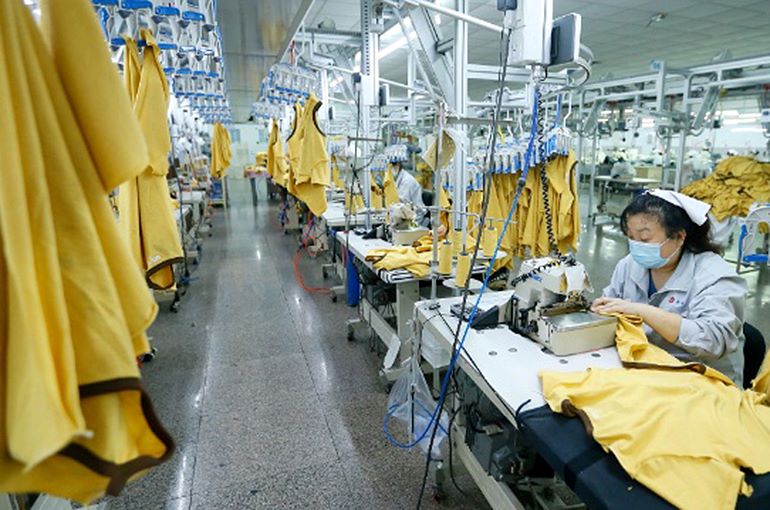
The result is a margin decline that reverberates throughout the supply chain. Textile mills, yarn producers and garment manufacturers are absorbing a growing portion of these cost increases, squeezing profits at the very stages of the industry responsible for transforming raw cotton into finished apparel.
In effect, the cotton market may appear calm on the surface, but deeper within the value chain financial pressure is steadily intensifying.
Legal and policy uncertainty looms over 2026
Looking ahead, new policy developments could once again reshape market sentiment. On November 5, 2025, oral arguments were heard before the US Supreme Court on the legal foundation for the tariff measures imposed under the International Emergency Economic Powers Act (IEEPA). The case centers on whether the executive branch possesses the authority to deploy emergency economic powers to justify broad tariff regimes unrelated to traditional national security threats. A ruling in the case could influence the durability of the trade measures introduced in 2025. For the cotton industry, the implications are substantial. Any judicial decision altering the legitimacy of these tariffs could quickly shift trade flows and price expectations.
A market stabilized by abundance
As the global cotton industry enters 2026, the immediate turbulence of last year’s tariff battles appears to be subsiding. Prices have stabilized near pre-pandemic levels, global supply remains abundant, and traders have largely adapted to the shifting trade environment.
Yet beneath this apparent equilibrium lies a more complex challenge. Record harvests from major exporters such as Brazil and the US are keeping fibre prices low, while rising regulatory and production costs are steadily eroding margins across the textile manufacturing sector.
In that sense, the cotton market’s resilience during 2025 may prove to be only the opening chapter in a deeper structural adjustment. The defining issue for the year ahead will not simply be geopolitics, but whether the industry can reconcile the growing demands of sustainability, cost inflation and consumer price resistance within a single economic framework. For cotton producers and textile manufacturers alike, the squeeze has only just begun.