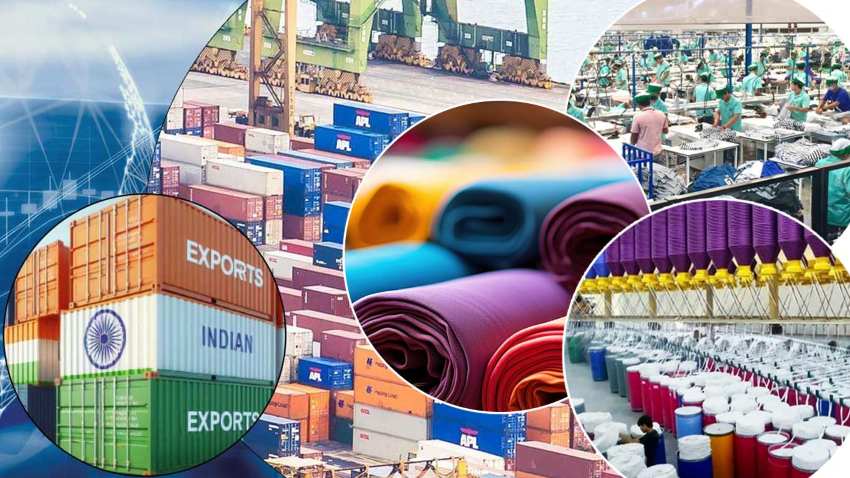
India’s new free trade agreements (FTA) are expected to redraw competition for the textile and apparel industry, opening wider preferential access to major consumer markets while exposing parts of the domestic value chain to greater import pressure. India is targeting preferential trade agreements covering nearly 75 per cent of its foreign commerce. Commerce and industry minister Piyush Goyal recently said New Delhi is negotiating comprehensive trade agreements with eight to nine additional economic blocs and countries, together representing around $15 trillion in global GDP.
The latest negotiations build on nine agreements covering 38 developed countries and around $60 trillion in GDP concluded over the past four years. Together, the existing and prospective arrangements could give Indian exporters access to a preferential market worth almost $85 trillion in global GDP. For textiles and apparel, the opportunity is big. The sector exports over Rs 3.25 lakh crore annually across fibres, yarns, fabrics and ready-made garments. Lower tariffs could help Indian suppliers narrow the cost gap with competing sourcing destinations such as Bangladesh, Vietnam and Pakistan.
Trade gains come with an import caveat
The export opportunity, however, is not without risks. Centre for Monitoring Indian Economy (CMIE) data reveal that previous FTAs have sometimes been accompanied by sharper increases in imports than in exports.
Table: Trade deals and their impact
|
Partner/trade agreement bloc |
Year 0 deficit index (baseline) |
Post-FTA peak movement index (years) |
Year 10 Post-FTA index level |
Primary textile, fiber, yarn & apparel impact |
|
South Asian Free Trade Area (SAFTA) |
100 |
395 (Year 6-7) |
275 |
Spike in zero-duty cotton ready-made garments and woven imports |
|
Association of Southeast Asian Nations (ASEAN) |
100 |
185 (Year 6) |
305 |
Large-scale entry of synthetic filament fabrics and polyester yarn |
|
South Korea |
100 |
230 (Year 8) |
260 |
Inflow of high-performance technical textiles and specialty polymer fibers |
|
Japan |
100 |
140 (Year 8) |
135 |
Inflow of precision spinning machinery, industrial textiles, and specialty dyes |
The experience highlights a policy challenge: growing market access must not simultaneously weaken India’s domestic upstream manufacturing base. Previous tariff reductions under ASEAN and SAFTA led to the entry of synthetic filament fabrics, polyester yarns, processed textiles and finished garments. Domestic producers in some segments struggled to compete because of higher power costs, input taxation and scale disadvantages.
The implication for policymakers is clear. Future agreements will need carefully designed rules of origin and value-addition requirements to ensure preferential access supports genuine Indian manufacturing rather than simply facilitating the import of non-originating materials for re-export.
Apparel gets the biggest opportunity
Among textile segments, ready-made garments could be among the immediate beneficiaries of new FTA coverage. Indian apparel exporters can potentially secure an 8-12 per cent landed-cost advantage in developed markets through preferential tariffs. This could improve India's competitiveness in categories such as structured tailoring, premium cotton knitwear and technical sportswear, where tariff differences can materially influence sourcing decisions.
The opportunity is particularly important in markets where Indian products have historically faced higher duties than shipments from countries enjoying preferential or duty-free access. But tariff reduction alone will not deliver sustained export growth. Exporters will also need to improve production speed, vertical integration, compliance and product development to meet the requirements of large international retailers.
Value chains face a reset
The FTA push is therefore likely to create different outcomes across the textile value chain. Garment manufacturers could benefit from lower export tariffs, while commodity yarn and fabric producers may face stronger competition from regional suppliers. This makes product differentiation and integration increasingly important for upstream businesses.
Manufacturers that can move from commodity products to engineered yarns, technical fabrics and specialised blends will be better positioned to withstand import competition while supplying globally competitive apparel factories.
Gokaldas Exports is an example of this strategy. The Bengaluru-based apparel manufacturer has increased its manufacturing footprint towards higher-value outerwear and technical sportswear while leveraging preferential trade corridors and specialised performance fabrics. Its gross export realisation has grown by more than 14 per cent year-on-year, according to the information provided.
Vardhman Textiles shows the upstream response. Facing competition in standard polyester yarns and commodity fabrics, the company has increased its focus on compact yarns, organic cotton blends and technical woven fabrics. Such specialisation enables Indian textile producers to compete on product performance and compliance rather than price alone.
The next test is execution
India’s growing FTA network could mark a shift from tariff disadvantage to preferential market access for textile and apparel exporters. Yet the gains will depend on how effectively domestic companies translate lower duties into competitive landed prices. The government’s broader objective of increasing India’s participation in global value chains and pursuing merchandise exports of $1 trillion by 2030 makes textiles a crucial test case.
For the industry, the next phase will therefore be less about simply signing trade agreements and more about building an export ecosystem capable of using them. The winners are likely to be companies that combine preferential market access with scale, vertical integration, specialised products and globally compliant supply chains.