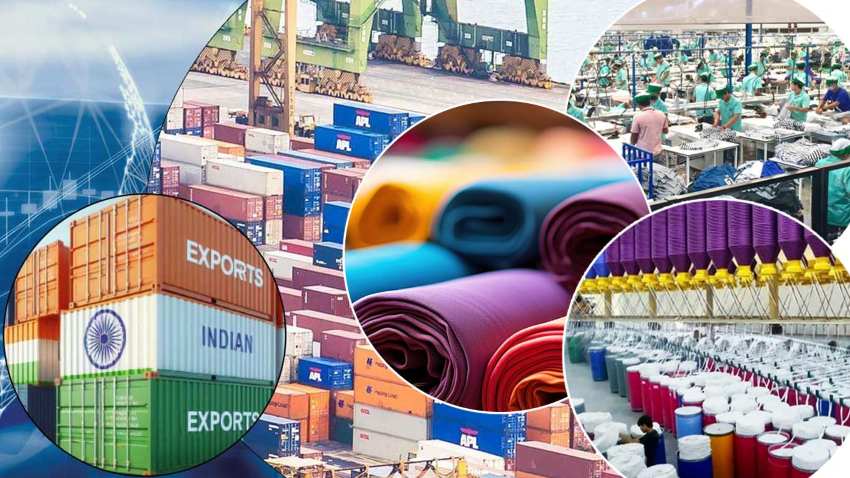
India’s textile and apparel (T&A) industry is approaching an inflection point. The 200th Report of the Department-Related Parliamentary Standing Committee on Commerce has highlighted vulnerabilities in the country’s export sector, including effective US tariff burdens of 18-25 per cent, transit times of 25 to 30 days and an excessive dependence on cotton. Yet these weaknesses should not trigger a policy choice between exports and the domestic market. Such a binary would overlook the structural reality of India’s textile economy: its next phase of growth depends on both engines operating simultaneously.
The sector, currently estimated at around $190 billion, has a stated ambition of reaching $350 billion by 2030. Achieving that target will require a stronger domestic consumption base as well as a substantially larger export footprint. The domestic market provides scale, employment and resilience against external shocks, while exports expose manufacturers to higher compliance standards, advanced technology, global sourcing requirements and foreign-exchange earnings.
Twin engines viz. exports and domestic market
The domestic market accounts for roughly $153 billion, or about 80 per cent of sector output, while exports contribute approximately $37 billion to $37.7 billion. Their growth, however, are markedly different.
Table: Indian T&A domestic growth vs. export expansion matrix
|
Dimension |
Domestic market |
Export earket |
|
Current value |
$153 bn |
$37-37.7 bn |
|
2030 target |
$250 bn |
$100 bn |
|
Core driver |
Retail, brands, D2C, and consumer demand |
FTAs, logistics, trade policy, and global sourcing |
|
Key constraint |
Fragmentation, tax distortions, and raw-material costs |
Tariffs, logistics latency, and product concentration |
|
Strategic opportunity |
Formalisation and organised retail |
China-plus-one sourcing and product diversification |
The domestic market is expected to approach $250 billion by 2030, implying roughly 9-10 per cent annual growth. Exports, on the other hand, need to reach $100 billion, requiring growth closer to 14 per cent annually. This difference is significant. India cannot reach its overall ambition simply by expanding consumption; it must also increase its share of a global textile and apparel trade estimated at more than $850 billion.
India currently captures only around 4.1-4.5 per cent of this trade. That underperformance becomes more striking as global buyers diversify sourcing away from China. India has the manufacturing base, labour pool and raw-material ecosystem to capture a larger share, but its product mix remains poorly aligned with global demand. More than 65 per cent of its textile base is still cotton-oriented even as synthetic, stretch and technical garments dominate much of international apparel growth.
Domestic cushion
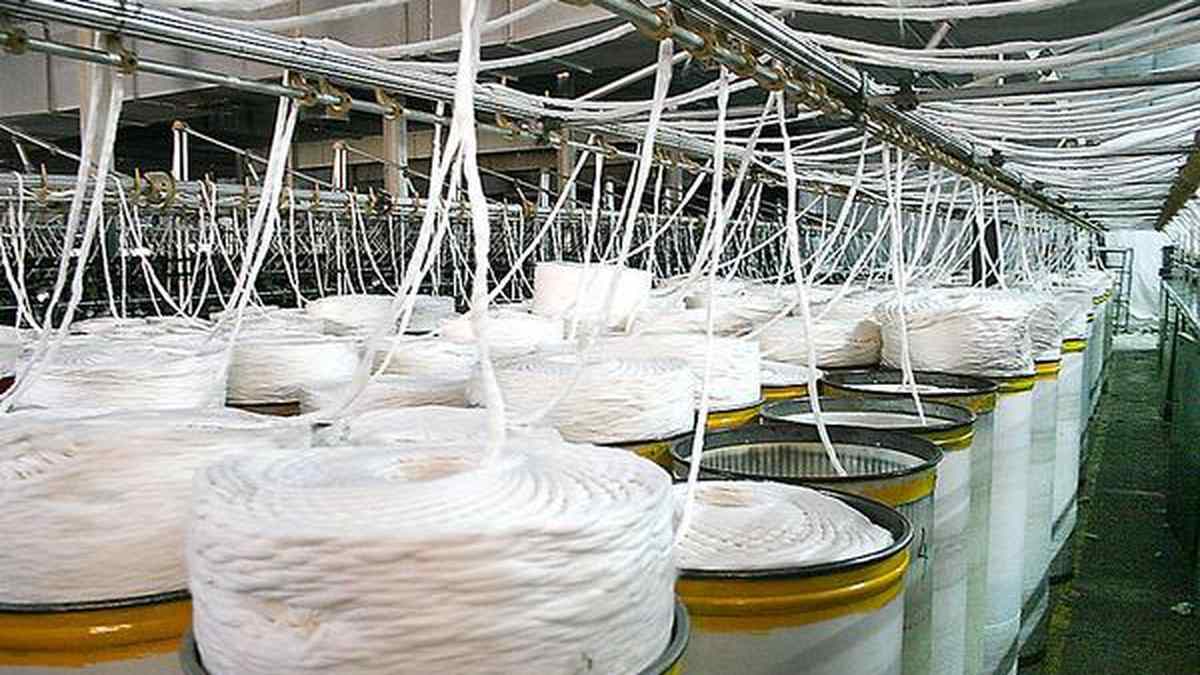
The domestic market nevertheless remains the sector’s most important stabiliser. It supports a highly decentralised production ecosystem spanning MSMEs, powerlooms, processors, manufacturers and retailers and provides employment to more than 45 million people directly.
Its weakness is not lack of demand but inefficient conversion of demand into formal, higher-value consumption. Fragmented manufacturing, logistics friction, inverted tax structures and volatile synthetic-fibre prices suppress productivity and margins. The most immediate opportunity lies in rationalising GST across the man-made fibre value chain. A uniform 5 per cent rate on fibre, yarn and fabric could reduce input-tax-credit blockages and lower production costs. Equally important is stronger enforcement of BIS Quality Control Orders to prevent substandard imports from distorting the domestic synthetic-textile ecosystem.
Digital retail provides another lever. Connecting clusters such as Surat, Ludhiana and Varanasi to organised e-commerce and ONDC networks could shorten distribution chains and improve producer realisations. The increase in organised value-fashion chains into Tier-II and Tier-III cities further strengthens this domestic multiplier by converting previously fragmented consumption into branded demand.
Export gap
Exports require a different policy response because India’s disadvantage is systemic rather than simply capacity-related. Tariff disparities are a major concern. Indian exporters can face effective US duties of 18-25 per cent, while competing suppliers benefit from more favourable trade arrangements. The result is margin decline at a time when Western buyers are already demanding shorter lead times and lower prices.
Logistics compounds the problem. Transit times of 25 to 30 days make Indian suppliers less responsive than competitors operating closer to major consumer markets. Establishing forward bonded warehouses near major overseas shipping hubs could therefore become a commercially meaningful intervention, allowing standard products to be replenished much faster without requiring factories to hold excessive domestic inventory.
Export incentives also need recalibration. Adjustments to RoDTEP and RoSCTL rates, alongside removal or expansion of interest-equalisation limits, could improve liquidity for mid-sized exporters. These are relatively immediate interventions. The deeper challenge is product and infrastructure transformation.
Looking beyond cotton
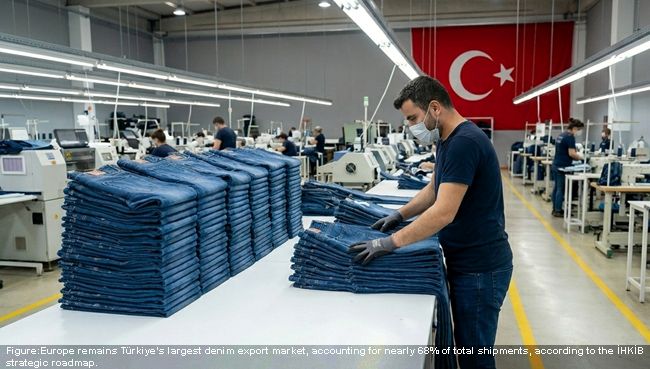
India’s export strategy must move beyond cotton if it is to capture the next wave of global sourcing. Technical textiles, synthetic activewear, stretch fabrics and performance apparel offer higher-value opportunities than commodity-oriented cotton exports. This requires vertical manufacturing scenarios rather than isolated factories. The seven PM MITRA parks can become important in this regard if they evolve into fully integrated clusters covering fibre, yarn, fabric, processing, garmenting and logistics.
Trade diplomacy is equally important. Comprehensive FTAs with markets such as the UK and EU could reduce the tariff disadvantage faced by Indian exporters against Bangladesh, Vietnam and other competing sourcing destinations. Without preferential market access, productivity improvements alone may not be sufficient to close the competitiveness gap.
Clusters adapt
The emerging response from textile clusters shows why domestic and export strategies should not be treated separately. Tiruppur offers an useful example of dual-market manufacturing. The development of the 1,052-acre Virudhunagar PM MITRA park is intended to bring synthetic knitting, dyeing and finishing closer together, reducing internal transportation and production cycles. The underlying commercial model is particularly relevant: export-oriented lines can serve Western buying cycles in the first half of the year and shift towards domestic value-fashion demand during India’s festive season. Such flexibility can raise capacity utilisation while reducing dependence on any single market.
Surat shows a different transition. As one of India’s largest man-made fabric centres, its synthetic-textile ecosystem is increasingly moving from commodity saree production towards poly-viscose, stretch and knit fabrics. Supplying domestic fast-fashion chains can provide better margins than commodity exports while insulating manufacturers from overseas tariff shocks.
The policy test
The central policy question, therefore, is not whether India should prioritise exports or domestic consumption. It is whether the two can be designed to reinforce each other. The domestic market can offer the scale, cash flow and employment stability necessary to sustain investment. Export markets, meanwhile, can push Indian manufacturers towards automation, ESG compliance, synthetic innovation and globally competitive quality standards.
Immediate reforms such as GST rationalisation, export-credit support and incentive recalibration can provide near-term relief. Over the longer term, PM MITRA parks, technical-textile investment, synthetic diversification and preferential trade agreements will determine whether India can convert its manufacturing potential into global market share.
The $350 billion ambition by 2030 is therefore less a question of choosing between two markets than building a system in which both grow together. India’s competitive advantage will ultimately come not from being either a large domestic market or a major exporter, but from becoming both.