Cambodia has been plagued by the problem of child for years. A new agreement between the International Labor Organization’s Better Factories Cambodia (BFC) and the Garment Manufacturers Association in Cambodia (GMAC) is the latest effort to eradicate child labor in Cambodia’s garment industry.
Under the plan, workers under the age of 15 will be identified, offered access to suitable vocational training institutes and paid the equivalent of their average monthly factory pay until they reach 15. Factories will get financial support from GMAC to support age confirmation and remediation costs. The Cambodian government has reaffirmed its commitment to end child labor across all sectors from 16.5 per cent in 1999 to 8 per cent in 2015, and eliminate the worst forms of child labor, like performing hazardous work, completely by 2016.
GMAC has been working with BFC on a project to monitor factories and help them maintain improvements for the last 14 years to establish a zero tolerance policy toward child labor.
ILO Better Factories Cambodia uses a number of means to detect workers below 15 years of age. It crosschecks information obtained from documents and interviews suspected workers prior to determining whether or not they are underage. If they are confirmed to be at least 18 years old, no further investigations are undertaken. If age-verifying documents appear unreliable, or do not match the information obtained through the worker interview, monitors may undertake an in-depth investigation at the suspected underage worker’s birthplace.
Migrant workers in Thailand’s apparel sector are supposed to earn a minimum wage, but a new study on the working conditions of migrants from Myanmar revealed that the workers are making roughly half of what they are owed. Workers are denied the right to collective bargaining and social security, and are also denied the legal minimum wage.
Overtime is also a common requirement. On an average, work days last nearly 11 hours, reaching as long as 12 to 16 hours during peak period or when deadlines must be met. Thailand’s major garment production sector is in an area bordering Myanmar. A significant portion of the factories there are sub-contracting for factories in central Thailand and workers don’t know which brands they are producing for.
By focusing production in border towns, the garment industry aims to reduce production costs by hiring migrant workers, who are seen as desperate and therefore easily exploited, at below the minimum wage. A campaign has been launched to ask brands to stop being complicit in this systematic wage theft and ensure that all workers in their supply chain, including migrants, are paid living wages. Migrant workers make up an estimated 10 per cent of the Thai workforce.
Tanzania has embarked on a plan to enhance its cotton productivity. While production was 3,50,000 tons in 2011-12, it went down to 246 tons in 2012-13, slumping further to 201 tons the following year. Lack of a reliable input supply system and frequent changes in world market prices are affecting performance in yield per hectare.
There has been an increase in cotton farming and ginning capacity with the number of ginneries increasing from 36 in 1993 to 56 ginneries now. The number of cotton buyers has also increased to about 35 companies. The problem of poor seed germination can be dealt with through contract farming where farmers' business groups will be centers of cotton sales and custodians of their own products. In contract farming, the system of using cotton agents' ginners would be abolished. Such a model of cotton production will not only assure farmers of better seeds for planting but will also ensure quality yields and high income since cheating through weighing scales will no longer be there Tanzanian cotton, is 100 per cent rain fed and is produced by small scale farmers owning farmland of between two to 10 hectares. An average 4,00,000 hectares is grown each season at an average 300 kg per hectare yield.
The natural silk industry in Cambodia is on the verge of extinction. The widespread use of pesticides has damaged the health of silkworms. Thus producers have had to rely on imported synthetic fibers to meet demand. Global demand for silk in recent years has remained between 300 and 400 tons but the production of natural silk in Cambodia has continued to fall, and now it’s only one ton a year. The problem lies in the extensive use of chemicals on farms. Villages use chemicals on their rice crops, and in agriculture, which badly affect the silkworms. Silkworms living in polluted environments produce poor quality and smaller amounts of silk. An unhealthy silkworm produces up to 100 meters of threads in its lifetime. A healthy silkworm can produce nearly five times that. The Cambodian hand-woven silk industry is characterized by strong skills base and a long traditional heritage. Weaving and wearing silk is a cultural and social tradition in Cambodia. Silk is a prestigious fabric and very popular among Cambodians. The country is known for its silk handicrafts. Silk is a significant item in the country’s export basket and is an important source of employment for women and households in rural areas.
News and indices of worldwide cotton marketing and prices. Put simply, stay ahead of the game by being well informed about your developments affecting your competitors and customers, and gain insight into independent views on cotton market developments.
Research, development and innovation to benefit wool producers. This is a specialised section of the wool industry with limited supply and very specific requirements in terms of processing performance.
FashionatingWorld engages professionally itself in all value adding customized services that could help companies, brands, retailers, buyers & sellers and trade bodies around the world to leap frog growth. With our expanding panel of experts with decades of experience, in their respective expertise area, scaling up business seems to be an exciting activity.
Our services include:
- Partnership & Licensing
- Joint Ventures
- Acquisitions & Mergers
- Funding & Private Equities
- Networking
- Matchmaking
- Franchising
- Sourcing
- Consultancy
- Promotions, Data enabled promotions
- Branding, Marketing & Sales
- Launch in a new country
Reach out in full confidentiality
This email address is being protected from spambots. You need JavaScript enabled to view it.
FashionatingWorld is looking for Win-Win partnerships across countries with B2B communication and sourcing companies, experts and trade bodies for promoting global trade of fashion retail, apparel and textiles.
Queries
This email address is being protected from spambots. You need JavaScript enabled to view it.
Partner with us at
This email address is being protected from spambots. You need JavaScript enabled to view it.
News, Press Releases & Information
This email address is being protected from spambots. You need JavaScript enabled to view it.
FashionatingWorld is a seamless network of GLOCAL (global and local-country specific) web platforms with sector focused approach on Fashion Retail, Apparel and Textiles. Sectors are a pleasurable experience taking you closer to your own sector for news and content related to the sector while seamlesslessly offering you a combined platform to browse for a much broader insight and understanding on all sectors right from Fashion Retail to Apparel (& Apparel SupplyChain) to Textiles (& Textile SupplyChain) aspects.
FashionatingWorld is set to connect the global fraternity through news, information and valuable insights on the contemporary developments in the industry. The country specific web platforms address news and other contents related to their country in their local business language, while global website addresses global news and content in English language.
FashionatingWorld is collaborative and cooperative model of combining strengths of B2B communication companies in each country to evolve a genuine and exclusive global platform.
Built & Brought by An independent holding company engaged in trade promotion with its stakeholders around the world in USA, Europe, Hong Kong, China and India, FashionatingWorld is looking for Win-Win partnerships across countries with B2B communication and sourcing companies, experts and trade bodies for promoting global trade of fashion retail, apparel and textiles.
this is a dummy article
More...
Pakistan fears loss of GSP Plus status after Peshawar carnage
Considering the frightening level of violence Pakistan has experienced, the country may lift the ban on executions. But this decision has made textile exporters worried. They feel Pakistan may lose duty benefits that it enjoys under the Generalised System of Preferences (GSP) Plus scheme. Exporters believe that the government should convince the European Union not to suspend the GSP scheme.
If the EU Parliament does not agree with the government’s decision of lifting the moratorium on execution, the probability of losing the GSP Plus status is very high. The hope is that after such a hideous incident the EU will not act against Pakistan’s GSP Plus status. Some textile companies’ exports are highly sensitive to the GSP Plus status. There are companies that export around 55 per cent of their products to EU countries. So any revision will damage their profitability.
Some exporters believe that since the GSP Plus scheme was granted with conditions, the country has to comply with the 27 international conventions, including the clauses on human rights that disallow the signatory country to abolish the death penalty. And since Pakistan has now lifted the self-imposed ban on the death penalty, it may lose the GSP Plus scheme in the EU.
Pakistanis and Dutch agree on standards
Pakistan and the Netherlands along with other international bodies have collaborated to uphold international standards and practices in the textile and garment industry. This is the beginning of a process, which started in January 2014 and was agreed to at a meeting in Washington DC in September 2014. It brings together buyers, brands, manufacturers, governments, workers and employers’ organisations. The aim is to create a platform for dialogue to improve their cooperation toward a sustainable growth of the sector improving competitiveness and compliance with international standards.
The Netherlands has good relations with Pakistan. It has supported numerous development projects in Pakistan. The two countries are major economic partners. The Netherlands is the fourth largest foreign direct investor in Pakistan. The Netherlands and Pakistan are major trading partners. Of the European Union member states, the Netherlands is Pakistan’s fifth largest export destination. The Netherlands imports primarily textiles, woven fabrics and bedding from Pakistan and exports oil and oil products, machinery and chemicals to Pakistan. The Netherlands has made a shift in its policy from development and aid to trade which will result in enhancement in the trade volume between the two countries.
VF Corp, IFC fund Bangladesh units upgradation
VF Corporation and the World Bank Group's International Finance Corporation (IFC) have provided loans to three Bangladeshi garment factories under a new funding program for fire and building safety improvements. Through the financing arrangement, apparel and footwear giant VF provides a full guarantee for up to $10 million that the IFC and its partner, BRAC Bank, lend to the company's contract suppliers.
This guarantee makes it possible for IFC to lend at lower interest rates. It is designed to help VF suppliers in Bangladesh overcome financial obstacles to improving workplace safety conditions. The first three loans have been issued to Arunima Sportswear, Olio Apparels, and Radisson Apparel. The owners will use the capital to invest in safety upgrades such as the installation of fire sprinklers, fire doors and detection systems, along with other necessary repairs and safety precautions.
Providing these loans to help supplier factories fund the necessary improvements is another positive step forward in VF's efforts to ensure the safety of the people making VF’s products in Bangladesh. The program is part of VF's efforts to help suppliers achieve performance standards for assessing and managing environmental and social risks and impacts, and labor and working conditions.
It is also designed to help enable factory owners meet the stringent standards set forth by the Alliance for Bangladesh Worker Safety, of which VF Corporation is a member.
www.vfc.com/
Chinese company acquires Pakistan's Masood Textile Mills
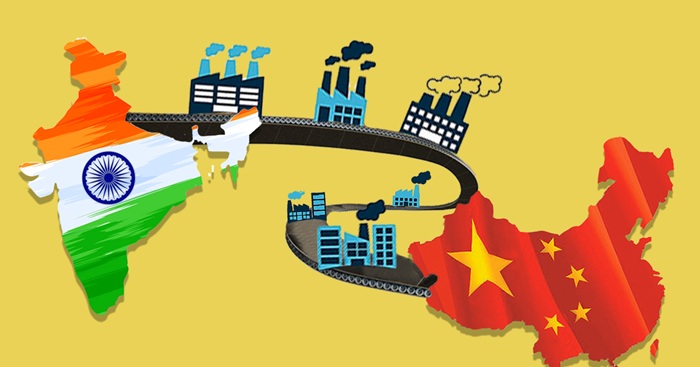
Shanghai Challenge Textile Company, a Chinese company, has purchased 14.6 million shares of Pakistan’s Masood Textile Mills. This is a first-of-its-kind deal in Pakistan in which a Chinese group has acquired a majority stake in a local textile company. Chinese investors hope to have the advantage of better cotton prices and cost-effective labor by investing in a Pakistani company.
Masood Textile Mills is a vertically-integrated textile manufacturing company with in-house yarn, knitting, fabric dyeing, processing, laundry and apparel manufacturing facilities. It posted a pre-tax profit of Rs1.1 billion in 2013, which was 13 per cent higher than its pre-tax earnings in the preceding year. It produces value-added textile products, whose exports to the European Union are expected to increase due to the GSP Plus status that Pakistan has received.
Shanghai Challenge Textile Company is engaged in the production and distribution of high-graded outdoor fabrics and apparels. The company operates its business through weaving, dyeing and processing of knitted fabrics as well as the production and distribution of apparels, accessories and specialty textile products.
China is investing billions in Pakistan. These are mostly centered around the energy sector. Pakistan suffers from chronic electricity shortages and has long sought investments in coal-fired power stations. Chinese companies will help build at least four new power stations in Pakistan, while the deals also cover the supply and mining of coal.
www.challenge-21c.com/en/