 There sure is a bright side to the economic slowdown at least for the Asian textiles and apparels industry. For manufacturers in India, China, Korea, Taiwan, Japan et al, the slowdown has not really meant slowing down of business completely. Indeed sales have been sluggish and demand not up to the mark at least from their traditional markets of the US and Europe, but manufacturers in this region are not complaining at least not yet. In fact, most stakeholders say they continued selling and what keeps them going is newer markets within the region. Most say the situation forced them to look beyond Europe and US and within the region and yes, they have not been too disappointed.
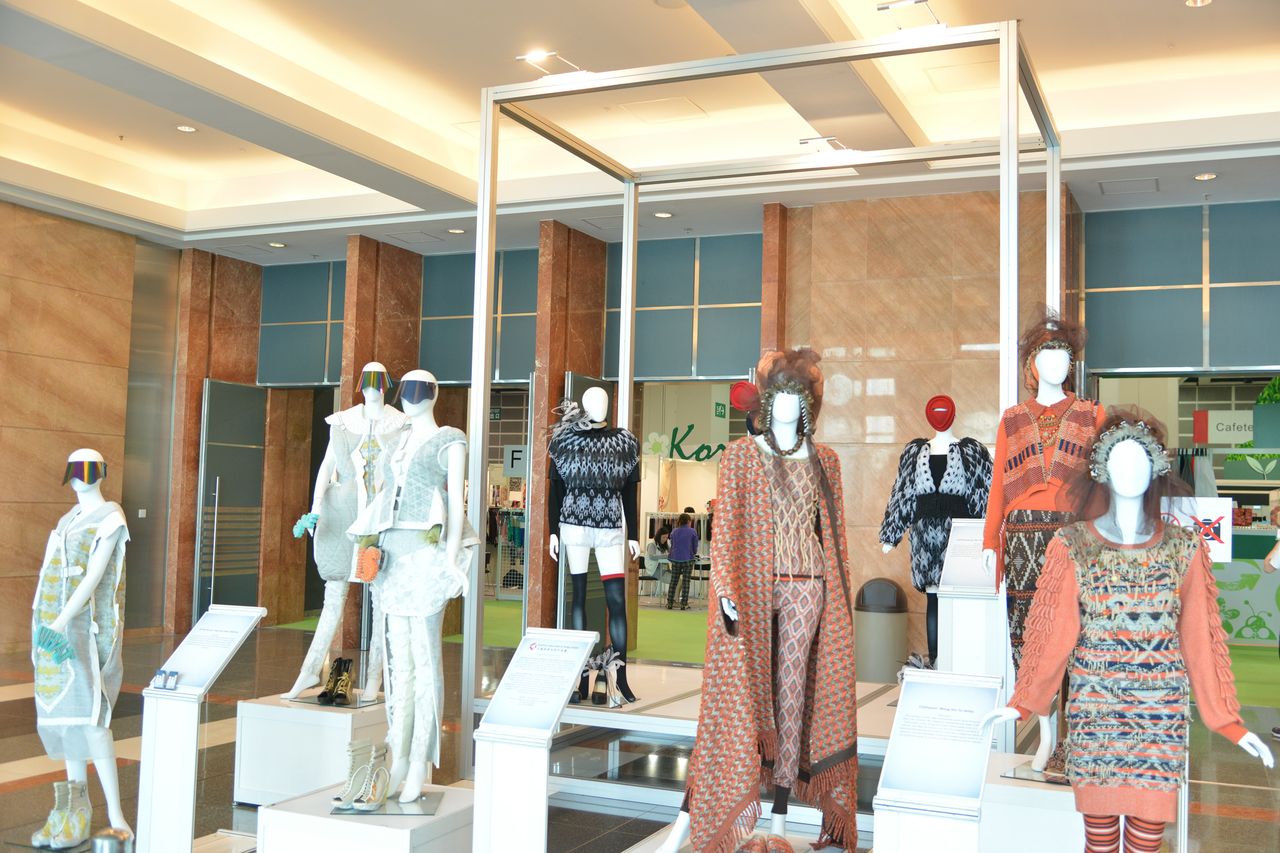
This optimism was clearly visible among exhibitors at the Interstoff Asia Essential Spring 2013 meet held in Hong Kong from March 13 to 15. The fair had 229 exhibitors from 10 countries including China, Korea, Taiwan, Hong Kong, Japan, Thailand among others showcasing their latest offerings. Besides suppliers and buyers from Europe a large number of visitors were from within the Asian region. On display were innovative fabrics and new collections setting the trend for Spring 2014.
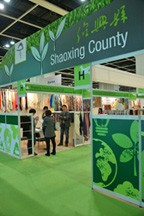
 And even though most exhibitors rued the slowdown in business and low demand from western markets, they were happy with the kind of sales they were doing within the Asian region. As Jin Wei Liang, Deputy Director, Shaoxing County Bureau of Commerce explained, “Earlier, the US accounted for nearly 20 per cent of our exports, but now it has come down to one per cent. The market has shifted to Southeast Asia and our focus is on newer markets here. That is why we are at this exhibition, to attract new buyers from within the region.” The Shaoxing County Bureau of Commerce participated with 32 exhibitors this time, the largest ever representation at the fair. What’s more the Shaoxing county is one of China’s biggest textile producing state and 90 per cent of its produce is exported. They are now tapping countries in Southeast Asia, ASEAN and even Brazil to tide over the slowdown. Agreed Kevin Tsang Fin Fung of Harbin Linen Mill (HK), who says “With the Chinese currency having appreciated in the past year, margins are low and prices cannot be increased too much. To tide over difficult times, we have been looking at markets in ASEAN and Southeast Asia. That has helped us also we have developed newer fabrics to fit client’s requirements.”
Korean organic cotton specialist fabric maker Kayjune Company was at present at the fair backed by Korea Trade Investment Promotion Agency. Their niche products are sold to manufacturers in Japan, Hong Kong, Russia among others and as SeongMoon.Kang, President of Kayjune Company explained, “Ours is a niche product and we have a lot of domestic customers. However, we are now tapping newer markets in Asia to grow our business.” Similarly Shingpung Textile makers of specialized nylon, spendex fabrics for outdoor wear and supplier to brands like Columbia, Puma, John Wolfskin among others has faced a slowdown since their biggest market is in Europe. But as Hong-Cheul, Shing says “Indeed, the economic slowdown has affected business but we are developing newer customers in the region and also in Europe.”
Closer home, the Apparel Export Promotion Council (AEPC) has been encouraging Indian industry toincrease apparel exports from India to non-traditional markets from the current 24 percent to 35 per cent within next few years. In fact, in the past one year Indian exporters entered newer destinations such as Latin America, southern and western Africa, Japan, Russia, Israel and Australia during. With government’s support through focus market schemes and market linked focus product schemes and various FTAs have given Indian businesses market access especially in Japan. Newer markets brought in 10 per cent business for the industry. According to AEPC data, Japanese demand seemed to help Indian garment exporters. Exports to Japan rose to 4.4 per cent last year after a 2.1 per cent drop the previous year. The industry is also strongly working on moving from cotton to synthetic fibre, as it will help diversify into new products like sportswear, swim suits. This is expected to help double exports in the next five years.
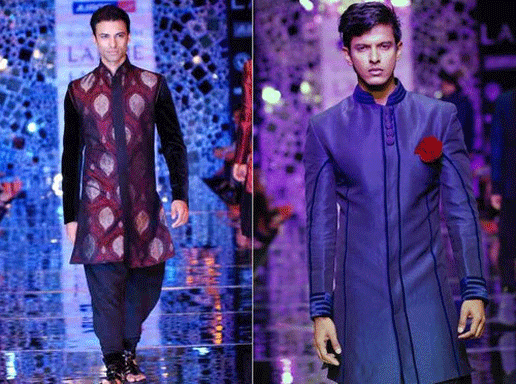 With more and more men willing to loosen their purse strings on clothes and accessories, many menswear players are logging onto the e-commerce space to fulfil the rising demand. In fact, many web platforms like Elitify.com, Pernia Qureshi’s The Men’s Shop, GujralSons and SBJ House of Luxury are cashing in on the growth opportunity for menswear.
A research done by Elitify.com reveals, men’s market is growing rapidly at a 13 per cent annually compared to 10 per cent for women. The fastest growing segment of online commerce is fashion, and it’s being propelled by men and they prefer shopping online as it is convenient and efficient.
Another report by ASSOCHAM showed the online retail industry in India is likely to be worth Rs 7,000 crores by 2015 and the credit goes to easy internet access and availability of broadband services. The survey conducted by ASSOCHAM Social Development Foundation (ASDF) is based on interactions with 500 shoppers in the age group 16 to 35 years in 10 cities -- Delhi, Mumbai, Chennai, Bangalore, Kolkata, Ahmedabad, Chandigarh, Ludhiana, Lucknow and Jaipur. 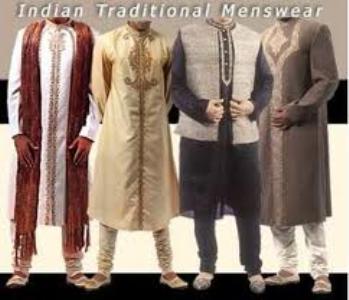
No wonder from e-retailers to designers everyone is logging on the net to sell their products. Take Pernia Qureshi for example, the pop up shop recently launched ‘The Men’s Shop’ which stocks menswear designer clothes from the likes of Rajesh Pratap Singh, Karan Johar + Varun Bahl, Atsu Sekhose, Rohit Gandhi & Rahul Khanna and Raghuvendera Rathore. On offer are formal suits, pants and shirts as well as laidback denims, kurtas and shorts and accessories.
If designers are cashing in on the online trend, so are conventional menswear brands. GujralSons, a 40-year-old brand catering to men's ethnic wear, has also come up with exclusive wedding collection that is being retailed through their website as well as at their stores. It has a range of sherwanis, suits, kurta pajamas among others. Most top fashion brands too have taken the e-route to increase their sales. Online shops are also evolving by focusing on concepts such as Dial-a-Suit as introduced by SBJ House of Luxury -- a men’s apparel brand.
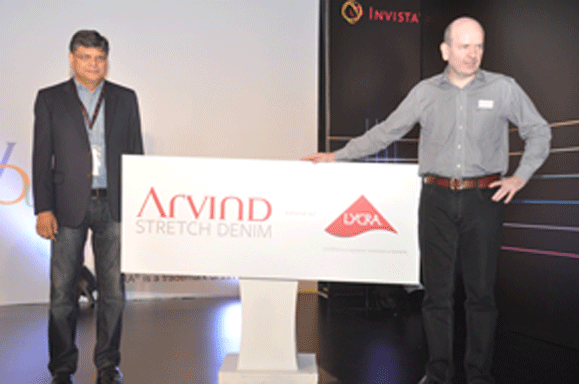 Invista, the leading fiber and fabric innovator in textile industry organised the second edition of its knowledge and innovation conclave ‘Lycra Rendezvous’ at the Taj Palace, New Delhi recently. The event witnessed leading mills and brands from the textile and apparel industry such as Arvind Denim, Mafatlal Denim, Vardhaman, Banswara Syntex among others participate in the event.
The day-long event saw insightful discussions and product showcase by Invista’s key customers. The highlight was the launch of its latest innovation LycraT166L fiber and the unveiling of Arvind Stretch Denim powered by Lycra fiber. Discussions amongst the top denim experts and a scintillating denim fashion show were the other high points. It started with a presentation on the evolution of denim jeans as a result of the butterfly effect ‘change happening at one place leads to spread of change everywhere.’ Denim jeans were showcased in new colour palettes, pastel and metallic and leather looks.
Arvind Denim launched its latest range of stretch fabrics under two key themes – Denim Glam and Pop Vintage bringing Invista’s best textile innovations together with the denim fabric making expertise of Arvind. As Aamir Akhtar, CEO, Arvind Denim explained, “The Lycra fiber brand has delivered multiple breakthroughs over the years through continuous investment in innovations and conquered new frontiers in comfort, fit, functionality and consumer concepts. Invista as the pioneer of innovation has contributed to the growth of the Indian textile and apparel industry that is currently growing at a healthy 14-15per cent. Taking forward our association, we are delighted to present the new generation of stretch fabrics with Lycra fiber that take comfort, style and stretch technology to another level.”
Invista shared the fiber innovation story with the audience. Main developments  included the Tough Max Lycra fabrics made with Lycra T400 fiber, which imparts strength and comfort. They also showcased their global denim concept collection for Spring/Summer 2014. The collection encompasses innovative garments highlighting company’s key technologies for denim including Tough Max, Lycra fabric, Xfit Lycra fabrics, Lycra dualFX fabrics and Coolmax fiber under key three themes of Fantasy, Reality and Harmony. Featured styles under Fantasy comprise of pearlized coatings, reflective surfaces, coloured weft yarns, prints and tie-dye effects; Reality features simple evergreen denim structures and neon colours; Harmony collection represents performance denims with knit inspired jacquard weaves of cotton and Lycra fiber.
Talking about the innovations, Andrew Evans, MD-South Asia, Invista said, “At Lycra Rendezvous, our endeavour was to provide a platform to the denim industry to delve deep into the consumer psyche, identify consumer needs and come up with innovative ways to spark the industry’s growth. We received a fantastic response from our customers and representatives of the industry reiterating the success of the event that brought together the entire value chain together.”
Commenting about their association with Invista Ravi Toshniwal, MD, Banswara Syntex said, “We have been working closely with Invista for the last 14 years on technical collaborations and new product developments for yarns and fabrics with Lycra fiber and Lycra T400 fiber. We highly value the partnership since it has enabled us to differentiate our offerings and deliver many firsts in the Indian textile market.”
Invista also presented novel consumer insights and research findings in a special session aimed at enabling the brands to identify ways of ‘winning the today’s denim consumer’. The highlight of the event was the brainstorm wherein industry stalwarts delved on topics such as ‘Shifting Supply Base: Opportunities & Challenges’ and ‘What does the Indian market need’.
The forum brought to the forefront challenges and opportunities that the textile and apparel industry is facing currently. The trends and future of the garment industry in countries like Sri Lanka, Cambodia and Vietnam were also discussed at length. It highlighted the ardent need for technological advancement and finesse in fiber processing.
Proline `We are looking at 25% CAGR growth in next three years'
Written byProline, the first Indian T-shirt brand
launched in 1983 by the Batra Group,
enjoys a 10 per cent market share of
the sports lifestyle segment today.
With a modest start as a sportswear
brand, Proline has come a long way
to become a major performance and
lifestyle label in the country. The brand
is the brainchild of brothers, Rajesh and
'Rajiv Batra, both avid tennis players and
sports enthusiasts. The duo identified a gap
in the Indian market for good quality sportswear
and introduced Proline. Sandeep Mukim, CEO, Proline India,
talks to Gurbir Singh Gulati about the brand's evolution and its
product portfolio.
hjhjhjhjhjhjhh
For over two decades story has carved a niche in the mens' wear segment. The launch of
Growing awareness about designer wear and people's spending capacity along with a
Delhi hosts All India Textile Conference after 23 years:The 67th All
ATDC's principals' conclave moots strategies:The Annual Regional
Asia Retail Congress focuses on stakeholders:The two day event was
More...
Commemorating 25 years as a leading promoter of Hong Kong's industry,Interstoff
The 7th China International Hosiery Purchasing Expo was held on March 5 to 7.2012.at
For Bangladesh’s apparel sector 2014 was an eventful year. Around 400 small and medium-sized factories have been shut following a work order deficit, turning around 10,000 workers unemployed. After the Rana Plaza tragedy, work orders reduced drastically as international buyers pulled out. As a result, many small and medium-sized garment factories had to shut their operation.
Accord and Alliance, the two platforms of the EU and American buyers, completed their inspection at garment factory buildings. The two platforms were formed following the Rana Plaza collapse with a view to inspecting readymade garment units from where they sourced apparels. Alliance has inspected a total of 587 garment factories since 2013 while Accord has so far inspected 1,613 units.
The year 2014 was also remarkable for the apparel industry. The sector which shares a lion’s portion of the export earnings, around 80 per cent, experienced bitter export growth. In addition, the sector failed to meet the export target in the last half of the year 2014 set by the government. Exports of the woven sub-sector during the year showed a shortfall of 10.57 per cent over the target.
Garment exports to one of the major destinations – the US market -- were not as per expected during the year 2014.
Pakistani textile exporters contradict PBS projected growth
Written by FWPakistan's garments export posted a robust growth of 10 per cent to US$ 826.836 million in July to November 2014-15, but exporters denied the official statistics. Overall readymade garments export shows a US$ 73.395 million growth in July to November 2014-15, comparing to the apparel export of US$ 753.441 million in July to November 2013-14, according to Pakistan Bureau of Statistics (PBS).
In term of volume, the garments export grew by 1,043,000 dozens (9.09 percent) to 12,540,000 dozens in July to November 2014-15 from 11,497,000 dozens in July to November 2014-15. However the valued added textile exporters rejected the growth projected through official statistics. For instance, according to Pakistan Readymade Garments Manufacturers and Exporters Association (PRGMEA), there is an ample unsold cotton stock, which shows the value-added textile is not doing well in the absence of proper power and gas supplies to manufacturing units. It also blamed the government saying since Commerce Ministry failed to evolve a plan to help the exporters, they could not capitalise on the GSP Plus status to the EU markets.
According to the industry body, the official figures are not reflecting on the real conditions of the country's export, adding that the growth should have been more than 30 per cent instead of 10 per cent since the country enjoyed the GSP Plus status in one of the world's expensive markets.
"The government has no aim or vision to boost up the export as there has been no new textile policy to help steer the exporting sector to a healthy growth," Khokar added. He said the country's total value-added textile output stands at around 60 percent for want of gas and supplies to manufacturing units, which clearly denies the government's claims projecting a healthy growth of 10 percent.
In November, readymade garments export stood at US$ 169.068 million up by US$ 19.217 million (19.19 per cent) from US$ 149.851 million in November 2013. Volume of garments export also posted an increase of 187, 000 dozens (8.24 per cent) in November 2014 to 2,456,000 dozens from 2,269,000 dozens in November 2013. www.prgmea.org