Tunisia teams signs up Messe Frankfurt to promote textiles in EU
Tunisia is among the top 15 garment suppliers in the world, and has the advantage of being close to the European market. It is the fifth largest supplier to the European Union as well as the leading trouser supplier to the EU. Other important products are work wear and lingerie. The main foreign investors in the apparel sector in Tunisia are France, Germany, Belgium and Italy. Now the trade association of garment and clothing manufacturers within Tunisia's employers' organization, CONECT has signed an agreement with trade show organiser Messe Frankfurt, to promote its industrial products internationally.
Messe Frankfurt pledged to promote Tunisian textile and apparel companies with a dedicated pavilion at the Apparel Sourcing trade show in Paris next September and February. The organiser will also be involved in implementing specific promotions in northern Europe and Germany. This agreement is a result of falling European imports of textiles and apparels sourced from Tunisia. With nearly 96 per cent of Tunisia’s apparels destined for EU, in a few years, the country fell from 4th to 9th position in the ranking of apparel suppliers. The country has over 30 centers for specialised education covering the textile industry, sectoral centers for training supervisors and technicians, a higher institute of textiles for senior technicians, a textile engineering university and a higher institute for fashion professionals.
Clothing and textile exports represent 36 per cent of total Tunisian exports. The clothing sector alone represents 91 per cent of textile and clothing exports: 72 per cent for woven garments and 19 per cent for knitted goods.
However Tunisia’s textile and clothing industry needs to diversify its products and move beyond its current markets and look instead at export opportunities in, eastern Europe, the Middle East, Scandinavia and sub-Saharan Africa
New technologies make active wear cotton heavy
New treatments and technologies have made cotton suitable for the outdoors market. More and more outdoor retailers and brands are realizing cotton can perform as well as or better than synthetics.
Cotton is an incredibly absorbent fiber. Fabric engineering and textile chemistry have been able to adapt the way cotton addresses both exterior and interior moisture management and thermal regulation. Consumers now prefer active wear made from natural fibers such as cotton or cotton blends or wool. They choose cotton active wear over synthetics if the cotton apparel had thermal regulating properties, dried faster, wicked moisture and did not show sweat.
‘Storm Cotton’ technology is a finish that provides water resistance to cotton fabrics. Wicking Windows transfers moisture away from the skin to the outside of a garment, keeping its wearer drier and more comfortable during exercise. A single-knit jacquard is inspired by the underside of a mushroom. It consists of a flat, tightly knit outer surface and an insulating interior with peaks and valleys. The tight construction of the outer layer helps protect the wearer from wind. The multiple folds and grooves increase the surface area of the fabric, helping the wearer to retain body heat.
Bangladesh in dilemma about joining TPP
Bangladesh doesn’t hope to get any significant benefits by joining the Trans Pacific Partnership (TPP). Exports anyway get tariff-free access to markets in most TPP member-countries like Australia, Canada, Japan, Singapore and New Zealand.
In fact Bangladesh’s income from duty on imports from those markets will fall if it joins TPP as the country will have to reciprocate to some extent by reducing import tariffs for partner countries. So, Bangladesh will see a dip in revenue earnings from import duty since TPP member countries like Singapore and Japan are two major sources of Bangladesh’s imports. In the fiscal year 2015, the country sourced some 10 per cent of its total imports from Singapore and Japan. Currently import duties contribute around 27 per cent of the total revenue earnings of Bangladesh.
Under the TPP framework, Bangladesh will get free market access to the US, but to achieve this the country will need to improve standards in some areas. But what’s certain is that Bangladesh will face competition from Vietnam once the Trans-Pacific Partnership comes into force.
Vietnam is among the 12 countries that are part of the TPP. Under the agreement the member countries have a vast scope to derive mutual economic benefits through duty relief.
Morocco participates in Premiere Vision Salon Manufacturing Istanbul
Moroccan textile companies are looking at reaching out to new markets abroad. The country’s industrial strategy has made textiles a priority. Companies are investing in dye finishing, printing and dyeing and knitting. In fact, Moroccan companies participated for the first time at Premiere Vision Salon Manufacturinng Istanbul (March 23-25) with the objective to reach new international markets and canvass outsourcer.
One factor that has always been to Morocco’s advantage is its proximity to Europe. The other is the relatively lower wages and the natural skill and dexterity of its workers, most of whom are women. The textile sector in Morocco covers five types of activity: warp and woof; knitted fabric; jeans; sportswear; and household textiles.
Textiles and clothing sector plays a major role in the country’s economy. It is the top industrial employer, providing about 2,00,000 jobs to 42 per cent of the labor force working in the industry. Textiles represent 40 per cent of Morocco’s industrial exports.
Some advantages the Moroccan textile industry enjoys are market knowledge and a mastery of European standards; ability to meet shipping and delivery deadlines; competitive advantage in transport costs, pricing and service. In Morocco, the state provides platforms, coordination and funding for marketing Morocco’s textile products and capabilities. The country has a simplified and integrated logistics system that guarantees delivery of products on time and allows the manufacturer to concentrate on production.
Bangladesh knitwear makers opting for composite units
Knitwear makers in Bangladesh are now integrating their existing composite units with more facilities. Composite units are one of the main strengths of the country’s knitwear sub-sector that sources more than 90 per cent of fabrics from the local market. Traditionally a knit factory having its own knitting, dyeing, sewing and finishing facilities is known as a composite.
Global brands and retailers now prefer their sourcing units to have more integrated facilities like washing, printing and embroidery on the premises or under single ownership mainly to ensure compliance in the whole supply chain. This helps buyers trace and ensure all safety and other requirements if all the units are on one premise or surrounding areas or have the same ownership. Big brands and buyersdo not want to risk their reputation by sourcing from any unit that is not compliant.
Policy support, especially cash incentives up to 25 per cent for local fabric sourcing, has also helped entrepreneurs set up composite units. The number of composite units ranges from 400 from 500.
Value addition by the composite units is nearly 100 per cent as they source fabrics from the local market. The knitwear sector as a whole adds value to about 75 to 80 per cent because the basic raw material, cotton, is being imported.
US-based Globe incorporates WASP in firefighter’s clothes
US company Globe that makes clothing for firefighters is now using ‘Wearable Advanced Sensor Platform’ (WASP) tracks heart rate, heart rate variability, estimated core body temperature, respiration rate, activity levels, posture, and other physiological factors, as well as 3D location inside a building in its clothes. These high tech products have the capability to interact with their user or environment, by tracking and communicating data about the wearer or environment to other devices through embedded sensors and conductive yarns.
Firefighters experience extreme physiological stress during the course of their duties. Stress and overexertion account for 50 per cent or more of firefighter line of duty deaths. Factors that affect firefighter responses include exertion of work performed, elevated thermal environment, wearing heavily insulated protective clothing, carrying heavy equipment, as well as individual health status, fitness level, medication, and hydration levels.
Recent advances in technology have brought together the apparel, technology, and textile industries to develop new capabilities in fabrics with the potential to change how athletes, patients, soldiers, first responders, and everyday consumers interact with their clothes and other textile products.
WASP is the world’s only system for real-time monitoring of physiology and location designed for firefighters and first responders.
globeturnoutgear.com/
Bangladesh yarn markets stable with falling cotton prices
The yarn market has been stable in Bangladesh thanks to the declining cotton prices worldwide. Yarn stocks at spinning mills in Bangladesh have gone down amid rising demand from garment exporters. Garment exports increased 9.47 per cent year-on-year in the July-February period of the current fiscal year.
Bangladesh has recently overtaken China as the largest cotton importer in the world as China has stopped importing cotton due to its huge stockpile. As of August, China's cotton stock stood at 64.58 million bales, which is half the annual global production. China’s stock rose because of a drop in consumption that resulted from higher production costs and shortage of workers. In 2015, Bangladesh imported 6.1 million bales of cotton, which was 5.59 million in 2014.
The changing composition of readymade garment exports from Bangladesh in recent years has created a steady demand for yarn and cotton in the local market. This shift has taken place primarily because of two reasons: the necessity of establishing backward linkages to improve delivery response time for effective competitiveness; and the relatively small investment that is required to establish these linkages in the knitwear sector.
Investments in composite knitwear manufacturing units have gained momentum in the last 8 to 10 years, creating a substantial demand for good quality yarn and in turn demand for cotton for spinning.
Government fixes uniform price for Bt cotton seeds
The government of India issued the Cotton Seed Price (Control) Order which fixed a uniform price for seeds of Bt cotton, across all cotton-growing states. Under the order, a 450-gm packet of Bt cotton seed would be capped at Rs 800 for the 2016-17 seasons, compared to the current range of Rs 830 to Rs 1,030.
But the real point of contention between seed companies and the major developer of Bt cotton technology, Mahyco Monsanto Biotech, an arm of the US seed giant Monsanto, is the royalty payment, technically known as ‘trait fees.’ This was slashed a steep 70 per cent from Rs 163 plus taxes per 450-gm packet (the standard unit for Bt seeds) to Rs 49.
Incidentally, Mahyco Monsanto Biotech, which dominates the market, has threatened to ‘re-evaluate’ its India operations. In particular, it has challenged the Centre's power to fix trait fees as being contrary to various laws - in 2009. Mahyco Monsanto Biotech has also argued that the order restricts farmers' access to the latest technology.
Things became complicated when state governments started intervening in seed pricing. The genesis of the issue was that Mahyco Monsanto Biotech was initially the sole licensed producer of Bt technology under its brand BOLLGARD I (BG I) and charged a trait fee of Rs 1,250. Inevitably, this resulted in a sharp jump in cotton seed prices from Rs 500 to Rs 1,800.
The government’s decision to step into this corporate battle is hard to explain. But it did so in December last year, with the Cotton Price Control Order, which empowered it to fix a uniform national price of cotton seeds including Bt cotton and trait fees.
Levi Strauss announces innovative water techniques
To commemorate the World Water Day, Levis Strauss announced it is making its innovative Water Less finishing techniques available to the public in an effort to encourage water conservation and create impactful change across the apparel industry.
The techniques were introduced by the company’s designers in 2011 and it reduced water used in garment finishing by up to 96 per cent. Since implementation, Water techniques have helped the company save more than 1 billion liters of water.
In addition, Levis Strauss also announced its participation in the White House Water Summit, where the company communicated its goal to train 100 per cent of corporate employees on water conservation through its ongoing partnership with Project WET, a non-profit that offers water education to help people understand and value water and ensure a sustainable future.
Mexico textile sector worries over TPP and Trump wall
Despite eyeing 4 per cent growth this year, Mexico's textile sector faces looming threats including the Trans-Pacific Partnership (TPP) and Donald Trump's proposal to barricade its US border – which some executives estimate could trigger $2 billion in annual trade losses.
According to Juan Alfonso Ayub, President of main textiles trade lobby Canaintex, a 6 per cent to 7 per cent jump in export value will drive this year's hike and domestic demand is also set to increase as a sagging peso fuels import substitution. Ayub notes the TPP is a rising red flag at a time when Mexico continues to lose market share to Vietnam and other formidable Asian rivals. We are very worried, Vietnam is an evident risk to our country and enjoys big government subsidies, said Ayub. Fifteen years ago, Mexico was the number one or two suppliers to the US. Now they are the fifth or sixth.
As a part of the game-changing potential of the TPP, Latin America's second-largest economy negotiated a 16-year, 25 per cent average duty phase-out for 80 key apparel and textile products. Yet Ayub says that's insufficient to protect suppliers from Vietnamese competition and the lingering risk that China will use its neighbour to triangulate exports.
More...
Alok prevented from sale of assets by consortium of lenders
A court order has prevented textile maker Alok Industries from selling its assets or changing its equity structure till a winding up petition filed by HSBC against the company is settled. The court set the date for next hearing on April 6.
HSBC has filed a petition on behalf of a consortium of unsecured lenders led by VTB Capital, to liquidate Alok Industries and settle outstanding dues of $55 million from a loan of $125 million that the company had taken. For it, the company had offered guarantee in an off-shore holding company which has no assets that can be seized by these lenders.
Alok Industries is in the process of undergoing a strategic debt restructuring in which a joint forum of 25 banks led by State Bank of India that lent around Rs 13,000 crores to the company decided in January to convert the loans into a 65 per cent equity stake.
SBI Capital Markets has since been mandated to run a formal auction process to sell the core businesses as a whole or in parts, and had called an extraordinary general meeting earlier this week.
While the process is aimed at repayment of secured lenders, mostly public sector banks, it has no proposals for unsecured lenders, who as the term suggests rank lower in the repayment scheme.
www.alokind.com/
Pakistan’s exporters press for zero-rating
Exporters of textile and leather products in Pakistan want a zero-rating regime available to them. They say this will help them compete with their rivals in international markets. Pakistan’s exports of textile and leather products have been persistently declining. And the exporters’ margin of profit is a meager 4 to 5 per cent. Local taxes and levies are reducing the liquidity of export oriented sectors. Increasing prices of raw materials, high banking service charges, high export refinance rates and the uneven taxation system are added reasons for falling exports.
Exporters want electricity and gas tariffs to be reduced and that the export sector should have a separate head of account in the tariff structure. They also want export-oriented industries to be ensured with a regular supply of all utilities to run the manufacturing units without any interruption.
Another complaint of theirs is that trade organisations are not consulted during the preparation of policies and neither are their recommendations included in decision making. Sales tax refund claims are pending approval. They say any delay in implementing the zero-rating regime would not only make it difficult for exporters to meet targets it would also make things worse for the already deteriorating sector.
PSF 2016: Exploring Vietnam’s preparedness in tapping TPP benefits
"As Robert Sinclair, COO of LF Sourcing observed at the recent Prime Source Forum (PSF) conference in Hong Kong, Vietnam with or without TPP, remains a good sourcing destination, but warns it has its limitations. Sinclair compares the country's population of just over 90 million to that of China's Guangdong province, which has a labour pool of 104 million."
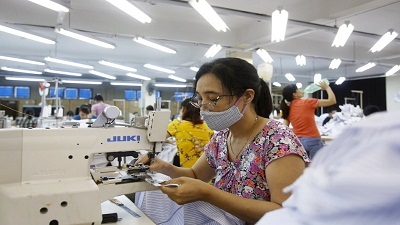
While all member countries stand to benefit from Trans-Pacific Partnership (TPP), Vietnam is poised to be TPP’s biggest winner. According to a study, compared to a baseline with no TPP -- Vietnam’s income gains in 2025 with a comprehensive TPP would be over 13 per cent higher, while its exports in 2025 would be over 37 per cent greater. Much of these gains would come, especially initially, from Vietnam’s growing production and export of apparel and footwear, resulting from the phase out of high duties in TPP partner countries, especially the United States and Japan.
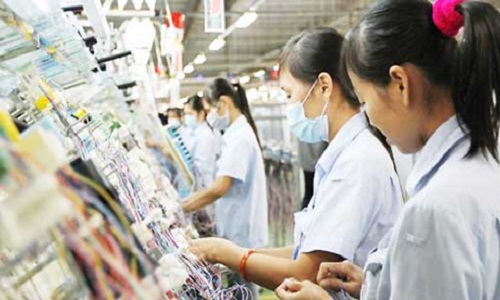
While acknowledging this potential, a number of industry executives are expressing a degree of skepticism about whether Vietnam will be sufficiently prepared to fully appreciate any benefits from countries investing in its economy - and more specifically, its textile and clothing industry.
As Robert Sinclair, COO of LF Sourcing observed at the recent Prime Source Forum (PSF) conference in Hong Kong, Vietnam with or without TPP, remains a good sourcing destination, but warns it has its limitations. Sinclair compares the country's population of just over 90 million to that of China's Guangdong province, which has a labour pool of 104 million. “If we have to factor that in, there is a limitation on what they're going to be able to produce and therefore benefit from TPP as a manufacturing country.” He believes this uncertainty means the door is left open for the Asian subcontinent in general and India in particular.
Challenges ahead
Li & Fung grew its business in Vietnam by 50 per cent, making it the company's second-largest sourcing destination after China between 2014 and 2015. The company employs 325 staff in the country and is obviously a big proponent of it. But even so, Sinclair reiterates concerns over its threshold and limitations.
Raphael Madarang, Director of global trade compliance and supply chain solutions for APL Logistics believes Vietnam faces a number of challenges if it is to take on the volume of business expected as a result of the fall-out from China, particularly from an infrastructure perspective. He mentioned this in the back drop of the news that Vietnam could experience a manpower shortage by 2017 and 2018, so they may not have enough people to run the factories and the mills.
One of the unique features of the TPP for textiles is that it has a yarn-forward rule of origin, which means the yarns used in the products should only be sourced from member countries. Vietnam, however, sources a large amount of yarn from China, a non-TPP country. Ultimately, this means Vietnam will have to make up for that production with a substantial investment in domestic spinning and dyeing facilities. Madarang felt, from a logistics standpoint, there is going to be a lot of movement in raw materials. He also expects a possible movement of raw materials from the US to Vietnam in order for them to capture this benefit since there is also a lot of yarn production in the US.
Foreign investment options
A potential solution to this situation is seen by cotton yarn, fabric and garment supplier Texhong Textile Group is foreign investment. The China-based company began investing in Vietnam in 2006, and last year invested in 500,000 new spindles, bringing its total in the country to 7 million. In 2015, around half of Texhong's capacity came from Vietnam, making it one of the first enterprises in China to have more capacity abroad than at home.
Explains Hong Tianzhu, CEO of Texhong that for Vietnam to enjoy TPP benefits and avoid a shortage of fabrics, there is a need for more weaving plants. In a bid to meet that potential demand, the company is building a 3,300 sq. ft. integrated industrial park in Quang Ninh Province to support the future development of Vietnam's textile industry. The so called Vietnam Galaxy project will include weaving, dyeing and apparel production facilities, and is due to begin production in 2017.
Texhong's investment will not only serve Vietnam's needs, but also help alleviate some of the pressure from higher costs in China. Nonetheless, Tianzhu also has confidence in the consumer market in China, and so, in a further strategic move, is positioning the industrial park on Vietnam's Northeastern border to serve both markets. Despite Texhong's promise to offer Vietnam a sizeable supply of fabric and yarn, one Malaysian manufacturer believes it is in high end apparel that the country is still lacking. Prabakaran Kesavan, Founder of Venlaakwear International is of the opinion that the service level in China is well-established, as is its R&D. These things take time to be copied into other markets like Vietnam. So there is a time gap. But China is not going to be replaced by the TPP. Gradually maybe, and it will start with the downstream. But we are not in competition with China.
Lenzing revenue up six per cent in 2015
Lenzing’s consolidated revenue climbed six per cent in the 2015 fiscal. This increase is particularly due to higher fiber selling prices, the growing share of specialty fibers in its product mix and positive exchange rate effects. Ebitda (earnings before interest, tax, depreciation and amortization) improved by 20.7 per cent.
Adjusted equity increased by 15 per cent. The adjusted equity ratio amounted to 50.6 per cent, the highest level since 2006. Net financial debt was sharply reduced by 27 per cent. Accordingly the ratio of net financial debt to Ebitda declined from 1.9 at the end of 2014 to 1.1 at the end of 2015. The return on capital generated by the Lenzing group improved thanks to the positive earnings development. As a result, the return on capital employed increased to eight per cent compared to minus 0.1 per cent in the previous year. Return on equity rose to 13 per cent.
The share of specialty fibers as a percentage of total group revenue was 40.5 per cent in the 2015 financial year compared to the 35 per cent the previous year. Expenditures for research and development were increased by 47 per cent in line with the company’s strategy of focusing on the development, production and marketing of innovative specialty fibers.
www.lenzing.com/