24th CHIC: The hub of Chinese fashion business attracts record exhibitors
"CHIC (China International Clothing & Accessories Fair 2016 -Spring) took place from March 16 to 18, 2016 right at the beginning of China’s 13th Five-Year-Plan Convention. The fair underlined evolution, not revolution dominates the prosperity of the fashion business. Innovation, especially in the area of research, development, industrial transformation constitutes the ‚main force."
The 24th edition of CHIC, China's largest fashion trade fair, continues to grow and evolve as the event welcomed over 1,300 exhibitors from 20 countries. CHIC (China International Clothing & Accessories Fair 2016 -Spring) took place from March 16 to 18, 2016 right at the beginning of China’s 13th Five-Year-Plan Convention. The fair underlined evolution, not revolution dominates the prosperity of the fashion business. Innovation, especially in the area of research, development, industrial transformation constitutes the ‚main force. And as outlined by Chen Dapeng, Executive Vice President CNGA and Head of CHIC, “The Chinese market is still growing but it is a market for the middle class. The slogan‚ ‘new normal’ expresses that consumers in China are very well aware on styles and prices, but not buying at any price. The price/quality ratio plays an important role.”
International hub of fashion business
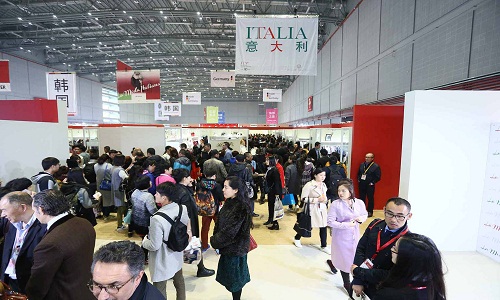
During the three days of the event, 1,04,592 professional visitors registered. Even if this number was lower compared to CHIC in March 2015, the higher quality of visitors was remarkable. As Limin Ou, CEO of Peacebird said they received a lot of positive feedback, the visitor quality as well as the quantity was amazing and they succeeded in reaching their goal. The Chinese market becomes more and more sophisticated and the organizers believe the future for them will lay in quality fashion for China’s growing middle class. The increasing number of international buyers is evident with merchants from as far as Botswana in Africa signing a business contract at CHIC.
Carrefour placed a direct enormous order. Besides trade visitors coming from shopping malls, department stores boutiques, e-commerce platforms also outlet centers attended CHIC. According to Liu, President and General Manager of Shanghai Xiongyi Apparel, a long-time visitors at CHIC, “I am coming to CHIC since many years. I always receive new inspiration here and discover every time new brands for my business.”
Considered Asia’s fashion window, CHIC furnished proof on international cultural and creative industries with total 1,300 brands. Twenty seminars with focus on scientific and technological researches including new sales channels were held during the event. Moreover, 15 fashion shows underlined the new fashion styles.
Lifestyle arenas a lure
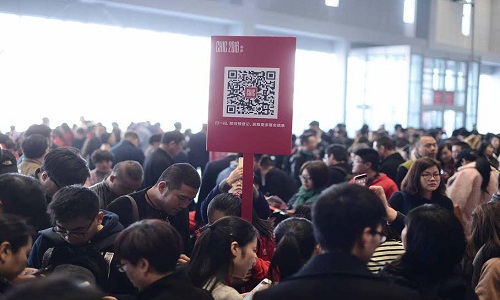
The clear structure of CHIC convinced the professional visitors again. Within ‘Prestige,’ hot discussions were raised regarding customization style innovation and better cost performance. Some of the Chinese brands used CHIC as a platform to re-launch their brand or present new lines. ‘Firs’ re-launched its brand ‘Shanshan,’ ‘Peacebird’ presented a new brand of their group called ‘Whaam’, a new cooperation between Ningbo Peacebird and Disney, targeting the young fashion market in China. Also one of the big Chinese retail brands, ‘Semir’, promoted a new brand within the area ‘New Look’ (womenswear). Liu, Business Development Manager of Semir, explained that their new brand ‘Gson,’ focussed on business style fashion, is profiting from the boom in the commercial real estates of China. Septwolves launched its new brand Totem Wolf – a new fusion of Mao, Tibetan, Dai ethnic characteristics and culture. The leading young team of Totem Wolf supplemented the launch with a relevant mobile phone app.
International fashion journey
The area was enlarged this time and new nations like Netherlands showed up. Chen Dapeng expressed that European brands are demanded in China, but they have to compete with the market prices of same quality in China and review their calculation of prices being partly six times higher than in Europe.
On the occasion of the visit of Dutch fashion labels to Shanghai, the first Sino-Dutch Fashion Dialogue ‘Cross’ was co-organized by the Netherlands Consulate General in Shanghai, RNW Media and Donghua University, CROSS helped the best of Dutch and Chinese fashion form ties through engaging dialogues.
As Anneke Adema, Consul General of the Netherlands in Shanghai said she noticed that throughout China there is a shift to the creative sector and hope this dialogue will make more people familiar with Dutch fashion: sustainable, comfortable, innovative in crossing borders and with a twist. She also expressed that it will also help in creating sustainable ties between Shanghainese and Dutch creative minds.
According to Gerard Roudine organizer the French pavilion ‘Paris Forever’ opined this CHIC was the best in their longtime participations. And Italian pavilion ‘La Moda Italiana’ received more visitors than previous years.
Meanwhile, Brazilian shoe association Abicalcados organized the Brazilian pavilion ‘Brazilian Footwear’. They were happy about the visitor flow and joining forces with CHIC to push their brands into the Chinese market. After several platforms they tried in China, they found now their place at CHIC and will continue in October 2016.
This time, the Chamber of Commerce of Netherlands, Enterprise European Network participated for the first time at CHIC. They received visitors from wholesalers, buyers and agents. And they even placed orders at CHIC. They considered their participation as successful and will plan a larger participation next time.
Participants of the German pavilion got good experiences at CHIC. Claire Thorneycroft, Export Manager at Roesch, liked the clear structure of CHIC and conducted promising talks to enlarge their distribution network. Some German exhibitors exhibited along with their agents in China. This, some said led to a resounding success.
Similarly, London-based PURE with its show-in-show concept at CHIC was optimistic. PURE organizers were happy about this cooperation as they were aware of the strong partnership with CHIC as mediator in the fashion sector.
Istanbul Leather and Leather Product Exporters’ Union (IDMIB) participated for the 3rd time at CHIC. They increased their participation by 50 per cent and announced already a further increase for next CHIC. The Turkish brands for leatherwear, furs and shoes received many trade visitors and considered their participation much more successful than expected.
Information Age at CHIC
This area provided the complete industrial chain software information technology. Information solution enterprises like Qishaon Tech, Quzhuyun Tech, Jiqimote accentuate the necessity of intelligent manufacturing from sewing automation digital printing. 3 D printing or drawing, but also inventions like cloud computing, big data to improve the industrial standards to 4.0.
CHIC is the recognized mediator of fashion business in China. Since its beginning in 1993, CHIC has established a world-wide network and a very close relationship to whole Chinese fashion circle. CHIC has set its tasks to be the fashion wind vane and to be partner even in more difficult times to see and work out changes and breakthroughs.
Warangal experiences boost in textile industry
Warangal district experienced vast industrial development, especially in the textile production sector, which has in turn boosted employment generation substantially in 2017.
This year, several large initiatives greatly expanded the area’s capacity and the largest of these developments was the laying of the foundation stone of the Kakatiya Mega Textile Park (KMTP) on October 22.
The latest development in the project is that layout of the building is set to be submitted to the government in the first week of January and the project managers will then await its approval. The KMTP initiative is expected to create about one lakh textile related jobs for locals in the area and constitutes a major development in the region and an array of companies, including from South Korea, are involved in the project. The employment that this project will generate will be a great asset to the area.
Another development in the region this year was the setting up of the first regional centre of Telangana Academy for Skills and Knowledge (TASK) in Hanamkonda. MLA, D Vinay Bhasker, who was part of the group that set up the academy. Assembly Speaker S.Madhusudhana Charysays that theTelangana government is going ahead with an avant-garde approach in ensuring development of not just Warangal district but of whole state. As the KMTP project pushes ahead into 2018, further development in the area’s textile industry is expected to follow.
Kumar Mangalam sells Kesoram stake in B K Birla group outfits
In a significant development, new promoter Kumar Mangalam Birla sold off most of Kesoram's cross holdings in other B K Birla Group companies and also disposed stakes in own group outfits like Aditya Birla Fashion at one go, netting close to Rs 300 crores.
Market observers say these deals are believed to be part of Kesoram's ongoing restructuring exercise which would help B K Birla's grandson Kumar Mangalam to manage Kesoram efficiently, removing it from inefficient business units and group cross-holdings.
To trim its diversified business operations, Kesoram Industries hived off its rayon and transparent paper business to a wholly-owned subsidiary for Rs 480 crores. In September, it had sold truck and bus radial tyre plant at Haridwar to JK Tyre.
Recent transactions, carried out in the open market, reduced to zero Kesoram's holdings in several B K Birla Group companies like Century Enka, Century Textile, Mangalam Timber Products, Mangalam Cement and also in K M Birla's own group outfit Aditya Birla Fashion.
While the biggest deal in monetary terms is the sale of 2.46 per cent in Century Textile for Rs 142.86 core, the most important transactions have been those involving companies like Mangalam Cement and Mangalam Timber. These companies are being managed by Manjushree Khaitan's daughter Vidula Khaitan as per her grandfather's Will.
DuPont launches Type 3 liquid-tight garment
DuPont has unveiled a new Type 3 liquid-tight garment for personal protective apparel, DuPont Tyvek 800 J. This is a new limited-use Type 3 chemical protective garment that is both durable and light weight. The garment resists pressurized jets of low-concentration, water-based, inorganic chemicals while providing protection, and freedom of movement due to its novel Tyvek 800 J Fabric Technology.
The product is geared to be used in industrial cleaning applications including pressure washing and tank cleaning, food processing, petrochemical installations, environmental remediation, maintenance, and other pharmaceutical operations. Tyvek 800 J is also suitable for use in cleaning operations using spray guns where the operator may be exposed to liquid splash.
DuPont's earnings for fourth-quarter 2015 beat expectations, but currency headwinds due to a strong US dollar and weak results in its agriculture business dented both top and bottom lines in the quarter.
PRGMEA, CCCT signs MoU to expand apparel business
Pakistan Readymade Garments Manufacturers & Exporters Association (PRGMEA) and China Chamber of Commerce for Import and Export of Textile and Apparel (CCCT) have inked a memorandum of understanding (MoU) to promote and expand cooperation between Pakistan and Chinese textile and apparel companies. The MoU was signed during China Asia Textile Forum 2016 at Shanghai. Ijaz Khokhar, Chief Co-ordinator inked the MoU on behalf of PRGMEA while CCCT was represented by its chairman Jiang Hui.
The guest speaker from Pakistan side, Khokhar also made a presentation on Pakistan textile and apparel sector at China Asia Textile Forum. The forum was attended by major apparel associations and many leading Chinese garment companies from the whole Asia.
As per the MoU, PRGMEA will provide visa assistance to Chinese companies through invitation letters. In first phase, CCCT delegation is visiting Pakistan to attend Texpo Fair being held first time in Pakistan from April 7 to 10. PRGMEA will arrange factory visits for Chinese delegation, and B2B meetings with its members. PRGMEA also plans to arrange a trade delegation to visit China by the end of this year. It is expected that Chinese companies will establish their units at CPEC Economic zones through joint ventures of the local companies, with PRGMEA playing leading role after striking this deal with CCCT.
Both, PRGMEA and CCCT have also agreed to deal with managing business contacts, seminars, business meetings, presentations, exhibitions, fairs holdings and other arrangements to make potential partners and export possibilities available in the two countries.
Korean firms flout labor laws in Myanmar
Korean owned factories in Myanmar have been cited for labor violations. Workers are under pressure in Korean-owned garment factories. Many factories have been found to be non-compliant, particularly concerning laws on working hours and overtime. Most of these Korean factories supply to international brands.
Almost 30 per cent of the factories surveyed failed to abide by the maximum 16 hours weekly overtime limit. Nearly two thirds of workers surveyed (62 per cent) reported being unable to refuse working excessive hours. Almost two-third of workers (63 per cent) said their take home pay is not enough to live comfortably. About 30 per cent of workers are provided pay slips only in English or Korean, another direct breach of Myanmar law which requires pay slip information to be provided in Burmese.
Only 40 per cent of workers have signed employment contracts; many did not have their own copy. Despite a legal requirement that an employer with more than 30 employees should establish a Workplace Coordinating Committee, only 14 per cent of Korean garment factories – all of which had more than 30 employees – have one. Other findings cover discrimination against trade union representatives, medical leave, maternity rights, harassment, child labor and working conditions including fire safety.
Pakistan’s textile units want export refinance
The textile industry in Pakistan wants protection from the invasion of subsidised textile products. It wants a 15 per cent regulatory duty to be immediately imposed on synthetic yarns and fabrics meant for domestic consumption.
The textile sector in Pakistan makes up 57 per cent of the country’s total exports. It wants payment of refunds, drawback on local taxes and levies, product focus market schemes, export refinance, availability of all types of raw materials, cotton and manmade fiber at competitive prices and cotton research through a public-private partnership. Above all it wants investment to flow into the sector so that the objective of doubling exports can be reached.
Pakistan’s trade policy has identified four main points – product sophistication and diversification (research and development, value addition, and branding), market access (enhancing share in existing markets, exploring new markets, trade diplomacy and regionalism), institutional development and strengthening (restructuring, capacity building, and new institutions), and trade facilitation (reducing cost of doing business, standardization, and regulatory measures) to boost the economy.
A significant number of textile mills in key manufacturing hubs of the country have shut down because of their inability to compete with low cost rivals of the likes of Bangladesh and Vietnam.
Texhong to develop platform in Vietnam
Hong Kong’s Texhong Textile Group us one of the world’s largest core spun yarn suppliers. In the year ended December 31, 2015, Texhong Textile’s total sales increased by approximately 10.5 per cent, reaching a record high as compared with the same period last year.
Continuing its expansion strategy, Texhong is set to increase production capacity through self-development and mergers and acquisitions. It had a total of approximately 2.20 million spindles and 572 looms at the end of 2015.
The company plans to develop a textile industrial chain platform in Vietnam. It has also acquired part of a jeans wear manufacturing group’s workforce as well as equipment in China and Cambodia. This will help the company in the form of invaluable experience for setting up the jeans wear business in Vietnam.
With its two yarn projects in Vietnam and China expected to begin in the second and third quarters of this year, spindle capacity will further increase by approximately 28 per cent to 2.81 million spindles — 1.57 million spindles in China and 1.24 million spindles in Vietnam. The company is expected to begin its second phase of construction of a grey fabric factory, a dyeing factory and a garment factory in Vietnam.
www.texhong.com/home/home.htm?languageno=en
India’s denim industry growing at 15 per cent
India’s denim is witnessing one of the fastest growth as an apparel fabric segment in India, up from 700 million meters in 2010 to 1.2 billion meters in 2015. Yet, there is a gap of 300 million meters in India for the denim industry to tap its full export potential. The denim industry is growing at a compounded annual growth rate of 13 to 15 per cent in a year when overall apparel growth rate is being pegged at three to five per cent this fiscal, down from 12 to 15 per cent for the past couple of years.
Denim makes up 35 per cent of total textile exports from India and is expected to rise to 45 per cent of total exports by 2020; production is also expected to increase to 1.5 billion meters by 2020. While the total denim capacity in the country is about 1.2 billion meters per annum, the utilisation is at around 900 million meters per annum, of which 250 million meters would be exports.
The Indian denim industry is gradually looking to increase its share of exports. As an apparel segment, denim’s growth has been more in the domestic market than in exports.
Welspun India expects 14 sales growth in Q4 of this fiscal
Welspun India expects 22 per cent Ebitda growth in Q4. Continued demand in the key US market, increase in towel or bed linen capacity and realisation gains from currency depreciation may help drive 14 per cent sales growth in the fourth quarter. Ebitda margin is expected to remain similar to third quarter levels at 27 percent (up180 basis points year on year) as higher input costs (in particular, cotton) are offset by gains from currency depreciation and operating leverage.
Welspun India is a home textiles player. Tailwinds from product innovation and new segments (entry into hospitality segment, foray into wearable technologies) may help drive CAGR over 18 per cent. Capacity addition in financial year ’18 through processing lines vs. fully integrated capacity may result in lower capex per unit addition.
Although gross margins would moderate from their third quarter levels due to higher cotton prices, Welspun expects 27 per cent Ebitda margin in the fourth quarter, similar to the third quarter, due to gains from currency depreciation. Increase in capacity utilization levels and likely capacity addition in financial year ’18 (contingent on demand remaining healthy) should aid sales growth. There may be a possible 20 to 25 per cent capacity addition in financial year ’18.
www.welspunindia.com/
More...
Policy issues plague Vietnam’s textile & garment industry
Truong Van Cam, Deputy Secretary General of the Vietnam Textile and Apparel Association (Vitas) feels, many textile & garment companies are leaving the market because of unstable policies. Speaking at a workshop held by the World Bank (WB) and the Vietnam Chamber of Commerce and Industry (VCCI), he recalled how a garment company wanted to import a printer to make products for export and it took them six months to obtain import license.
Cam said on Thoi Bao Kinh Te Saigon, that this was because the Decree 60 stipulated that business owners must have junior college’s degree to be able to import printers. A business in Nam Dinh province, which employs 2,000 workers, said it has to pay VND40-50 billion additionally every month because of the required higher minimum wage and trade union fee. The State’s policies need to be designed in a way to encourage investors to do business and stay in the market, commented Cam.
Anther analyst speaking at the workshop observed that the government seems to be too optimistic about opportunities to be brought to the textile and garment sector by TPP.
Pakistan lags in reliability, security, diversity in apparel trade: WB
Pakistan lags behind competitors in reliability, political stability and lack of diversity, despite low prices in most apparel product categories says a World Bank (WB) report. The report titled, ‘Apparel employment, trade, and economic development in South Asia,’ states many buyers avoid Pakistan because of the security situation and hence entrepreneurs have to travel to Dubai to meet them, which complicates sourcing.
The report observed that Pakistan is cost competitive in most product categories, but it is not a top performer in any of the export categories. One major problem is a lack of product diversity, with the country almost entirely dependent on cotton products and trouser exports. Other problems are reliability, compliance, and political stability and safety, especially Foreign Direct Investment (FDI). Pakistan also has a large labor pool, but productivity is hurt by the limited availability of good sector-specific training institutes and gaps in technical, design, and middle management skills.
The report maintains that Pakistan has a fast-growing apparel sector that accounts for 19 per cent of its exports, and firms are competitive with global exporters in terms of prices. The country ranks fourth in terms of value ($4.2 billion) with the same global market share (1.2 per cent) as Sri Lanka.
Global supply chain feels pressure of changing threat landscape, BSI study
"A BSI Global Supply Chain Intelligence Report cites increasing number of terrorism incidents as major supply chain risk. The report is based on data from BSI’s Supply Chain Risk Exposure Evaluation Network (SCREEN), which provides continuous evaluation across 22 proprietary risk factors and 204 countries. BSI’s 2015 SCREEN data and analysis reveals a clear picture of the changing global threat landscape and how this varies by country, continent, and industry sector."
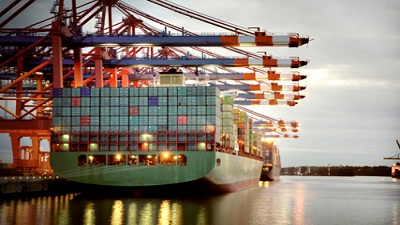
A BSI Global Supply Chain Intelligence Report cites increasing number of terrorism incidents as major supply chain risk. The report is based on data from BSI’s Supply Chain Risk Exposure Evaluation Network (SCREEN), which provides continuous evaluation across 22 proprietary risk factors and 204 countries. BSI’s 2015 SCREEN data and analysis reveals a clear picture of the changing global threat landscape and how this varies by country, continent, and industry sector.
BSI’s report noted a number of cross-border issues that threatened supply chains across the world in 2015. This include: damages caused by cargo theft; increased number of terrorism incidents contributed to billions of dollars in losses to global shipping companies; an influx of migrants in Europe that harmed supply chain integrity across the continent; economic downturns in Argentina, Brazil, and China; and issues of political transparency that drove social unrest in Africa and Central America. Extreme weather events, including many attributed to the El Nino phenomenon, caused supply chain disruptions and threatened business continuity in multiple regions. There were also several industries that were plagued by poor enforcement of labour regulations, allowing for significant rates of child or forced labour in Argentina and India, among other nations.
Security concerns
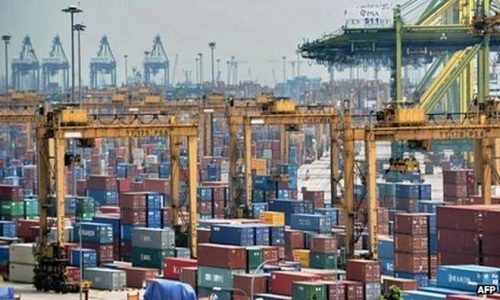
The report said, nearly AUD$30 billion was lost due to cargo theft worldwide in 2015 from a variety of supply chain threats, predominantly driven by security concerns. South Africa has seen a 30 per cent increase in cargo truck hijackings over the last year, with thieves using high levels of violence and switching from targeting only high value goods to also targeting lower value items. Daring vehicle shipment thefts have become increasingly commonplace in China, with a recent series of in-transit vehicle thefts occurring along the busy G45 highway. More sophisticated attacks were observed in India throughout 2015, where criminal gangs masterminded new techniques to steal goods without breaking customs seals to avoid detection – a major risk for companies participating in international supply chain security programs.
Terrorism and supply chain
It further said, in Europe, disruptions in trade caused by the ISIS terrorist group clearly highlighted the link between terrorism and the supply chain. Border controls in France following the November attacks in Paris are estimated to have cost the Belgian shipping industry AUD$4.6 million. Terrorist-linked smuggling rings were also identified to be colluding between Spain and the Middle East, the groups illegally transporting shipments of stolen electronics, drugs, weapons and other contraband. Elsewhere, the Jordanian trucking industry suffered AUD$990 million in lost revenue since conflict began in the Middle East in 2011.
In addition to theft, business continuity-related threats such as extreme weather events and political and social unrest, led to significant losses for individual companies and national economies last year. 2015’s top five natural disasters caused a collective AUD$33 billion of damage to businesses. In 2016, BSI has identified emerging health crises, such as the Zika virus, could also pose a significant threat to the global supply chain and may lead to work stoppages and protests similar to the supply chain disruptions seen in conjunction with the Ebola epidemic.
Labour issues
Coupled with labour unrest and factory strikes have also caused considerable financial damage across the world. Factory strikes in China increased by 58.3 per cent from the previous year due to pay disputes, as factory owners struggled to pay workers due to a slowing economy, leading to protests. The withholding of wages was cited as a major cause in 75 per cent of protests and generated losses of up to AUD$35 million in the footwear industry. Labour unrest is likely to continue in China in 2016, regardless of whether the economy improves.
Numerous cases of child and forced labour were exposed in 2015, highlighting the need for visibility into corporate supply chain to mitigate the risk of human rights abuses. Nearly 80 per cent of Argentina’s textile industry was found to be sourcing from unregulated facilities, where forced, child labour and poor working conditions are common. BSI also noted an increase in the risk of child labour use in India due to the existence of loopholes in labour reforms approved in 2015. In response to these and other recent concerns, European countries and the United States last year moved to pass laws mandating reporting on corporate social responsibility issues in corporate supply chains.
Threat potentials in 2016 include:
The study also listed out certain threat potentials for 2016. These include: Global cargo theft cost estimated to grow by a further AUD$1.3 billion in 2016; increased concerns in China, Germany, India, Mexico, South Africa, and US; continued tensions in South China Sea predicted to lead to further protests and disruptions; conflict in Syria; migrant crisis in EU to lead to port disruptions; EU/Schengen border controls predicted to have far-reaching impact; labour unrest in China, as a slowdown in the economy continues; La Nina and other weather phenomenon; health crises due to Zika and Ebola etc.
Buyers want high end denim from Bangladesh
Bangladesh is drawing the attention of global buyers for high-end denim. Rising costs in China have created an opportunity for Bangladesh to grab a share of the denim segment. Bangladesh now produces more value-added products. It targets denim exports worth $7billion by 2021, when the country's total garment export is expected to cross the $50 billion mark.
Price is the advantage of Bangladeshi denim makers that helps them retain the top exporting position in the EU and maintain the third position in the US. Global brands have started exploring the sourcing potential of handloom denim fabrics dyed with natural indigo from Bangladesh.
In recent years a few companies in Bangladesh have started cultivating natural indigo and this indigo is mainly used in dyeing high quality, handmade products for high end and luxury markets. Denim made on handlooms is softer than mill made denim, has a unique texture and breathes well and helps feel cool in summer and retain body warmth in winter. Organic cotton and natural indigo dye are used for producing the handloom denim fabric.
Sustainable fashion companies in Germany are working with a company in Bangladesh to produce hand-woven indigo denim fabric.