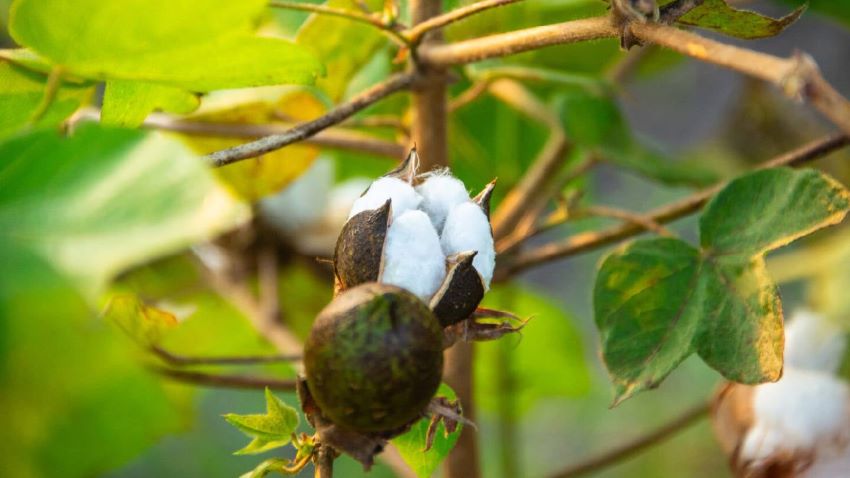
Over the years Zimbabwe’s production of cotton has fallen.At one time cotton farming was a major foreign currency earner. A large number of farmers have since abandoned the crop, which was at one point ranked Zimbabwe’s top agricultural export, and they opting for more viable ones such as tobacco and soya beans.
There are challenges related to production, pricing, marketing and late provision of inputs. Price wars have become the norm.
About 106 cotton buying points will be set up across the country, up from 98 last year. Free inputs are being provided to farmers in a bid to revive the sector.
Farmers are in favor of buyers visiting each farmer and buying the cotton right from the farmer’s doorstep. Farmers are expecting a price of 63 cents per kg to remain in business.
The price is negotiated between farmers and buyers, and farmers will be paid according to the grade or quality of their seed cotton. Only registered buyers would be allowed to buy the crop from farmers from areas which they supported growers with inputs.
The cotton firm, Cottco, once a major player in the sector, is aiming to revive production.
The country’s cotton buying season opens on June 1.

- 1
- 2
- 3
- 4
- 5
- 6
- 7
- 8
- 9
- 10
From gym to boardroom performance fabrics are redefining apparel demand
The global apparel industry has entered a new phase of evolution as the distinction between sportswear and everyday fashion continues... Read more
Digital Dominance Redefined: Zara moves past H&M in $100 bn fast fashion bat…
The global fast-fashion sector has reached a inflection point in 2026 where the battleground is no longer only store shelves... Read more
Spykar accelerates offline expansion: plans 100 new stores across India
A titan of the Indian denim-first fashion scene, Spykar has officially unveiled an aggressive retail growth strategy. As consumer demand... Read more
The Inventory Illusion: Rethinking the Zara benchmark in a volatile retail era
For over a decade, the global fashion industry has treated the Zara playbook as the gold standard of inventory efficiency.... Read more
Retail Without Retail: How Walmart’s depot network is turning space into logisti…
Walmart is fundamentally rewriting the commercial real estate and retail logistics playbook with the rise of its ‘Walmart Depots’ a... Read more
Global textile regulation tightens, forcing realignment across fashion supply ch…
Global fashion and consumer goods supply chains are entering a decisive regulatory transition as Extended Producer Responsibility (EPR) frameworks for... Read more
Luxury’s new power axis, US dominance, China reset, Gulf surge
As the post-China luxury order takes shape, the US is emerging as the industry’s most dependable growth engine, while Japan,... Read more
India’s $9 Billion Landfill Blind Spot How trashed clothes hold the key to globa…
A massive economic windfall is sitting uncollected in India’s landfills, and the key to unlocking it lies in rethinking how... Read more
Red Sea crisis reshapes textile trade routes, challenges India’s export margins,…
Global apparel trade is now in a new operational phase where geopolitical stability and logistics reliability are as important as... Read more
EU’s textile waste rules enter enforcement phase, raising alarms across fashion …
Europe’s apparel and textile industry is approaching one of its most significant regulatory transitions in decades. As the European Union... Read more