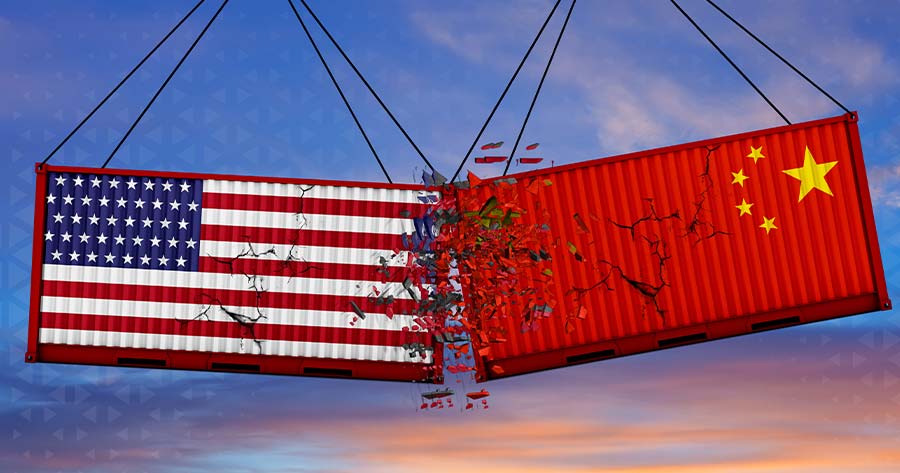
Vietnam’s textile and garment industry concluded 2025 with an export turnover of approximately $46 billion, marking a 5.6 per cent Y-o-Y increase. While this performance solidifies the nation’s status as the world’s third-largest exporter - trailing only China and Bangladesh - the final figures fell slightly short of the initial $48 billion industry target. This marginal shortfall is attributed to significant international policy transitions and a regime of aggressive US tariffs that disrupted seasonal order flows. Despite these macro-volatilities, the sector maintained a robust trade surplus of $21 billion, reaffirming its position as a primary pillar of the national trade balance.
Divergent trends in yarn and apparel
A notable trend in the 2025 data is the divergence between finished goods and raw materials. Apparel shipments dominated earnings, contributing roughly $38 billion to the total. Conversely, the yarn segment faced intense downward pressure; while export volumes rose, the total value of yarn exports declined. This ‘volume-value gap’ reflects a surplus of supply in regional spinning markets and stiff price competition from China and India. The current landscape forces us to shift from a high-volume model to value-driven manufacturing, stated Truong Van Cam, General Secretary, Vietnam Textile and Apparel Association (VITAS). This shift is evident in the 2026 outlook, where many enterprises have secured orders through Q1 by focusing on higher-margin, specialized technical textiles.
Strategic sourcing and the green transition
The industry is proactively preparing for a high-output 2026, evidenced by a sharp year-end increase in cotton and yarn imports. With a domestic localization rate now reaching 52 per cent, manufacturers are still importing nearly 70 per cent of high-grade raw materials to meet stringent rules of origin required by the EVFTA and CPTPP. Opportunities in the coming year are concentrated in ‘green’ manufacturing. To retain Tier-I global clients, Vietnamese firms are investing heavily in water-recycling systems and solar-powered facilities. As 2026 begins, the sector is increasingly moving toward a ‘multi-pillar’ model, diversifying into technical sportswear and medical textiles to hedge against concentrated market risks in the US and EU.