VF Corporation has become a signatory to the Fashion Industry Charter for Climate Action. In signing the charter, VF Corp furthers its commitment to global climate advocacy and engagement and joins more than 40 fashion and apparel industry companies in the shared pursuit of net-zero emissions by 2050, among other specific targets.
The Fashion Industry Charter was launched in Poland in December 2018. Signatories work as individual organizations and collectively through six working groups to advance commitments that include reducing their aggregate greenhouse gas emissions by 30 per cent by 2030; analyzing and setting a decarbonization pathway for the fashion industry; supporting the movement toward circular business models and acknowledging the positive impact this will have toward reducing GHG emissions within the fashion sector; and establishing a dialogue with governments in key countries to enable renewable energy, energy efficiency and the necessary infrastructure for a systemic change beyond the fashion industry.
Climate action is a central pillar of VF Corp’s sustainability strategy. In 2015, the company announced its goal to use 100 per cent renewable energy in all owned and operated facilities worldwide by 2025. VF Corp is working to establish science-based climate targets with the goal to announce them later this year.
- 1
- 2
- 3
- 4
- 5
- 6
- 7
- 8
- 9
- 10
Beyond the DTC Rush: Levi’s hybrid channel strategy sets a new retail benchmark
The global apparel sector is entering a phase where channel strategy is no longer a tactical lever but a core... Read more
The New Rules of Resale: EPR turning secondhand into fashion’s strategic growth …
The global fashion industry is facing a decisive regulatory and commercial reset. What began as a sustainability narrative around reuse... Read more
The 2027 Mandate: Why denim’s future hinges on verifiable data
For decades, the global denim industry has relied on a narrative of durability, heritage, and authenticity. That narrative is now... Read more
Europe’s textile core unravels as costs, imports and policy pressure bite
Europe’s textile and apparel sector, long seen as a benchmark for craftsmanship and industrial depth, is slipping into a prolonged... Read more
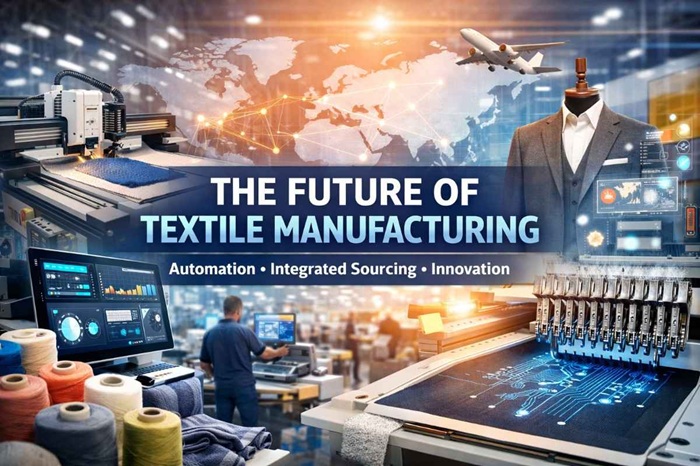
Automation, innovation, regulation are the forces shaping textiles in 2026
The global textile sector has entered a new era. Early 2026 saw the industry breach a $1.06 trillion valuation, reflecting... Read more
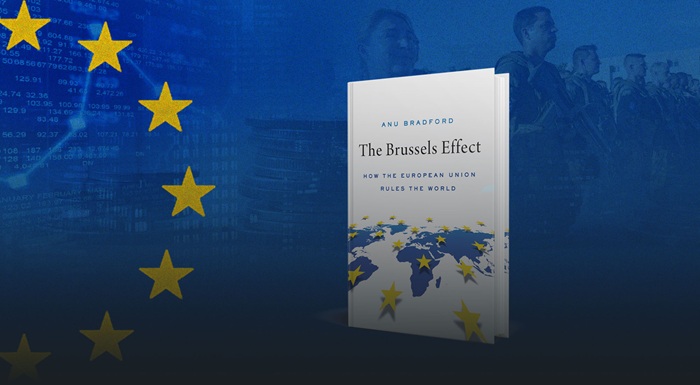
The new Brussels rulebook, every EU apparel order is now a balance-sheet risk
The humble export order sheet is undergoing a transformation. What was once a straightforward commercial instrument: SKU, volume, FOB price,... Read more
Why 2026-27 could be a defining cotton year for India’s farm-to-fashion economy
The global cotton economy is entering a more constrained phase, and for India, the implications run far beyond the farm... Read more
Luxury resale’s next big battle is no longer digital, it is about who controls s…
For nearly a decade, the luxury resale story was written in the language of platforms. Market leadership was measured by... Read more
Digital Arms Race: Indian apparel giants deploy AI to neutralize tariff crisis
The Indian textile and apparel sector is in a digital survival phase in 2026, shifting from traditional labor-intensive models to... Read more
Europe’s Textile Endgame: Why Project FAE is becoming fashion’s most critical in…
Europe’s apparel majors are no longer treating circularity as a branding layer. With Project FAE or Feedstock Activation Europe, the... Read more