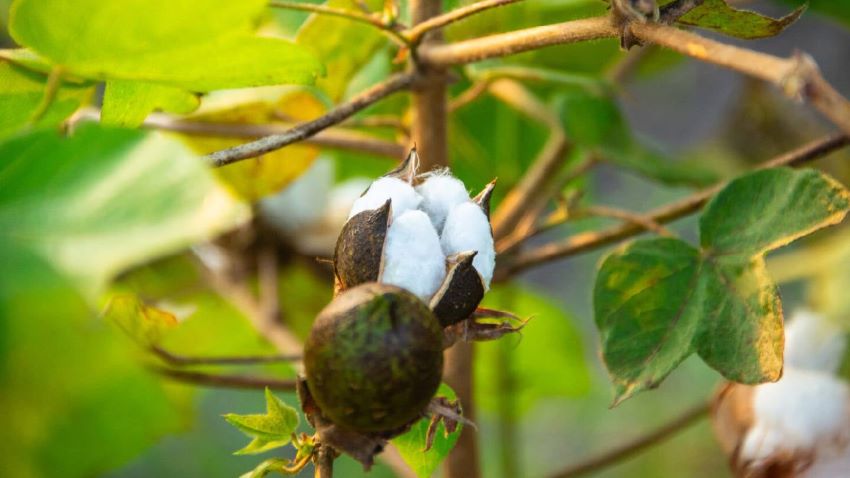
The US Department of Agriculture (USDA) forecasts substantially higher production of cotton with a moderate increase in consumption. Global production is estimated at 104. 35 million bales (1 bale = 480 pounds) in 2016-17 compared to 99.54 in 2014-15, up 4.8 per cent. The likely increase in production is largely attributed to the US, India, and Pakistan. There aren’t any major increases in acreage, but extreme weather conditions and pest attack of last year that negatively impacted crop yields are not anticipated in 2016-17. In 2016-17, the USDA expects US cotton production at 14.8 million bales, India at 28 million bales and Pakistan at nine million bales, which are 15 per cent, 4 per cent, and 29 per cent higher than 2015-16 figures, respectively.
However, Brazil and China are likely to have lower production. China’s cotton production has been pruned for a third consecutive year to 23.8 million bales in 2015-16 and 22.5 million bales in 2016-17. The slide comes in the midst of lower price realisations (cotton prices lost 30 per cent in 2014), reduced support prices and increased preference for food grain crops.
The USDA estimates global cotton consumption at 110.78 million bales in 2016-17 compared to 109.02 million bales in 2015-16. China’s cotton consumption (use of cotton by mills) had gone down in recent years on account of factors like higher domestic prices, falling man-made fiber prices and overall industrial slowdown; and no major upturn is expected. However, cotton consumption in China is expected to grow slightly in 2016-17 on lower domestic prices.

- 1
- 2
- 3
- 4
- 5
- 6
- 7
- 8
- 9
- 10
The new fashion equation, quality, agility and value replace speed and discounts
The traditional order that once separated low-cost fast fashion from premium luxury is steadily breaking down as consumers become more... Read more
AI goes invisible as fashion brands rewire design studios
The fashion industry's digital transformation is entering a new phase. After investing heavily in sophisticated 3D computer-aided design (CAD) platforms... Read more
Natural fibers gain ground as global retail pushes back against polyester
A change is underway across the global textile industry as consumer preferences begin to alter sourcing decisions that have long... Read more
From exclusivity to engagement, luxury retail rewrites its growth strategy for 2…
The global luxury industry is entering a different growth cycle. After years of post-pandemic spending riding on affluent consumers and... Read more
Shaping the future of fashion at BRICS+ 2026
The upcoming BRICS+ Fashion Summit in Moscow promises to be a pivotal international gathering, offering a dedicated platform for fast-growing... Read more
The 10.3 mn-tonne cotton trade boom will be driven by scarcity, not surplus
The global cotton trade is entering an unusual expansion phase. Trade volumes are expected to rise steadily over the next... Read more
From Volume to Value: How fashion supply chains are defending margins through 20…
For decades, the global textile and apparel industry measured success through factory utilisation. Full order books, high machine occupancy and... Read more
The new retail math, smaller footprint, faster returns, sharper focus
The US retail industry is passing through one of its most impactful change in decades. What appears on the surface... Read more
The Operator Economy: China is rewriting the rules of global brand ownership
For decades, Western brands relied on centralized control over design, distribution, merchandising, and retail expansion in China market. That model... Read more
US cotton blacklist reshapes global textile supply chains
The US’ latest expansion of the Uyghur Forced Labor Prevention Act (UFLPA) Entity List is more than another trade sanction.... Read more