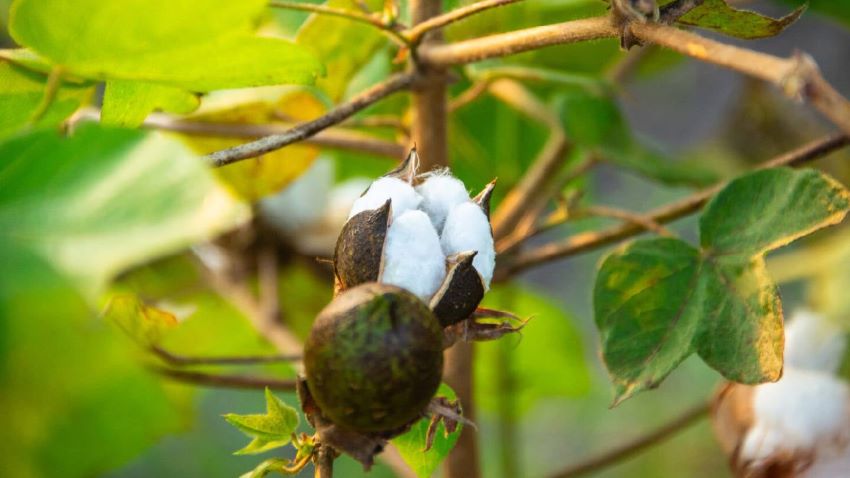
The Cotton USA Sustainability Task Force has established goals for improvements in key areas of environmental stewardship, farm productivity and resource efficiency including land, water, air, input and energy use by 2025. The task force was established by the US cotton industry in 2017. It includes representatives from all US cotton industry’s seven raw cotton segments: cotton producers, ginners, merchants, co-ops, warehousers, cottonseed processors and US textile mills. The US is the world’s largest cotton exporting country and the third largest producer.
The goals set by the task force to be achieved by 2025 are: reducing the amount of land needed to produce a pound of cotton fiber by 13 per cent; reducing soil loss by 50 per cent, in balance with new soil formation; reducing greenhouse gas emissions by 39 per cent; reducing energy to produce seed cotton and ginned lint by 15 per cent; increasing water use efficiency (more fiber per gallon) by 18 per cent; and increasing soil carbon in fields by 30 per cent.
The United States cotton industry is the first to establish national, quantifiable goals for sustainability. Additionally, its farmers operate under voluminous, stringent and enforceable regulations. The industry has made great gains in sustainability over the past 35 years.

- 1
- 2
- 3
- 4
- 5
- 6
- 7
- 8
- 9
- 10
The new fashion equation, quality, agility and value replace speed and discounts
The traditional order that once separated low-cost fast fashion from premium luxury is steadily breaking down as consumers become more... Read more
AI goes invisible as fashion brands rewire design studios
The fashion industry's digital transformation is entering a new phase. After investing heavily in sophisticated 3D computer-aided design (CAD) platforms... Read more
Natural fibers gain ground as global retail pushes back against polyester
A change is underway across the global textile industry as consumer preferences begin to alter sourcing decisions that have long... Read more
From exclusivity to engagement, luxury retail rewrites its growth strategy for 2…
The global luxury industry is entering a different growth cycle. After years of post-pandemic spending riding on affluent consumers and... Read more
Shaping the future of fashion at BRICS+ 2026
The upcoming BRICS+ Fashion Summit in Moscow promises to be a pivotal international gathering, offering a dedicated platform for fast-growing... Read more
The 10.3 mn-tonne cotton trade boom will be driven by scarcity, not surplus
The global cotton trade is entering an unusual expansion phase. Trade volumes are expected to rise steadily over the next... Read more
From Volume to Value: How fashion supply chains are defending margins through 20…
For decades, the global textile and apparel industry measured success through factory utilisation. Full order books, high machine occupancy and... Read more
The new retail math, smaller footprint, faster returns, sharper focus
The US retail industry is passing through one of its most impactful change in decades. What appears on the surface... Read more
The Operator Economy: China is rewriting the rules of global brand ownership
For decades, Western brands relied on centralized control over design, distribution, merchandising, and retail expansion in China market. That model... Read more
US cotton blacklist reshapes global textile supply chains
The US’ latest expansion of the Uyghur Forced Labor Prevention Act (UFLPA) Entity List is more than another trade sanction.... Read more