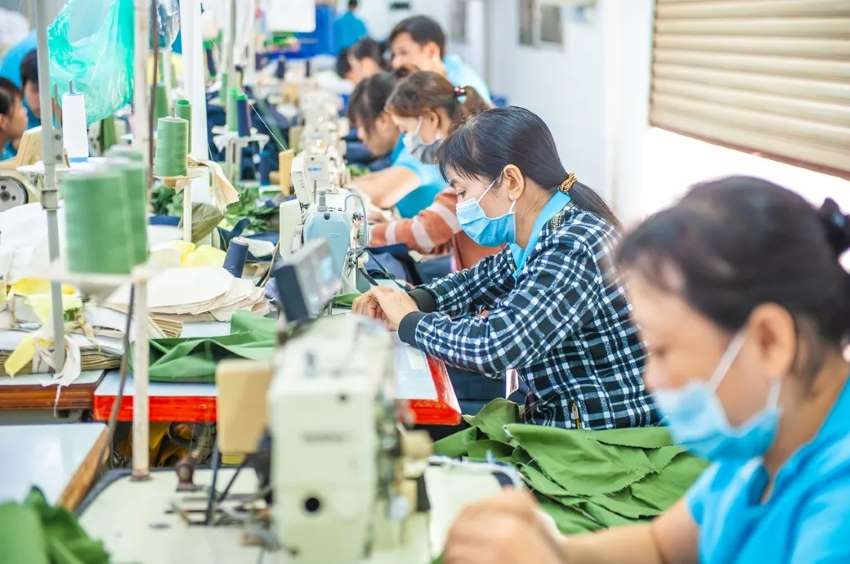
Global retailers’ efforts to clean supply chains of slave labor and improve labor conditions will have little impact unless consumers in India, Asia’s third largest economy, demand more ethically produced goods. India is among the largest manufacturers of textiles and apparel in the world, supplying to leading international brands.
The industry has the most invisible supply chain. It is mostly unorganised, which makes it harder to map and regulate. If domestic consumers raise their voice and insist on buying only ethical products, that will bring pressure on manufacturers. The domestic market accounts for more than 40 per cent of the industry’s revenue. Hundreds of small and medium-sized enterprises use forced labor and treat workers poorly, with abuses ranging from withheld salaries to debt bondage.
The seasonal nature of work in India’s textile industry, the advent of fast fashion and the competitiveness of the business have helped create conditions leading to the exploitation of workers. There is child labor, not just because of a supply pull factor but also a demand push factor. The only way to resolve the issue is to sensitise everyone: businesses, workers and consumers. In India, legislation exists against bonded labor and child labor, but enforcement is weak.
- 1
- 2
- 3
- 4
- 5
- 6
- 7
- 8
- 9
- 10
The £7 Billion Question: Who pays for fashion’s ‘free rental’ habit?
The global fashion industry is facing an uncomfortable paradox: its most valuable customers may also be its most destructive. A... Read more
India, China Bangladesh face fresh headwinds as global apparel markets rebalance
Global apparel trade is entering a more uneven recovery phase, with demand growth persisting but losing uniform momentum across major... Read more
Global cotton enters a deficit year in 2026 as supply drop meets logistics risk
The global cotton economy has entered a fragile and sensitive phase. Early projections for the 2026-27 season suggest that world... Read more
India’s textile trade gets a Pacific push as New Zealand FTA removes tariff barr…
India and New Zealand have inked a ‘once-in-a-generation’ Free Trade Agreement (FTA), one that will have a profound impact on... Read more
Lululemon’s world-first nylon circularity push signals a new apparel arms race
The global apparel industry’s circularity narrative is entering a more technically demanding phase. Polyester recycling once the flagship of sustainable... Read more
Beyond the DTC Rush: Levi’s hybrid channel strategy sets a new retail benchmark
The global apparel sector is entering a phase where channel strategy is no longer a tactical lever but a core... Read more
The New Rules of Resale: EPR turning secondhand into fashion’s strategic growth …
The global fashion industry is facing a decisive regulatory and commercial reset. What began as a sustainability narrative around reuse... Read more
The 2027 Mandate: Why denim’s future hinges on verifiable data
For decades, the global denim industry has relied on a narrative of durability, heritage, and authenticity. That narrative is now... Read more
Europe’s textile core unravels as costs, imports and policy pressure bite
Europe’s textile and apparel sector, long seen as a benchmark for craftsmanship and industrial depth, is slipping into a prolonged... Read more
Automation, innovation, regulation are the forces shaping textiles in 2026
The global textile sector has entered a new era. Early 2026 saw the industry breach a $1.06 trillion valuation, reflecting... Read more