The textile industry generates more harmful Co2 than the entire air and ship traffic as a whole.
Eighty billion pieces of clothes are bought every year, twice as much as 15 years ago and 23 billion pairs of shoes are produced annually.
Mountains of plastic waste, eroded landscapes, droughts or species extinction demonstrate massive environmental pollution, caused by humans and their predatory exploitation of nature.
More plastic than fish could swim in the sea by 2050.
Now consumers can choose environmentally-friendly, climate-neutral and recycled clothes and shoes – without having to accept any compromise on performance.
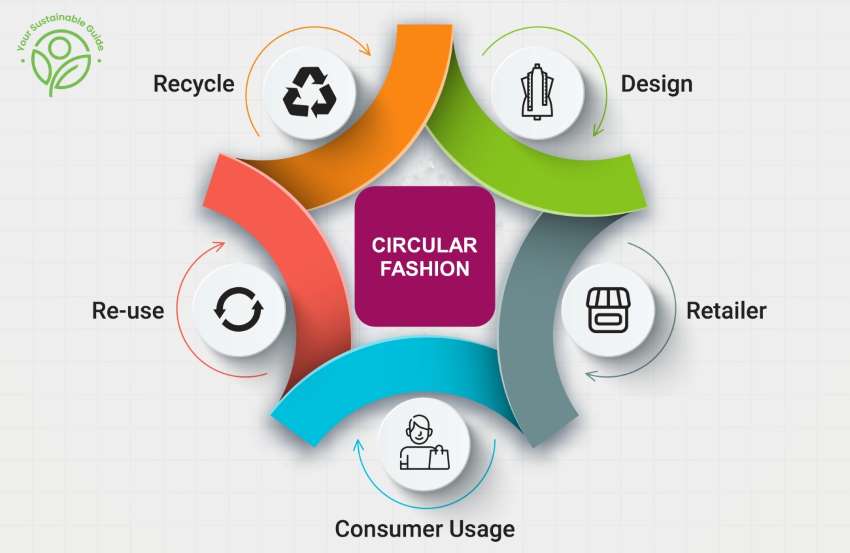
If we don’t close the textile loop soon with joined forces and thus don’t only prevent additional waste and chemicals, but also save precious resources, such as crude oil and water as well as balance CO2 emissions, such a nature will be a thing of the past.
With today’s customers becoming increasingly environmentally mindful, the timing has never been better to bring awareness to the ways that responsible sustainability can be incorporated into a fashion or lifestyle brand.
In the last ten years sustainable practices have merged into the overall circularity movement and have moved from vocabulary to real practice. Circularity in fashion can positively impact the bottom line when executed strategically.
- 1
- 2
- 3
- 4
- 5
- 6
- 7
- 8
- 9
- 10
Polyester volatility redraws India’s textile industry competitive map across Asi…
India’s synthetic textile industry has entered a phase of cost instability as polyester staple fibre (PSF) prices rise across domestic... Read more
The £7 Billion Question: Who pays for fashion’s ‘free rental’ habit?
The global fashion industry is facing an uncomfortable paradox: its most valuable customers may also be its most destructive. A... Read more
India, China Bangladesh face fresh headwinds as global apparel markets rebalance
Global apparel trade is entering a more uneven recovery phase, with demand growth persisting but losing uniform momentum across major... Read more
Global cotton enters a deficit year in 2026 as supply drop meets logistics risk
The global cotton economy has entered a fragile and sensitive phase. Early projections for the 2026-27 season suggest that world... Read more
India’s textile trade gets a Pacific push as New Zealand FTA removes tariff barr…
India and New Zealand have inked a ‘once-in-a-generation’ Free Trade Agreement (FTA), one that will have a profound impact on... Read more
Lululemon’s world-first nylon circularity push signals a new apparel arms race
The global apparel industry’s circularity narrative is entering a more technically demanding phase. Polyester recycling once the flagship of sustainable... Read more
Beyond the DTC Rush: Levi’s hybrid channel strategy sets a new retail benchmark
The global apparel sector is entering a phase where channel strategy is no longer a tactical lever but a core... Read more
The New Rules of Resale: EPR turning secondhand into fashion’s strategic growth …
The global fashion industry is facing a decisive regulatory and commercial reset. What began as a sustainability narrative around reuse... Read more
The 2027 Mandate: Why denim’s future hinges on verifiable data
For decades, the global denim industry has relied on a narrative of durability, heritage, and authenticity. That narrative is now... Read more
Europe’s textile core unravels as costs, imports and policy pressure bite
Europe’s textile and apparel sector, long seen as a benchmark for craftsmanship and industrial depth, is slipping into a prolonged... Read more