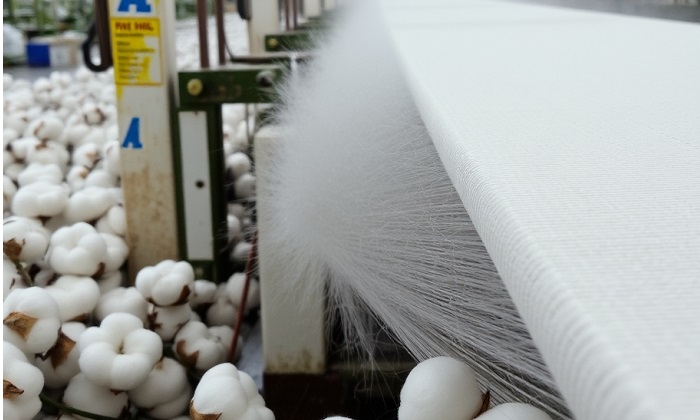
The 'hank yarn obligation', an age old stipulation obligating the textile mills to produce a minimum of 40 per cent of the yarn as hank yarn, is a deterrent to growth and threat to their economic viability. According to the textile entrepreneurs from Tirupur, though there are certain exceptions provided on the clause when it comes to production of blended and hosiery yarn, this old rule holds no significance in the present textile scenario existing in a liberalised economical condition. They wanted the obligation rule either be scrapped or reduce the obligation limit to 10 per cent.
D Prabhu, secretary of Texpreneuers Forum, points out that with the introduction of schemes like Technology Upgradation Fund Scheme, many handloom weavers have moved either to power looms or auto looms. Hence, the demand for hank yarn has come down. The textile units were forced to produce 40 per cent of the yarn as hank yarn without having adequate demand in the market.
Prabhu further says that the forum has pointed out in its representation to the Union Textiles Ministry that due to the hank yarn obligation rule, about 3.21 crore kilograms of hank yarn is produced in the state in a month against the actual requirement of 16.22 lakh kg. Scenario across the country is also almost the same. Textile mill owners are of the opinion that the report of an external agency appointed by the government to study the repercussions of hank yarn obligation on textile sector should be released soon.
- 1
- 2
- 3
- 4
- 5
- 6
- 7
- 8
- 9
- 10
Cotton markets hold firm as tariffs, higher supply reshape global fiber economic…
In a year marked by tariff escalations, geopolitical brinkmanship and a recalibration of global trade flows, the international cotton market... Read more
Beyond Cotton How Kapok could redefine sustainable insulation in textiles
In the lush, humid heart of Southeast Asian rainforests stands a giant, a silent sentinel of the forest canopy. Growing... Read more
Bharat Tex 2026: Redefining the global textile value chain
Union Minister of Textiles, Giriraj Singh, has officially unveiled Bharat Tex 2026, signaling a significant leap in India’s influence over... Read more
Intertextile Shanghai Spring 2026: A hub for global textile innovation
The textile industry’s pulse is quickening as Intertextile Shanghai Apparel Fabrics – Spring Edition prepares to open its doors from... Read more
Moscow Fashion Week 2026: Blending sustainable innovation with timeless glamour
Scheduled to run from March 14-19, 2026 in Moscow, Russia, the Moscow Fashion Week (MFW) is cementing its status as... Read more
The Store as Stage: How fashion is crafting immersive consumer worlds
The North American fashion retail sector in 2026 is shedding its product-first identity and shifting towards a model that values... Read more
Turning the supply chain upside down, on-demand production reshapes apparel
The global fashion industry, long celebrated for its creativity and scale, is facing a structural reckoning. For decades, retailers and... Read more
Intertex Milano 2026 - A global nexus for textile innovation
Intertex Milano is set to return this summer, confirming its status as a premier international destination for the textile and... Read more
Primark at crossroads as AB Foods weighs spin-off amid digital and Lefties press…
The long-standing supremacy of Europe’s budget fashion champion, Primark, is facing a test. As of February 2026, Associated British Foods... Read more
Vietnam, Bangladesh, Cambodia drive US apparel imports in 2025
The 2025 year-end data for the US apparel sector reveals an industry in structural flux. Despite aggressive tariff measures and... Read more