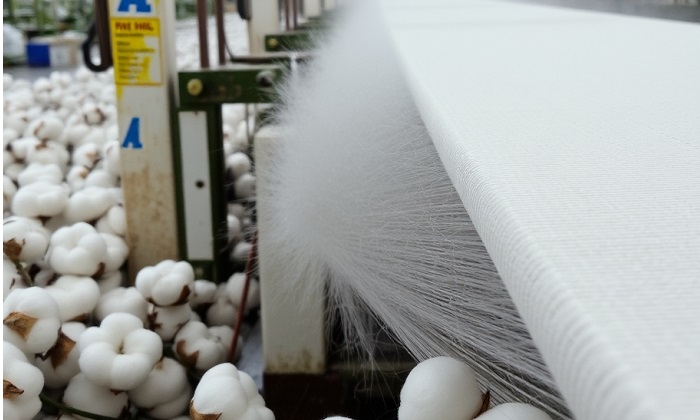
The 15th edition of Texfair in Coimbatore has emerged as a critical staging ground for the Indian textile industry as it navigates the immediate implementation of GOTS 8.0 standards. With over 240 exhibitors currently showcasing at the Codissia complex, the focus of the fair has shifted from mere volume to high-precision engineering and automated air-jet spinning technologies. These systems are specifically engineered to handle synthetic blends with a 30 per cent reduction in power consumption compared to older legacy frames. According to industry leaders at the event, these technological upgrades are no longer optional, but a prerequisite for maintaining margins against rising operational costs.
The integration of Industry 4.0 into spinning frames allows for real-time monitoring essential for the rigorous traceability audits required under the new GOTS framework, noted a senior representative from the Southern India Mills’ Association. A brief examination of local MSMEs participating in the expo reveals a concerted movement toward indigenous automated spare parts management, which has already reduced downtime for several Tamil Nadu-based spinning units by approximately 15 per cent this year. As international buyers from Switzerland and Japan converge on the stalls, the expo underscores a broader sector transition toward a digitally verified, low-impact manufacturing model that aligns with global environmental mandates.
The Southern India Mills’ Association (SIMA) represents the interests of the organized textile industry in South India. Founded in 1933, it supports over 500 member mills across the spinning and weaving categories. SIMA currently focuses on enhancing global competitiveness through technology missions and sustainable raw material procurement strategies.