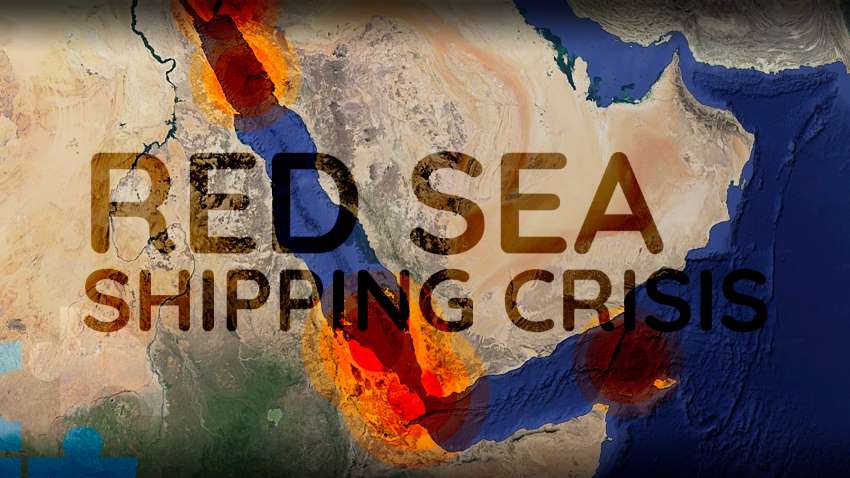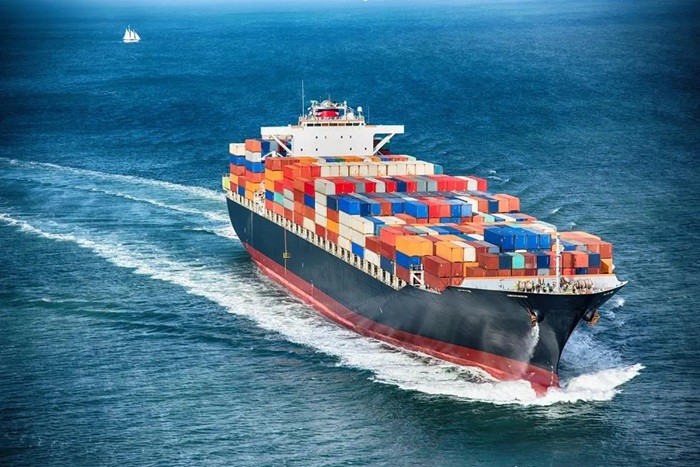
The global textile industry has always lived with thin margins, long lead times, and unforgiving working-capital cycles. But the latest war in the Middle East has exposed just how fragile that balance really is. What began as a regional military escalation between the US-Israel alliance and Iran has rapidly mutated into a full-blown commercial crisis for fiber producers, spinning mills, fabric processors, and garment exporters. With the Strait of Hormuz under disruption and the Bab-el-Mandeb corridor classified as high risk, the maritime arteries that feed raw materials into textile factories have slowed to a crawl.
For an industry where yarn often moves across three countries before becoming a finished shirt, every extra day at sea compounds cost. And every dollar added to freight chips away at already lower margins. The result is not just a logistics problem. It is a structural repricing of the global textile business.
Ocean freight is the new cost center
The most immediate impact is visible on the water. Carriers that once relied on the Suez Canal are now bypassing it entirely steering vessels 3,500 nautical miles around the Cape of Good Hope. The detour adds weeks to shipping schedules and effectively removes capacity from the system. Ships that used to complete three Asia-Europe rotations per quarter now manage barely two.
World Bank and JPMorgan Chase statistics show that these longer voyages are tightening container availability and inflating freight benchmarks at the fastest pace since the pandemic. The numbers illustrate the stress building inside textile supply chains.
Table: Textile supply chain freight cost pre and post conflict
|
Metric |
Pre-conflict (Jan 2024) |
Current crisis (March 2026) |
% Change |
|
Asia-Europe Freight Rate (40ft) |
$1,500 - $2,000 |
$4,500 - $6,200 |
+210% |
|
Transit Time (India to UK) |
22 - 25 Days |
42 - 50 Days |
+95% |
|
War Risk Insurance Premium |
0.05% of hull value |
0.75% - 1.0% of hull value |
+1,400% |
|
Crude Oil (Brent) |
$78/barrel |
$95 - $110/barrel (est.) |
+25% - 40% |
For textile exporters, this is more than an accounting headache. Freight is now eating into 6-10 per cent of order value on basic garments, a ratio that makes many low-margin styles commercially unviable. Factories that priced spring collections six months ago are suddenly absorbing costs they never modelled.
When oil prices rewrite fiber economics
The crisis is not confined to ships and ports. It is working its way upstream into the chemistry of textiles themselves. Synthetic fibers like polyester, nylon, acrylic are derived from petrochemicals. When crude rises, so do the costs of Purified Terephthalic Acid (PTA) and Monoethylene Glycol (MEG), the building blocks of polyester.
With Brent flirting with $110 per barrel, polyester markets have entered near-daily price discovery. Indian Polyester Staple Fiber has already climbed into the $1,150-$1,250 per metric ton band. Chinese export offers hover near $1,000/MT, but mills report volatility that makes forward contracting risky. This matters because synthetics are no longer a niche input. They dominate modern apparel.
Today, more than half of global clothing which is about 56 per cent is polyester-based. That means every energy shock cascades directly into spinning, weaving, knitting, dyeing, and finishing costs. Clusters in Surat and Ludhiana report a familiar squeeze: raw material inflation of 5-8 per cent, but European buyers unwilling to accept price revisions. Margins are being shaved at the mill gate. Some smaller processors have quietly reduced shifts rather than run loss-making orders.
The just-in-time model breaks down
The deeper casualty may be the industry’s faith in speed. For two decades, brands perfected just-in-time sourcing. Produce in South Asia; ship through Suez; ;and in Europe in three weeks; replenish quickly. That system now looks outdated.
One large European fashion conglomerate sourcing nearly half its seasonal knitwear from South Asia recently saw 120,000 units rerouted around Africa. The detour alone added $1,800 per container. More damaging was timing. The goods missed the Easter retail window, triggering early markdowns and a projected 15 per cent drop in full-price sales. To save the best-selling designs, the company resorted to air freight, pushing logistics cost per garment from $0.15 to over $2. Such emergency airlifts may protect sales, but they destroy margin structure. For textiles, which operate on pennies per piece, that math simply doesn’t work.
Nearshoring moves from theory to strategy
These disruptions are increasing a sourcing shift that had been discussed for years but rarely executed. Brands are now prioritizing geography over pure labor arbitrage. Proximity is being priced as insurance. Manufacturing corridors in Turkey, Egypt, and Eastern Europe are seeing renewed inquiries, even though their wages exceed those in South Asia. What they offer instead is predictability that is five to seven days of transit instead of 40.
For mills in India, Vietnam, and Bangladesh, the message is clear: cost competitiveness alone is no longer enough. Reliability has become a selling point. Factories that can stock greige fabric locally or maintain bonded warehouses near consumer markets are suddenly more attractive partners.
Sanctions, trade rules add friction
The conflict has also complicated compliance. Iran’s specialized fiber and carpet exports have largely disappeared from international trade, creating temporary opportunity for alternative suppliers. But new tariffs and origin scrutiny are offsetting those gains.
The US has introduced broad import duties and intensified audits of value addition. Exporters using Chinese yarn or fabrics inside Vietnamese or Cambodian garments now face deeper documentation checks. Containers routed through high-risk straits are more frequently flagged for inspection, adding demurrage and storage costs at West Coast ports. In an industry built on tight calendars, even three extra days at customs can wipe out profitability.
A $1.8 trillion industry reconsiders its model
The broader backdrop makes the shock even more consequential. The global apparel and textile market is expected to approach $1.86 trillion next year, but growth has slowed while uncertainty has multiplied. Major global players such as Inditex, H&M Group, and Adidas are leaning harder into direct-to-consumer channels, inventory analytics, and higher-value smart or performance fabrics to protect profitability. The logic is straightforward: if logistics costs are rising permanently, margins must be rebuilt through product differentiation rather than scale alone.
Commodity T-shirts are losing appeal. Technical textiles, recycled polyester, and functional fabrics carry better pricing power. For mills, the implication is profound. Competing only on volume is becoming dangerous. Value addition is the new buffer.
What the Red Sea disruption ultimately reveals is that textile supply chains were optimized for stability, not volatility. For years, the equation was simple: cheapest labor plus predictable shipping equals profit. That formula no longer holds. Now the calculus includes insurance premiums, rerouting days, fuel volatility, sanctions risk, and geopolitical chokepoints.
In effect, freight has become the new raw material. And just as cotton or polyester prices dictate mill viability, shipping economics now determine which countries remain competitive. If disruptions persist, the global textile map may look very different within five years. Production could fragment across regional hubs. Inventory buffers may replace lean pipelines. And proximity to consumer markets may matter more than wage differentials. For an industry built on thread, the seams are showing. But the businesses that adapt by diversifying fiber sources, investing in technical textiles, and shortening supply chains may emerge stronger. Because in today’s textile trade, resilience has become the most valuable fabric of all.