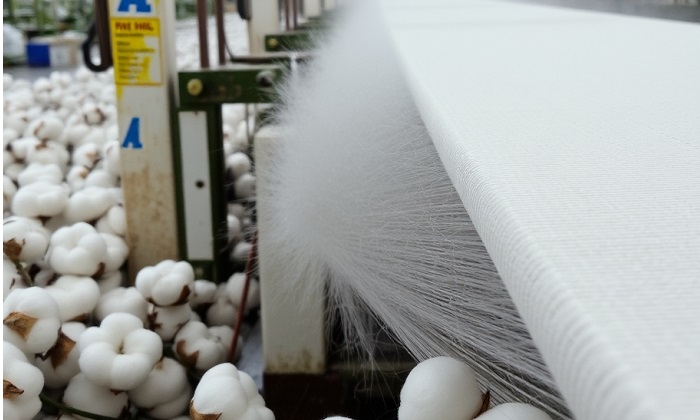
Marcus Bruegel, Technical Director, Global Organic Textile Standard (GOTS) has quit and Rahul Bhajekar has been appointed his successor. Bhajekar will be responsible for further development and quality assurance of GOTS, including environmental and social aspects. He has more than 21 years of experience in textile testing and chemical restrictions, as well as in implementation of GOTS with manufacturers, processors and chemical companies. Rahul has been familiar with GOTS since 2005 and served as a member of the GOTS Technical Committee for several years.
Marcus was with GOTS from the start and has contributed tremendously to its growth and stature. His role in the successful establishment of GOTS as a globally recognised label has been exemplary. As the stringent voluntary global standard body, GOTS is recognized to ensure the organic status of textiles for the entire post-harvest processing (including spinning, knitting, weaving, dyeing and manufacturing) of apparel and home textiles made with organic fiber. Key provisions include a ban on the use of genetically modified organisms (GMOs), highly hazardous chemicals (such as azo dyes and formaldehyde), and child labour, while requiring strong social compliance management systems and strict waste water treatment practices.
Meanwhile the number of GOTS certified facilities have continued to increase. The number of facilities certified by GOTS grew from 3,663 facilities in 2014 to 3,814 facilities in 2015. GOTS certified facilities are now located in 68 countries around the world. India leads the countries with the largest increase in GOTS certification in 2015. India has 1,441 GOTS certified facilities, Turkey 489, Germany 306, Bangladesh 210, China 201, Pakistan 142, Italy 141 among others.
- 1
- 2
- 3
- 4
- 5
- 6
- 7
- 8
- 9
- 10
Cotton markets hold firm as tariffs, higher supply reshape global fiber economic…
In a year marked by tariff escalations, geopolitical brinkmanship and a recalibration of global trade flows, the international cotton market... Read more
Beyond Cotton How Kapok could redefine sustainable insulation in textiles
In the lush, humid heart of Southeast Asian rainforests stands a giant, a silent sentinel of the forest canopy. Growing... Read more
Bharat Tex 2026: Redefining the global textile value chain
Union Minister of Textiles, Giriraj Singh, has officially unveiled Bharat Tex 2026, signaling a significant leap in India’s influence over... Read more
Intertextile Shanghai Spring 2026: A hub for global textile innovation
The textile industry’s pulse is quickening as Intertextile Shanghai Apparel Fabrics – Spring Edition prepares to open its doors from... Read more
Moscow Fashion Week 2026: Blending sustainable innovation with timeless glamour
Scheduled to run from March 14-19, 2026 in Moscow, Russia, the Moscow Fashion Week (MFW) is cementing its status as... Read more
The Store as Stage: How fashion is crafting immersive consumer worlds
The North American fashion retail sector in 2026 is shedding its product-first identity and shifting towards a model that values... Read more
Turning the supply chain upside down, on-demand production reshapes apparel
The global fashion industry, long celebrated for its creativity and scale, is facing a structural reckoning. For decades, retailers and... Read more
Intertex Milano 2026 - A global nexus for textile innovation
Intertex Milano is set to return this summer, confirming its status as a premier international destination for the textile and... Read more
Primark at crossroads as AB Foods weighs spin-off amid digital and Lefties press…
The long-standing supremacy of Europe’s budget fashion champion, Primark, is facing a test. As of February 2026, Associated British Foods... Read more
Vietnam, Bangladesh, Cambodia drive US apparel imports in 2025
The 2025 year-end data for the US apparel sector reveals an industry in structural flux. Despite aggressive tariff measures and... Read more