The latest initiative of the Irish value retailer Primark, a member of a long list of alliances aimed at improving the well-being of garment workers and developing sustainable practices is the German Partnership for Sustainable Textiles (Bündnis für nachhaltige Textilien), which works towards achieving social, environmental and economic improvements throughout the textile supply chain.
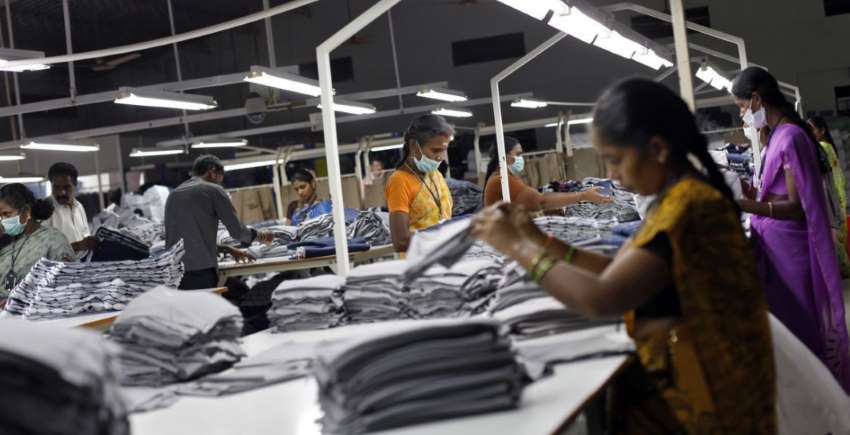
Established in 2014, the multi-stakeholder initiative has international fashion retailers such as H&M and Adidas among its members, as well as trade unions. According to Paul Lister, who is responsible for Primark’s Ethical Trade Team and CSR at Associated British Foods, Primark has been working hard for the last decade to ensure that the rights of workers within our global supply chain are respected and the lives of people working within the garment industry in emerging markets markedly improve, as industrialisation brings new jobs and opportunities.
As part of this work the company have collaborated with many organisations, including the Deutsche Gesellschaft für Internationale Zusammenarbeit GmbH (GIZ), with whom they have worked for more than five years in Bangladesh. For Primark, it is a logical next step to join the Textilbündnis and they look forward to actively participating in the working groups.
- 1
- 2
- 3
- 4
- 5
- 6
- 7
- 8
- 9
- 10
Beyond the DTC Rush: Levi’s hybrid channel strategy sets a new retail benchmark
The global apparel sector is entering a phase where channel strategy is no longer a tactical lever but a core... Read more
The New Rules of Resale: EPR turning secondhand into fashion’s strategic growth …
The global fashion industry is facing a decisive regulatory and commercial reset. What began as a sustainability narrative around reuse... Read more
The 2027 Mandate: Why denim’s future hinges on verifiable data
For decades, the global denim industry has relied on a narrative of durability, heritage, and authenticity. That narrative is now... Read more
Europe’s textile core unravels as costs, imports and policy pressure bite
Europe’s textile and apparel sector, long seen as a benchmark for craftsmanship and industrial depth, is slipping into a prolonged... Read more
Automation, innovation, regulation are the forces shaping textiles in 2026
The global textile sector has entered a new era. Early 2026 saw the industry breach a $1.06 trillion valuation, reflecting... Read more
The new Brussels rulebook, every EU apparel order is now a balance-sheet risk
The humble export order sheet is undergoing a transformation. What was once a straightforward commercial instrument: SKU, volume, FOB price,... Read more
Why 2026-27 could be a defining cotton year for India’s farm-to-fashion economy
The global cotton economy is entering a more constrained phase, and for India, the implications run far beyond the farm... Read more
Luxury resale’s next big battle is no longer digital, it is about who controls s…
For nearly a decade, the luxury resale story was written in the language of platforms. Market leadership was measured by... Read more
Digital Arms Race: Indian apparel giants deploy AI to neutralize tariff crisis
The Indian textile and apparel sector is in a digital survival phase in 2026, shifting from traditional labor-intensive models to... Read more
Europe’s Textile Endgame: Why Project FAE is becoming fashion’s most critical in…
Europe’s apparel majors are no longer treating circularity as a branding layer. With Project FAE or Feedstock Activation Europe, the... Read more