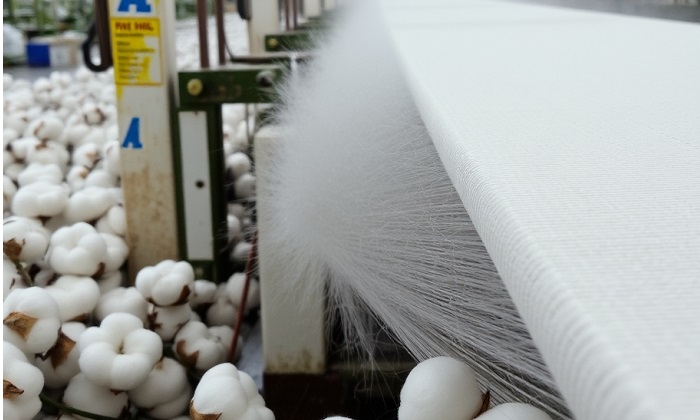
Pashmina shawl weaving, an ancient cottage industry of Kashmir, provides livelihood to thousands of families from both urban and rural areas. While women do the basic processing of dusting, combing and spinning, men weave the yarn into elegant shawls which are in high demand at the national and international level.
Presently there are around 20,000 weavers involved in shawl making. But power looms are souring the picture. When a hand spun pashmina shawl costs around Rs 10,000 in the market, the one blended with silk or other fibers and made on a power loom is priced between Rs 3000 to Rs 3500. A weaver normally earns about Rs 800 to Rs 1000 from handloom and weaves up to six shawls a month. However hundreds of the shawls can be woven in a month with power looms.
The introduction of power looms has affected thousands of pashmina artisans. They are now either shifting to other jobs or are compelled to work for lower wages. Over three lakh women have been hit. To help women, the backbone of the Kashmiri pashmina industry, a foot driven spinning wheel has been introduced for them.
Normally, a woman spins 2.5 grams to three grams of pashum a day but this spindle enables her to spin up to 10 grams a day. Though the spinning wheel costs Rs 5000, it is being provided to women for Rs 1000.

- 1
- 2
- 3
- 4
- 5
- 6
- 7
- 8
- 9
- 10
Trade pacts, integrated manufacturing power India’s textile export ambitions
Global apparel sourcing is entering a new phase in which resilience, compliance and manufacturing depth matter as much as cost... Read more
Next-gen digital Indigo systems redefine textile manufacturing economics
The global textile sector is experiencing a structural shift as industrial-scale digital dyeing technologies replace traditional indigo vats in major... Read more
Fashion retail’s physical comeback, stores become experience hubs
Online shopping has permanently altered fashion consumption, making convenience, algorithmic recommendations, endless assortment and doorstep delivery standard expectations. Yet the... Read more
India reworks apparel export strategy as US tariffs squeeze margins
As tariff volatility, shorter retail buying cycles and aggressive price negotiations in the US expose weaknesses in the country’s traditional... Read more
MIT’s recyclable yarn could disrupt spandex’s grip on fashion
Stretch has become essential to modern fashion. Activewear, denim, underwear and athleisure all depend heavily on elastic fibres such as... Read more
Speed, synthetics and trade pacts propel Vietnam past Bangladesh
Vietnam has overtaken Bangladesh to become the world's second-largest exporter of ready-made garments (RMG), marking more than a symbolic change... Read more
The €2,150 Question: Can Europe afford circular fashion at scale?
Europe's push to build a circular textile economy is facing an uncomfortable commercial truth. The technology capable of producing virgin-quality... Read more
From cotton peaks to polyester pressures, textile supply chains face a reset
The assumption that textile supply chains can absorb periodic swings in cotton prices has become untenable. During the first seven... Read more
Global sourcing reset exposes India’s apparel competitiveness gap
The assumption that global apparel sourcing would naturally shift from China to India is proving increasingly misplaced. Fresh trade data... Read more
The new fashion equation, quality, agility and value replace speed and discounts
The traditional order that once separated low-cost fast fashion from premium luxury is steadily breaking down as consumers become more... Read more