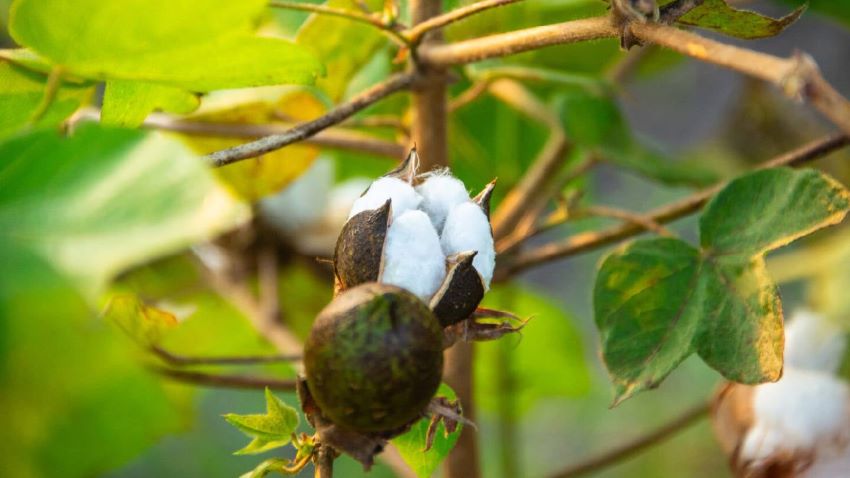
Pakistan’s cotton has a high level of contamination. Contamination is one of the critical issues spinners face in their efforts to maintain first grade yarn quality. The contamination proportion is 20 gm per bale, while the international market standard is only 2.5 gm per bale. Contamination produces low quality lint cotton, yarn and manufactured goods. Generally, the quality of cotton is determined by its color, fiber length, strength and finesse. One of the important factors which make the quality of raw cotton low is contamination.
Pakistan’s cotton has a large impurity content. It has a high level of foreign matter, trash water contents and is considered poor by international standards. These impurities have been reducing the beneficial effect of improved cultivation and impairing not only the quality of raw cotton but also the subsequent processes of textile products.
One way to avoid contamination is to start picking at the time when fully matured bolls are opened. A number of impurities like pieces of leaves, immature and empty bolls, stems, flowers, sticks and weeds, trash and dust mix with cotton due to carelessness of pickers. Cotton is the most important cash crop of Pakistan. It is a major source of foreign exchange earnings and also provides livelihood to millions of people.

- 1
- 2
- 3
- 4
- 5
- 6
- 7
- 8
- 9
- 10
Vietnam wins, India slips as US apparel sourcing undergoes massive reset
A trade realignment is transforming the global apparel market, yet India’s manufacturing has stalled at the starting line. Newly released... Read more
US clothing prices rise faster than inflation, reshaping fashion retail strategy
After nearly two years of heavy discounting, inventory liquidation, and margin decline, apparel prices in the US are now rising... Read more
From gym to boardroom performance fabrics are redefining apparel demand
The global apparel industry has entered a new phase of evolution as the distinction between sportswear and everyday fashion continues... Read more
Digital Dominance Redefined: Zara moves past H&M in $100 bn fast fashion bat…
The global fast-fashion sector has reached a inflection point in 2026 where the battleground is no longer only store shelves... Read more
Spykar accelerates offline expansion: plans 100 new stores across India
A titan of the Indian denim-first fashion scene, Spykar has officially unveiled an aggressive retail growth strategy. As consumer demand... Read more
The Inventory Illusion: Rethinking the Zara benchmark in a volatile retail era
For over a decade, the global fashion industry has treated the Zara playbook as the gold standard of inventory efficiency.... Read more
Retail Without Retail: How Walmart’s depot network is turning space into logisti…
Walmart is fundamentally rewriting the commercial real estate and retail logistics playbook with the rise of its ‘Walmart Depots’ a... Read more
Global textile regulation tightens, forcing realignment across fashion supply ch…
Global fashion and consumer goods supply chains are entering a decisive regulatory transition as Extended Producer Responsibility (EPR) frameworks for... Read more
Luxury’s new power axis, US dominance, China reset, Gulf surge
As the post-China luxury order takes shape, the US is emerging as the industry’s most dependable growth engine, while Japan,... Read more
India’s $9 Billion Landfill Blind Spot How trashed clothes hold the key to globa…
A massive economic windfall is sitting uncollected in India’s landfills, and the key to unlocking it lies in rethinking how... Read more