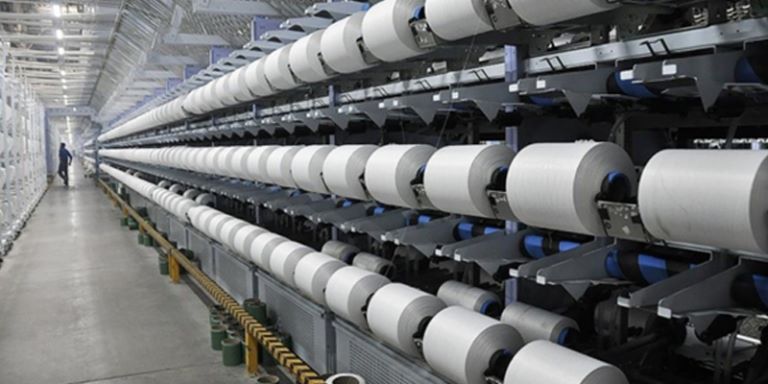
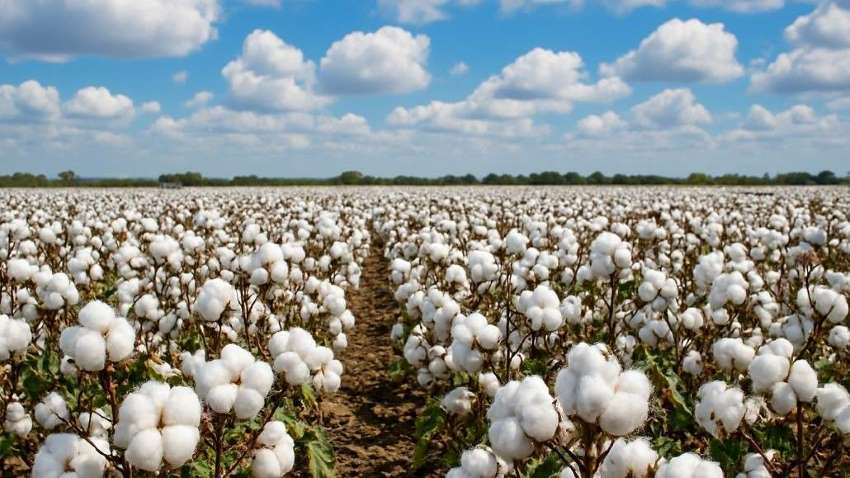
For the first time, new viscose filaments from cotton have been produced by a successful chemical recycling process of polyester/cotton fiber blends. The process is called Blend Re: wind and generates three circular outgoing product streams. Cotton is turned into new high quality viscose filaments and polyester into two pure new monomers.
The project focuses on chemical recycling of polyester/cotton (polycotton) fiber blends with the objective of separating and generating relevant outputs for future industrial use; polyester monomers and a cotton pulp suitable for regeneration into cellulosic textile fibers such as viscose fibers.
Blend Re:wind is a separation process. It is developed having existing industrial processes in mind. The aim is to integrate as much as possible to minimize both environmental and economic costs while boosting businesses. Scaling up from lab scale is the biggest challenge at the moment and it is also costly. The integration possibilities of the Blend Re:wind process would however address these challenges in feasible ways.
The Blend Re:wind process includes high quality of recycled filaments; complete recycling of polycotton blends with pure product streams at high yield; good feasibility with existing industry processes; and strong environmental performance since it is water based and uses only common, cheap bulk chemicals and a catalyst.
- 1
- 2
- 3
- 4
- 5
- 6
- 7
- 8
- 9
- 10
The £7 Billion Question: Who pays for fashion’s ‘free rental’ habit?
The global fashion industry is facing an uncomfortable paradox: its most valuable customers may also be its most destructive. A... Read more
India, China Bangladesh face fresh headwinds as global apparel markets rebalance
Global apparel trade is entering a more uneven recovery phase, with demand growth persisting but losing uniform momentum across major... Read more
Global cotton enters a deficit year in 2026 as supply drop meets logistics risk
The global cotton economy has entered a fragile and sensitive phase. Early projections for the 2026-27 season suggest that world... Read more
India’s textile trade gets a Pacific push as New Zealand FTA removes tariff barr…
India and New Zealand have inked a ‘once-in-a-generation’ Free Trade Agreement (FTA), one that will have a profound impact on... Read more
Lululemon’s world-first nylon circularity push signals a new apparel arms race
The global apparel industry’s circularity narrative is entering a more technically demanding phase. Polyester recycling once the flagship of sustainable... Read more
Beyond the DTC Rush: Levi’s hybrid channel strategy sets a new retail benchmark
The global apparel sector is entering a phase where channel strategy is no longer a tactical lever but a core... Read more
The New Rules of Resale: EPR turning secondhand into fashion’s strategic growth …
The global fashion industry is facing a decisive regulatory and commercial reset. What began as a sustainability narrative around reuse... Read more
The 2027 Mandate: Why denim’s future hinges on verifiable data
For decades, the global denim industry has relied on a narrative of durability, heritage, and authenticity. That narrative is now... Read more
Europe’s textile core unravels as costs, imports and policy pressure bite
Europe’s textile and apparel sector, long seen as a benchmark for craftsmanship and industrial depth, is slipping into a prolonged... Read more
Automation, innovation, regulation are the forces shaping textiles in 2026
The global textile sector has entered a new era. Early 2026 saw the industry breach a $1.06 trillion valuation, reflecting... Read more