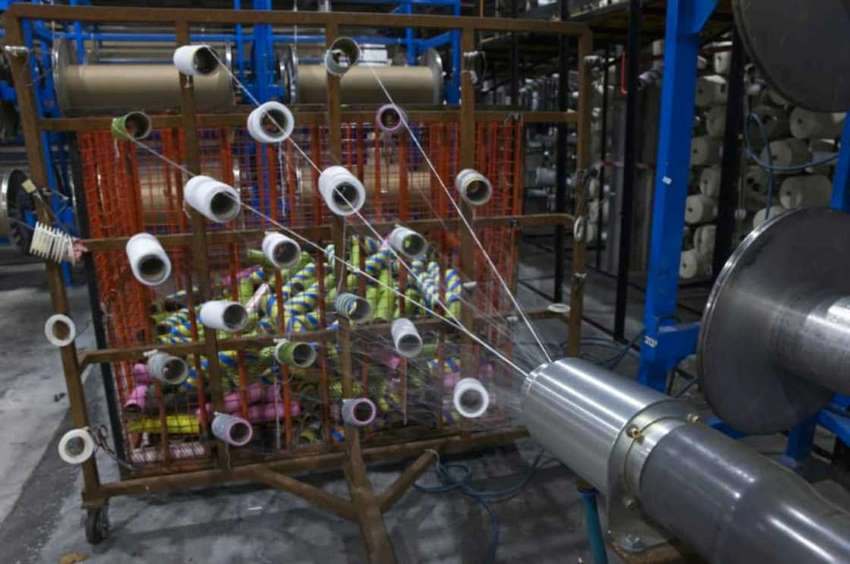
Between 2016-20 the global nanofiber market is expected to grow as the production system is forecast to show improvement with the vendors striving to achieve economy of scale and reduce the breakeven point. Many solution providers such as FibeRio technology, Elmarco are coming up with improved technology and new techniques, showcasing their capabilities to provide comprehensive nanofiber solutions.
According to analysts, the global nanofiber market will grow at a CAGR of 24.12 per cent during the period 2016-2020. The increased adoption of nanofibers in technical textile is the primary growth driver for this market. Technical textiles that include nonwovens make up around 25 per cent of the global fiber consumption and have huge demand in areas like medical devices, water purification, and responsive fibrous system.
During 2015, the filtration application segment dominated the market with a market share of around 59 per cent. However, the electronics application segment is expected to see the highest CAGR during the forecast period. Material cost is an important market driver of nanofiber in electronics application. Nanofibers have a structural advantage such as enhanced conductivity over other materials and are being used as deposits on the pre-patterned SiO2 substrate in field effect transistor (FET). These transistors and other logic circuits find huge application in the electronics sector.
- 1
- 2
- 3
- 4
- 5
- 6
- 7
- 8
- 9
- 10
Global cotton enters a deficit year in 2026 as supply drop meets logistics risk
The global cotton economy has entered a fragile and sensitive phase. Early projections for the 2026-27 season suggest that world... Read more
India’s textile trade gets a Pacific push as New Zealand FTA removes tariff barr…
India and New Zealand have inked a ‘once-in-a-generation’ Free Trade Agreement (FTA), one that will have a profound impact on... Read more
Lululemon’s world-first nylon circularity push signals a new apparel arms race
The global apparel industry’s circularity narrative is entering a more technically demanding phase. Polyester recycling once the flagship of sustainable... Read more
Beyond the DTC Rush: Levi’s hybrid channel strategy sets a new retail benchmark
The global apparel sector is entering a phase where channel strategy is no longer a tactical lever but a core... Read more
The New Rules of Resale: EPR turning secondhand into fashion’s strategic growth …
The global fashion industry is facing a decisive regulatory and commercial reset. What began as a sustainability narrative around reuse... Read more
The 2027 Mandate: Why denim’s future hinges on verifiable data
For decades, the global denim industry has relied on a narrative of durability, heritage, and authenticity. That narrative is now... Read more
Europe’s textile core unravels as costs, imports and policy pressure bite
Europe’s textile and apparel sector, long seen as a benchmark for craftsmanship and industrial depth, is slipping into a prolonged... Read more
Automation, innovation, regulation are the forces shaping textiles in 2026
The global textile sector has entered a new era. Early 2026 saw the industry breach a $1.06 trillion valuation, reflecting... Read more
The new Brussels rulebook, every EU apparel order is now a balance-sheet risk
The humble export order sheet is undergoing a transformation. What was once a straightforward commercial instrument: SKU, volume, FOB price,... Read more
Why 2026-27 could be a defining cotton year for India’s farm-to-fashion economy
The global cotton economy is entering a more constrained phase, and for India, the implications run far beyond the farm... Read more