Myanmar is continuously working to banish the unfavorable image of its textile industry and improve the sector to sustain business. To spruce up its image, the country plans to host seminars for European companies. The first ever code of conduct for the country’s apparel sector was released recently as a guide for best practices and responsible corporate behavior. Employee contracts are not always a part of the country’s business culture. Some factories need to improve this. Some still need to make sure there is an adequate fire safety plan and that working hours don’t exceed the maximum allowed by law.
The country’s apparel sector currently employs at least 3,00,000 workers. Myanmar’s garment sector is growing rapidly. Apparel product types and production options available are significantly more diverse than they were even a year ago.
The industry is increasingly establishing itself as a good production base for medium quality sportswear and fashionable jackets and coats. Casual trousers, skirts, blouses and baby apparel products are also produced. Most new factories produce for the EU market. Corporate social responsibility is crucial for Myanmar, not only because brands want to see compliance that jives with international standards but also because better working conditions encourage factory workers to be more motivated and satisfied in their jobs, which itself results in improved factory productivity.
- 1
- 2
- 3
- 4
- 5
- 6
- 7
- 8
- 9
- 10
Beyond the DTC Rush: Levi’s hybrid channel strategy sets a new retail benchmark
The global apparel sector is entering a phase where channel strategy is no longer a tactical lever but a core... Read more
The New Rules of Resale: EPR turning secondhand into fashion’s strategic growth …
The global fashion industry is facing a decisive regulatory and commercial reset. What began as a sustainability narrative around reuse... Read more
The 2027 Mandate: Why denim’s future hinges on verifiable data
For decades, the global denim industry has relied on a narrative of durability, heritage, and authenticity. That narrative is now... Read more
Europe’s textile core unravels as costs, imports and policy pressure bite
Europe’s textile and apparel sector, long seen as a benchmark for craftsmanship and industrial depth, is slipping into a prolonged... Read more
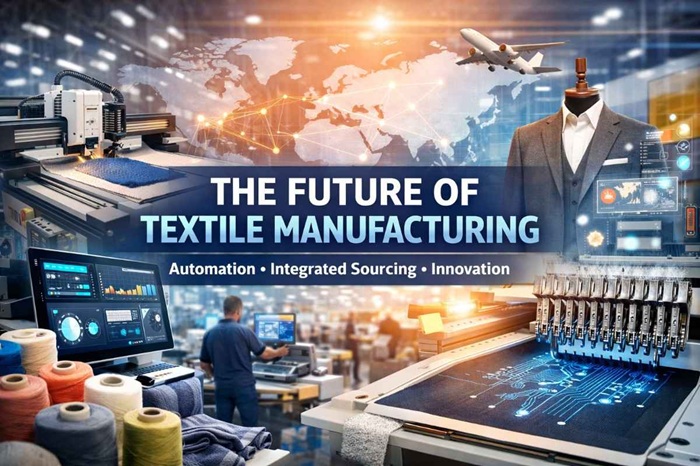
Automation, innovation, regulation are the forces shaping textiles in 2026
The global textile sector has entered a new era. Early 2026 saw the industry breach a $1.06 trillion valuation, reflecting... Read more
The new Brussels rulebook, every EU apparel order is now a balance-sheet risk
The humble export order sheet is undergoing a transformation. What was once a straightforward commercial instrument: SKU, volume, FOB price,... Read more
Why 2026-27 could be a defining cotton year for India’s farm-to-fashion economy
The global cotton economy is entering a more constrained phase, and for India, the implications run far beyond the farm... Read more
Luxury resale’s next big battle is no longer digital, it is about who controls s…
For nearly a decade, the luxury resale story was written in the language of platforms. Market leadership was measured by... Read more
Digital Arms Race: Indian apparel giants deploy AI to neutralize tariff crisis
The Indian textile and apparel sector is in a digital survival phase in 2026, shifting from traditional labor-intensive models to... Read more
Europe’s Textile Endgame: Why Project FAE is becoming fashion’s most critical in…
Europe’s apparel majors are no longer treating circularity as a branding layer. With Project FAE or Feedstock Activation Europe, the... Read more