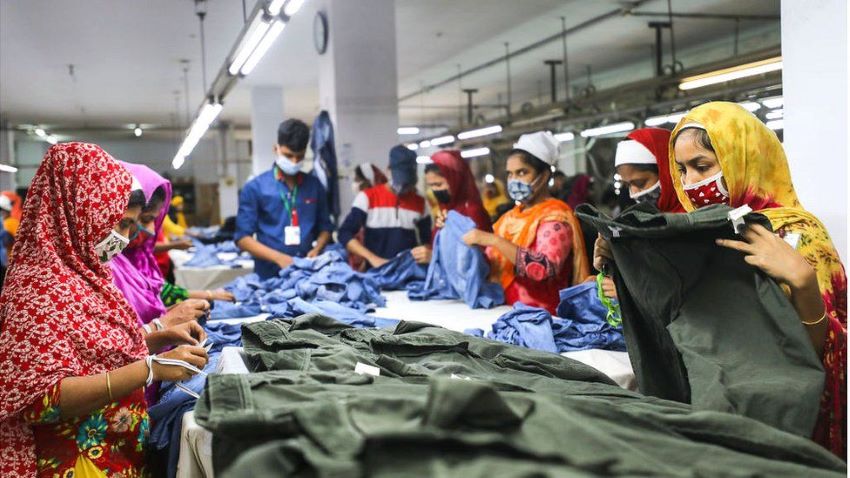
Clothing and footwear brands and retailers have dramatically increased their disclosure of information about their supply chains in the past three years. Dozens of brands and retailers are publicly disclosing information about their supplier factories. This has become a widely accepted step toward better identifying and addressing labor abuses in garment supply chains.
Transparency is not a panacea for labor rights abuses but is critical for a business that describes itself as ethical and sustainable. Supplier transparency is a powerful tool that promotes corporate accountability for garment workers’ rights in global supply chains. It is proof that a company knows where its products are made and also allows workers and labor and human rights advocates to alert the company to rights abuses in supplier factories. Information about brands’ supplier factories can help workers gain faster access to redress for human rights abuses.
The US-based Fair Labor Association has taken significant steps to drive supply chain transparency among members. The Dutch Agreement on Sustainable Garments and Textiles has not made supply chain transparency of individual members a condition of membership but requires its members to disclose information about their supplier factories. The United Kingdom Ethical Trading Initiative and the Fair Wear Foundation have taken incremental steps to improve supply chain transparency of their members.
- 1
- 2
- 3
- 4
- 5
- 6
- 7
- 8
- 9
- 10
The £7 Billion Question: Who pays for fashion’s ‘free rental’ habit?
The global fashion industry is facing an uncomfortable paradox: its most valuable customers may also be its most destructive. A... Read more
India, China Bangladesh face fresh headwinds as global apparel markets rebalance
Global apparel trade is entering a more uneven recovery phase, with demand growth persisting but losing uniform momentum across major... Read more
Global cotton enters a deficit year in 2026 as supply drop meets logistics risk
The global cotton economy has entered a fragile and sensitive phase. Early projections for the 2026-27 season suggest that world... Read more
India’s textile trade gets a Pacific push as New Zealand FTA removes tariff barr…
India and New Zealand have inked a ‘once-in-a-generation’ Free Trade Agreement (FTA), one that will have a profound impact on... Read more
Lululemon’s world-first nylon circularity push signals a new apparel arms race
The global apparel industry’s circularity narrative is entering a more technically demanding phase. Polyester recycling once the flagship of sustainable... Read more
Beyond the DTC Rush: Levi’s hybrid channel strategy sets a new retail benchmark
The global apparel sector is entering a phase where channel strategy is no longer a tactical lever but a core... Read more
The New Rules of Resale: EPR turning secondhand into fashion’s strategic growth …
The global fashion industry is facing a decisive regulatory and commercial reset. What began as a sustainability narrative around reuse... Read more
The 2027 Mandate: Why denim’s future hinges on verifiable data
For decades, the global denim industry has relied on a narrative of durability, heritage, and authenticity. That narrative is now... Read more
Europe’s textile core unravels as costs, imports and policy pressure bite
Europe’s textile and apparel sector, long seen as a benchmark for craftsmanship and industrial depth, is slipping into a prolonged... Read more
Automation, innovation, regulation are the forces shaping textiles in 2026
The global textile sector has entered a new era. Early 2026 saw the industry breach a $1.06 trillion valuation, reflecting... Read more