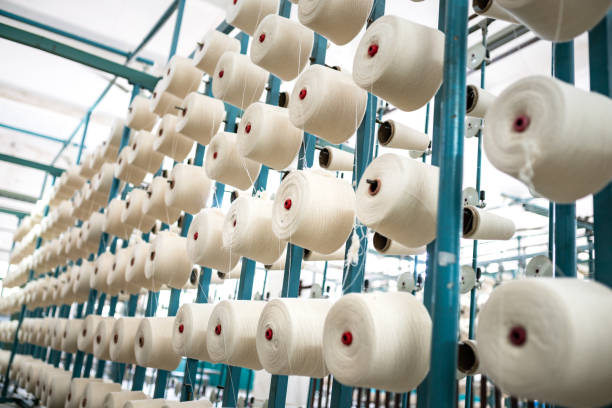
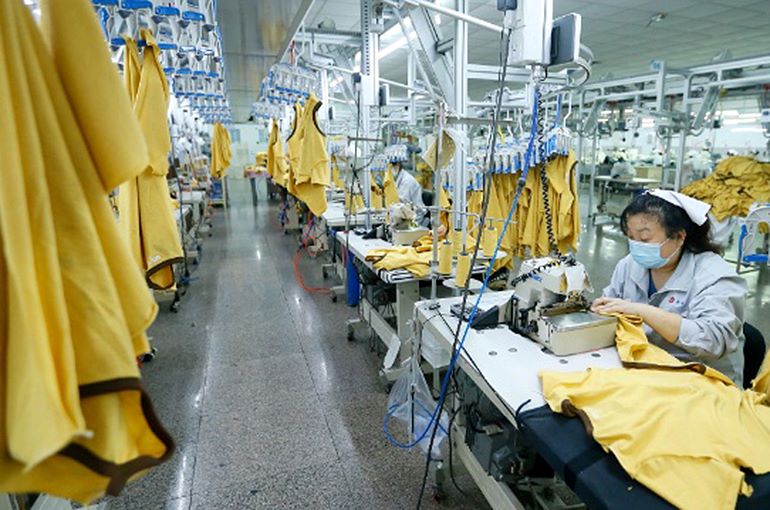
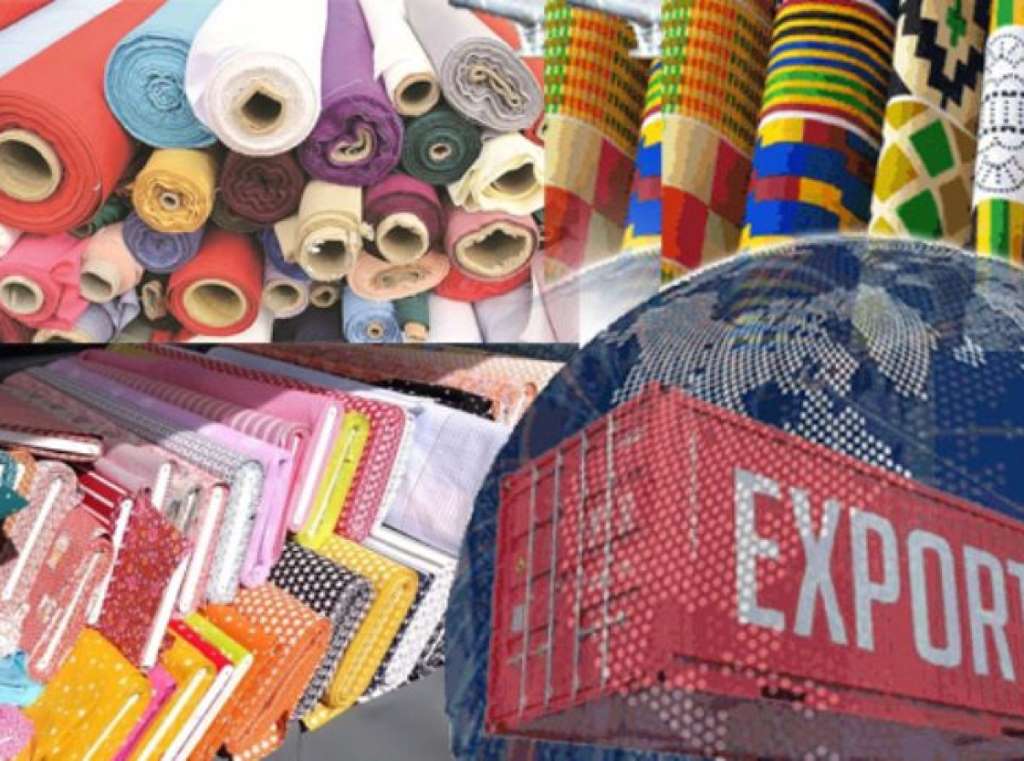
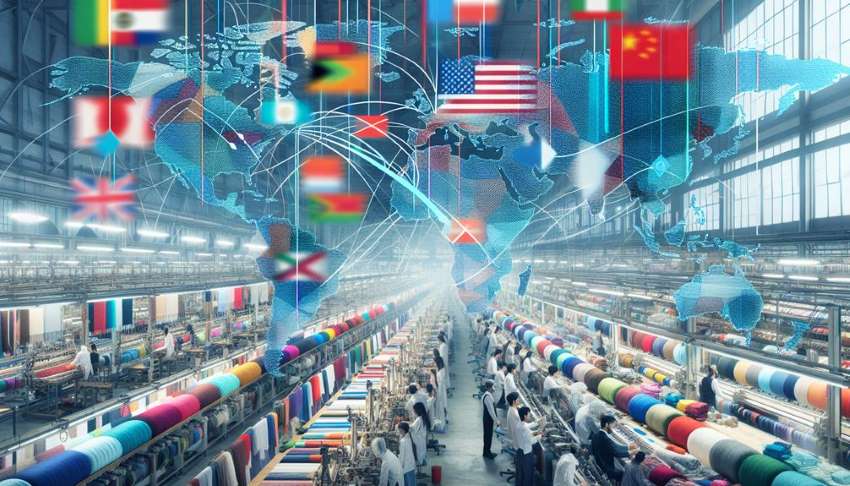
Garment manufacturers in Bangladesh used to buy fabrics and yarn from domestic suppliers. But now they are increasingly sourcing their raw materials from abroad. The reason: prices of domestic fabrics have gone up. As a result, production capacity of local textile mills remain unutilized.
Readymade garment units have been increasingly turning to other destinations, such as China and India, for sourcing. After the declaration of one-step GSP (generalised system of preferences) by the European Union, local readymade garment owners got the right to purchase cotton and cloth from any destination at competitive prices. Mills in Bangladesh which increased their production capacity following tremendous export growth in the financial year 2010-11 are the worst victims of the present situation.
Relaxation of rules of origin by the EU and low pressure of gas and electricity and some other bottlenecks have pushed up production cost of local fabrics and put the local millers in an uncertain situation. A considerable number of small and medium textile mills are facing the threat of closure.
Bangladesh achieved over 40 per cent export growth in the readymade garment sector in 2010-11 but due to global economic meltdown and the euro zone crisis, the sector could not maintain continuity and made only a marginal growth.
- 1
- 2
- 3
- 4
- 5
- 6
- 7
- 8
- 9
- 10
The second life economy gets a boost as resale outgrows traditional apparel reta…
For decades, resale existed in the margins of the apparel economy, thrift stores, peer-to-peer marketplaces, and charity bins quietly absorbing... Read more
Rising polyester costs shake India’s textile manufacturing hubs
India’s synthetic textile industry is confronting a sudden and destabilizing price shock that is reverberating across its vast manufacturing ecosystem.... Read more
Cotton markets hold firm as tariffs, higher supply reshape global fiber economic…
In a year marked by tariff escalations, geopolitical brinkmanship and a recalibration of global trade flows, the international cotton market... Read more
Beyond Cotton How Kapok could redefine sustainable insulation in textiles
In the lush, humid heart of Southeast Asian rainforests stands a giant, a silent sentinel of the forest canopy. Growing... Read more
Bharat Tex 2026: Redefining the global textile value chain
Union Minister of Textiles, Giriraj Singh, has officially unveiled Bharat Tex 2026, signaling a significant leap in India’s influence over... Read more
Intertextile Shanghai Spring 2026: A hub for global textile innovation
The textile industry’s pulse is quickening as Intertextile Shanghai Apparel Fabrics – Spring Edition prepares to open its doors from... Read more
Moscow Fashion Week 2026: Blending sustainable innovation with timeless glamour
Scheduled to run from March 14-19, 2026 in Moscow, Russia, the Moscow Fashion Week (MFW) is cementing its status as... Read more
The Store as Stage: How fashion is crafting immersive consumer worlds
The North American fashion retail sector in 2026 is shedding its product-first identity and shifting towards a model that values... Read more
Turning the supply chain upside down, on-demand production reshapes apparel
The global fashion industry, long celebrated for its creativity and scale, is facing a structural reckoning. For decades, retailers and... Read more
Intertex Milano 2026 - A global nexus for textile innovation
Intertex Milano is set to return this summer, confirming its status as a premier international destination for the textile and... Read more