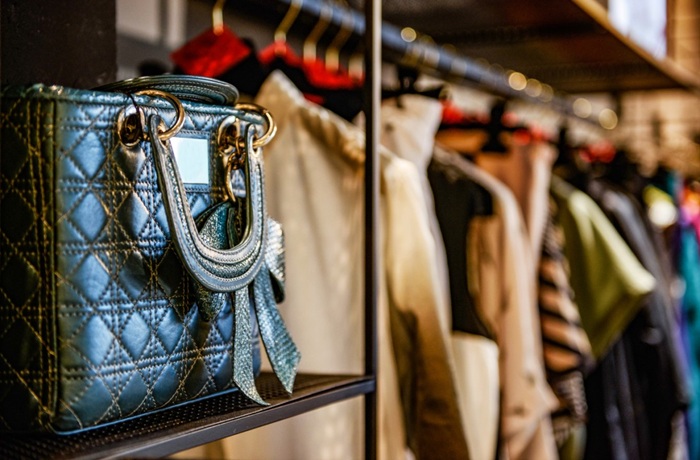
Bulgaria, Romania and other countries in the Balkan region have established a foothold in the luxury market and fashion houses from Paris and Milan are quietly building a bigger presence as they feed demand for a quicker turnover of styles.
More affordable labels have long produced bags, scarves, clothes and shoes in southeastern Europe, but margins are becoming slimmer as Balkan companies jostle for that business with China, Turkey and, increasingly, Africa.
The luxury sector is expected to grow up to five per cent this year, outpacing fashion as a whole, encouraging southeastern Europe to focus its efforts on attracting more upmarket clients alongside competitors such as Portugal.
Factories near the Danube are positioning themselves to help top brands adjust to faster fashion cycles.
Orders and enquiries from top brands are increasing and they have invested in machines to do the specialised stitches, buttons and ironing they demand alongside hand sewing, which is sometimes done through contractors.
For the brands, the cost advantage of nearby countries with the lowest wages in the European Union is not the only factor in an era where word of lapses in quality or poor working conditions spreads fast.
While top French and Italian luxury houses have experimented with manufacturing outside their home base for years now, it is often for more basic garments such as branded T-shirts.
But the need for small batches of work, done fast, to exacting standards, is growing.
- 1
- 2
- 3
- 4
- 5
- 6
- 7
- 8
- 9
- 10
Beyond the DTC Rush: Levi’s hybrid channel strategy sets a new retail benchmark
The global apparel sector is entering a phase where channel strategy is no longer a tactical lever but a core... Read more
The New Rules of Resale: EPR turning secondhand into fashion’s strategic growth …
The global fashion industry is facing a decisive regulatory and commercial reset. What began as a sustainability narrative around reuse... Read more
The 2027 Mandate: Why denim’s future hinges on verifiable data
For decades, the global denim industry has relied on a narrative of durability, heritage, and authenticity. That narrative is now... Read more
Europe’s textile core unravels as costs, imports and policy pressure bite
Europe’s textile and apparel sector, long seen as a benchmark for craftsmanship and industrial depth, is slipping into a prolonged... Read more
Automation, innovation, regulation are the forces shaping textiles in 2026
The global textile sector has entered a new era. Early 2026 saw the industry breach a $1.06 trillion valuation, reflecting... Read more
The new Brussels rulebook, every EU apparel order is now a balance-sheet risk
The humble export order sheet is undergoing a transformation. What was once a straightforward commercial instrument: SKU, volume, FOB price,... Read more
Why 2026-27 could be a defining cotton year for India’s farm-to-fashion economy
The global cotton economy is entering a more constrained phase, and for India, the implications run far beyond the farm... Read more
Luxury resale’s next big battle is no longer digital, it is about who controls s…
For nearly a decade, the luxury resale story was written in the language of platforms. Market leadership was measured by... Read more
Digital Arms Race: Indian apparel giants deploy AI to neutralize tariff crisis
The Indian textile and apparel sector is in a digital survival phase in 2026, shifting from traditional labor-intensive models to... Read more
Europe’s Textile Endgame: Why Project FAE is becoming fashion’s most critical in…
Europe’s apparel majors are no longer treating circularity as a branding layer. With Project FAE or Feedstock Activation Europe, the... Read more