The growing complexity of the fashion industry is forcing companies to transform from traditional to more modern business models. This led Lectra, the world leader in integrated technology solutions dedicated to industries using soft materials, fabrics, leather, technical textiles and composite materials, to plan the ‘Lectra Fashion PLM V4’.
As Daniel Harari, Lectra CEO points out, fashion companies need to adapt their ways of working to be agile enough to offer compelling products to please consumers and reach the market quickly. Lectra provides companies with business expertise, technologies and change methods to meet the challenges of today’s modern fashion market and remain competitive. Lectra Fashion PLM is the embodiment of these pillars.
Lectra Fashion PLM was developed to improve teamwork from design to production and to help fashion companies build better products faster while boosting overall business performance. Lectra Fashion PLM focuses on collection planning and calendar management, Lectra R&D teams partnered with South Korea’s leading fashion company Samsung-Cheil Industries and DBApparel, the French market leader for branded intimate apparel.
Lectra develops the most advanced specialised software and cutting systems and provides associated services to a broad array of markets including fashion (apparel, accessories, footwear), automotive (car seats and interiors, airbags), furniture, as well as a wide variety of other market sectors, such as aeronautical and marine industries, wind power and personal protective equipment. Lectra serves 23,000 customers in more than 100 countries with 1,500 employees and $281 million in 2014 revenues. The company is listed on Euronext.
- 1
- 2
- 3
- 4
- 5
- 6
- 7
- 8
- 9
- 10
Beyond the DTC Rush: Levi’s hybrid channel strategy sets a new retail benchmark
The global apparel sector is entering a phase where channel strategy is no longer a tactical lever but a core... Read more
The New Rules of Resale: EPR turning secondhand into fashion’s strategic growth …
The global fashion industry is facing a decisive regulatory and commercial reset. What began as a sustainability narrative around reuse... Read more
The 2027 Mandate: Why denim’s future hinges on verifiable data
For decades, the global denim industry has relied on a narrative of durability, heritage, and authenticity. That narrative is now... Read more
Europe’s textile core unravels as costs, imports and policy pressure bite
Europe’s textile and apparel sector, long seen as a benchmark for craftsmanship and industrial depth, is slipping into a prolonged... Read more
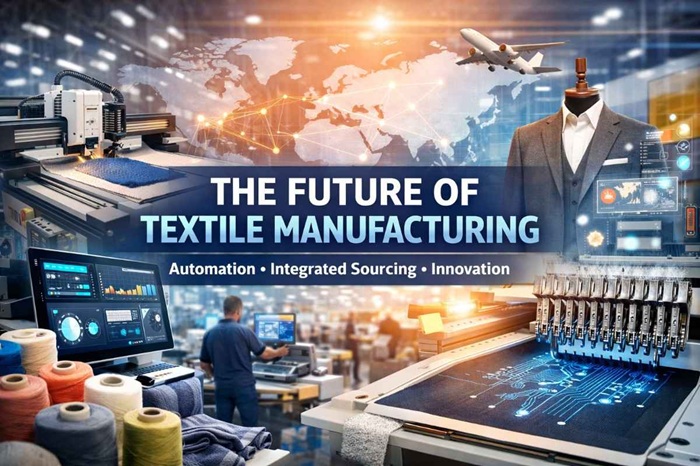
Automation, innovation, regulation are the forces shaping textiles in 2026
The global textile sector has entered a new era. Early 2026 saw the industry breach a $1.06 trillion valuation, reflecting... Read more
The new Brussels rulebook, every EU apparel order is now a balance-sheet risk
The humble export order sheet is undergoing a transformation. What was once a straightforward commercial instrument: SKU, volume, FOB price,... Read more
Why 2026-27 could be a defining cotton year for India’s farm-to-fashion economy
The global cotton economy is entering a more constrained phase, and for India, the implications run far beyond the farm... Read more
Luxury resale’s next big battle is no longer digital, it is about who controls s…
For nearly a decade, the luxury resale story was written in the language of platforms. Market leadership was measured by... Read more
Digital Arms Race: Indian apparel giants deploy AI to neutralize tariff crisis
The Indian textile and apparel sector is in a digital survival phase in 2026, shifting from traditional labor-intensive models to... Read more
Europe’s Textile Endgame: Why Project FAE is becoming fashion’s most critical in…
Europe’s apparel majors are no longer treating circularity as a branding layer. With Project FAE or Feedstock Activation Europe, the... Read more