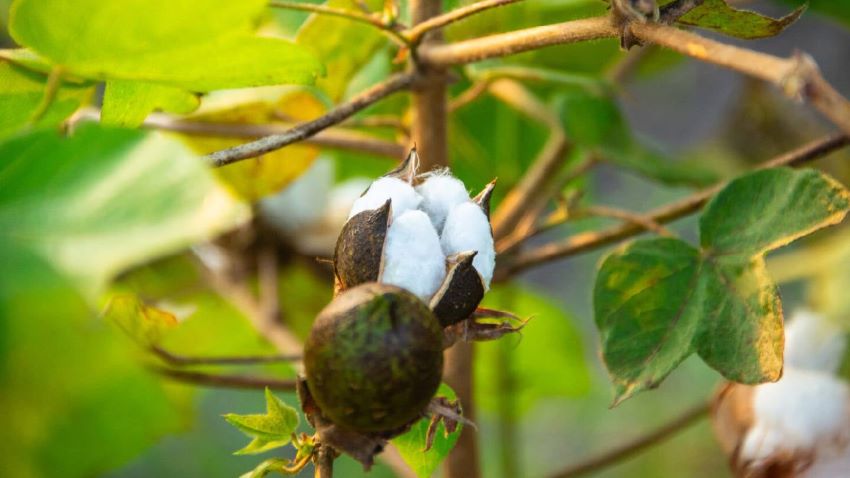
Kenya plans to revive the cotton industry. Among the steps chalked out is eliminating imports of cotton raw materials within the next five years. The country used to produce over 30,000 tons of cotton in the 1980s but production has declined to 7,500 tons currently. Rising cost of production has made the cash crop unprofitable. The hope is to increase cotton production to 10,000 tons by the end of 2020, through increasing the area under cultivation. Kenya is keen to use locally produced cotton to supply textile factories that export most of their products to foreign markets.
The cooperative model will be leveraged to revive the cotton industry and create additional jobs. A pilot project has been launched, where farmers have formed a cooperative. This will be replicated to 22 counties across the country. Farmers will be provided with certified seeds to ensure they achieve optimum yields. As of now Kenya is losing value addition opportunities due to over-reliance on imports of intermediate cotton products that are converted into finished textile products.
Kenya will be taking steps to expand exports and raise the country’s share of new investments. The country will particularly be focusing on trade windows such as the African Growth and Opportunity Act and the European Economic Partnership Agreement which have not been fully exploited.
- 1
- 2
- 3
- 4
- 5
- 6
- 7
- 8
- 9
- 10
Global cotton enters a deficit year in 2026 as supply drop meets logistics risk
The global cotton economy has entered a fragile and sensitive phase. Early projections for the 2026-27 season suggest that world... Read more
India’s textile trade gets a Pacific push as New Zealand FTA removes tariff barr…
India and New Zealand have inked a ‘once-in-a-generation’ Free Trade Agreement (FTA), one that will have a profound impact on... Read more
Lululemon’s world-first nylon circularity push signals a new apparel arms race
The global apparel industry’s circularity narrative is entering a more technically demanding phase. Polyester recycling once the flagship of sustainable... Read more
Beyond the DTC Rush: Levi’s hybrid channel strategy sets a new retail benchmark
The global apparel sector is entering a phase where channel strategy is no longer a tactical lever but a core... Read more
The New Rules of Resale: EPR turning secondhand into fashion’s strategic growth …
The global fashion industry is facing a decisive regulatory and commercial reset. What began as a sustainability narrative around reuse... Read more
The 2027 Mandate: Why denim’s future hinges on verifiable data
For decades, the global denim industry has relied on a narrative of durability, heritage, and authenticity. That narrative is now... Read more
Europe’s textile core unravels as costs, imports and policy pressure bite
Europe’s textile and apparel sector, long seen as a benchmark for craftsmanship and industrial depth, is slipping into a prolonged... Read more
Automation, innovation, regulation are the forces shaping textiles in 2026
The global textile sector has entered a new era. Early 2026 saw the industry breach a $1.06 trillion valuation, reflecting... Read more
The new Brussels rulebook, every EU apparel order is now a balance-sheet risk
The humble export order sheet is undergoing a transformation. What was once a straightforward commercial instrument: SKU, volume, FOB price,... Read more
Why 2026-27 could be a defining cotton year for India’s farm-to-fashion economy
The global cotton economy is entering a more constrained phase, and for India, the implications run far beyond the farm... Read more