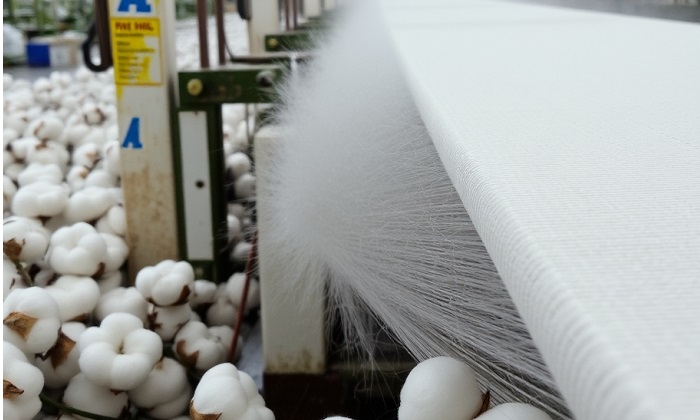
Japanese textile maker Suminoe Textile will set up an electric carpet plant in Vietnam. The factory will produce electric heating appliances such as electric carpets and blankets. Electric heating appliances are one of Suminoe’s key products in the functional goods business. Suminoe made its first foray into the overseas business in 1994 by establishing a plant in Thailand. It now has 14 bases in seven countries, including the United States, India and Indonesia.
Japanese firms are scaling up investment in Vietnam’s textile and garment sector. Japanese company Matsuoka produces casual apparel in Vietnam to be exported to Japan and China. The company has chosen Vietnam for capital injection and production expansion in recent years to take advantage of the opportunities anticipated to be brought by new-generation free trade agreements such as the EVFTA and the CPTPP. Matsuoka has three plants in Vietnam with one more coming up. The firm’s medium-term business plan intends at minimising its dependence on China by nearly 50 per cent by March 2021 by shifting its focus to Vietnam from China, where production costs are on the rise. Sakai Amiori, another Japanese company, has opened an export apparel production plant. The influx of foreign direct investment has the benefit of turning Vietnam into a global manufacturing base.
- 1
- 2
- 3
- 4
- 5
- 6
- 7
- 8
- 9
- 10
Global cotton enters a deficit year in 2026 as supply drop meets logistics risk
The global cotton economy has entered a fragile and sensitive phase. Early projections for the 2026-27 season suggest that world... Read more
India’s textile trade gets a Pacific push as New Zealand FTA removes tariff barr…
India and New Zealand have inked a ‘once-in-a-generation’ Free Trade Agreement (FTA), one that will have a profound impact on... Read more
Lululemon’s world-first nylon circularity push signals a new apparel arms race
The global apparel industry’s circularity narrative is entering a more technically demanding phase. Polyester recycling once the flagship of sustainable... Read more
Beyond the DTC Rush: Levi’s hybrid channel strategy sets a new retail benchmark
The global apparel sector is entering a phase where channel strategy is no longer a tactical lever but a core... Read more
The New Rules of Resale: EPR turning secondhand into fashion’s strategic growth …
The global fashion industry is facing a decisive regulatory and commercial reset. What began as a sustainability narrative around reuse... Read more
The 2027 Mandate: Why denim’s future hinges on verifiable data
For decades, the global denim industry has relied on a narrative of durability, heritage, and authenticity. That narrative is now... Read more
Europe’s textile core unravels as costs, imports and policy pressure bite
Europe’s textile and apparel sector, long seen as a benchmark for craftsmanship and industrial depth, is slipping into a prolonged... Read more
Automation, innovation, regulation are the forces shaping textiles in 2026
The global textile sector has entered a new era. Early 2026 saw the industry breach a $1.06 trillion valuation, reflecting... Read more
The new Brussels rulebook, every EU apparel order is now a balance-sheet risk
The humble export order sheet is undergoing a transformation. What was once a straightforward commercial instrument: SKU, volume, FOB price,... Read more
Why 2026-27 could be a defining cotton year for India’s farm-to-fashion economy
The global cotton economy is entering a more constrained phase, and for India, the implications run far beyond the farm... Read more