Japan is keen on reconstituting the Trans-Pacific Partnership without the US. Japan and 10 other nations hope to reach a broad agreement. But New Zealand, a leading proponent of the TPP 11 effort, suddenly seems to be wavering. New Zealand wants restrictions on foreign real estate investment.
The 11 nations have already agreed not to alter the original terms of the pact, and if exceptions are made for New Zealand alone, the whole thing can fall apart. Some advocate simply removing New Zealand from the group, a solution that would reduce the amount of milk Japan imports under the deal. But such a step would be difficult given that New Zealand is a founding member of the TPP.
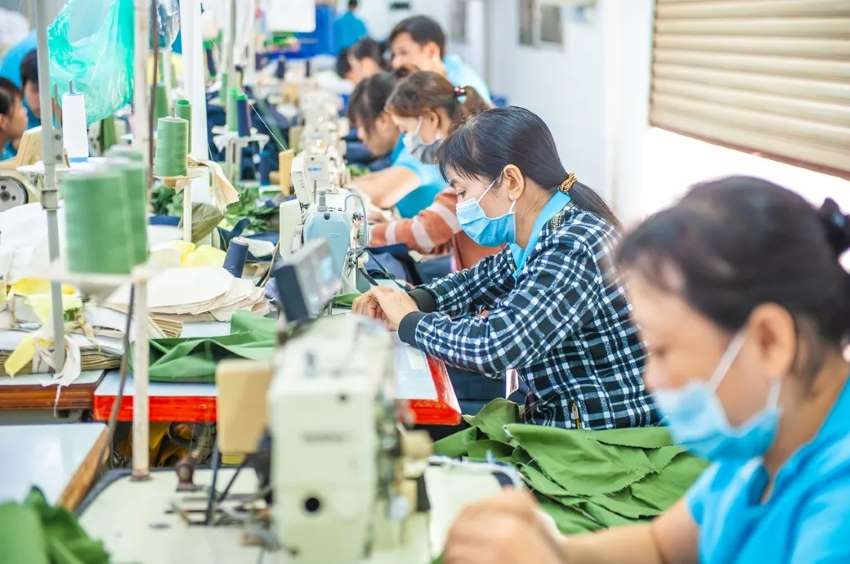
Vietnam also could prove a source of discord. The Southeast Asian country has not relented on its request for changes to critical rules abolishing tariffs on textiles and banning restrictions on the international transfer of e-commerce data. Had TPP proceeded as planned, as a 12-nation trade agreement, including the US, Vietnam was expected to reap the biggest gains from being afforded greater access to the US market. The deal for Vietnam was essentially it would implement difficult reforms on state-owned enterprises and labor and other areas in exchange for greater access to the US market, particularly for textiles and footwear.
- 1
- 2
- 3
- 4
- 5
- 6
- 7
- 8
- 9
- 10
Beyond the DTC Rush: Levi’s hybrid channel strategy sets a new retail benchmark
The global apparel sector is entering a phase where channel strategy is no longer a tactical lever but a core... Read more
The New Rules of Resale: EPR turning secondhand into fashion’s strategic growth …
The global fashion industry is facing a decisive regulatory and commercial reset. What began as a sustainability narrative around reuse... Read more
The 2027 Mandate: Why denim’s future hinges on verifiable data
For decades, the global denim industry has relied on a narrative of durability, heritage, and authenticity. That narrative is now... Read more
Europe’s textile core unravels as costs, imports and policy pressure bite
Europe’s textile and apparel sector, long seen as a benchmark for craftsmanship and industrial depth, is slipping into a prolonged... Read more
Automation, innovation, regulation are the forces shaping textiles in 2026
The global textile sector has entered a new era. Early 2026 saw the industry breach a $1.06 trillion valuation, reflecting... Read more
The new Brussels rulebook, every EU apparel order is now a balance-sheet risk
The humble export order sheet is undergoing a transformation. What was once a straightforward commercial instrument: SKU, volume, FOB price,... Read more
Why 2026-27 could be a defining cotton year for India’s farm-to-fashion economy
The global cotton economy is entering a more constrained phase, and for India, the implications run far beyond the farm... Read more
Luxury resale’s next big battle is no longer digital, it is about who controls s…
For nearly a decade, the luxury resale story was written in the language of platforms. Market leadership was measured by... Read more
Digital Arms Race: Indian apparel giants deploy AI to neutralize tariff crisis
The Indian textile and apparel sector is in a digital survival phase in 2026, shifting from traditional labor-intensive models to... Read more
Europe’s Textile Endgame: Why Project FAE is becoming fashion’s most critical in…
Europe’s apparel majors are no longer treating circularity as a branding layer. With Project FAE or Feedstock Activation Europe, the... Read more