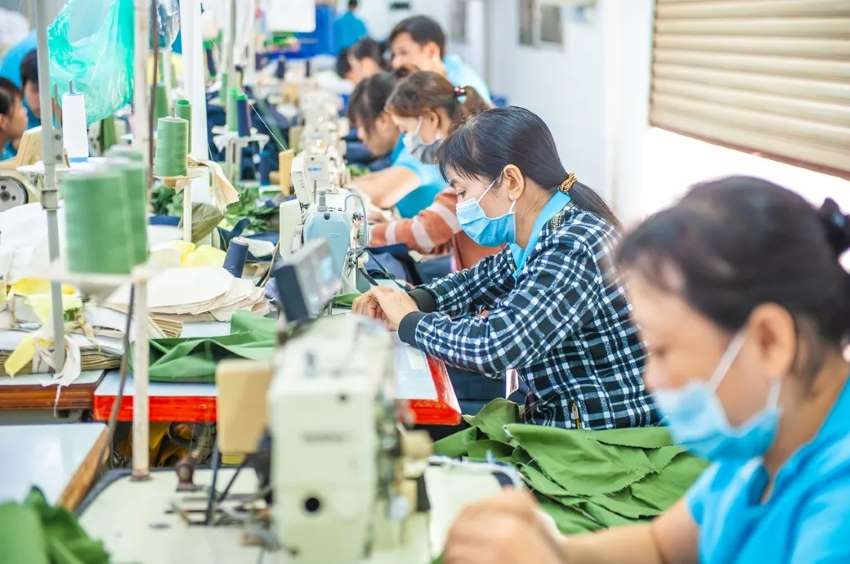
The Indian denim industry has been operating at 60 per cent to 70 per cent capacity due to a slowdown in demand and over capacity. If the situation continues there can be more production cuts. Denim needs to be cut, sewn and washed before it can be marketed. These upstream activities are majorly done in the unorganized sectors of Delhi, Ulhasnagar and Bellary. These hubs mainly slowed down due to the liquidity crunch in the economy since demonetization and the slow acceptance of GST by small players. As 85 per cent of the fabric is sold in the domestic market, denim fabric mills are badly hit.
Since the upstream activities of garment sewing and washing will take a while to work smoothly with the formal banking system, no recovery of the market in the near future is foreseen. The denim fabric manufacturing industry used to be the sunrise industry in the entire textile value chain of India. Over the last decade, it was growing at a healthy rate of 15 percent CAGR. Currently the industry has an annual installed capacity of 1.5 billion meters, which is the world’s largest, after China. The sales turnover of the industry is estimated to be around Rs 15,000 crores. This industry gives direct employment to five lakh workers.
At present there are 46 denim fabric mills operating in the country. The current domestic consumption of Indian denim fabric is 750 to 800 million meters. Denim fabric export is 200 million meters.
- 1
- 2
- 3
- 4
- 5
- 6
- 7
- 8
- 9
- 10
Beyond the DTC Rush: Levi’s hybrid channel strategy sets a new retail benchmark
The global apparel sector is entering a phase where channel strategy is no longer a tactical lever but a core... Read more
The New Rules of Resale: EPR turning secondhand into fashion’s strategic growth …
The global fashion industry is facing a decisive regulatory and commercial reset. What began as a sustainability narrative around reuse... Read more
The 2027 Mandate: Why denim’s future hinges on verifiable data
For decades, the global denim industry has relied on a narrative of durability, heritage, and authenticity. That narrative is now... Read more
Europe’s textile core unravels as costs, imports and policy pressure bite
Europe’s textile and apparel sector, long seen as a benchmark for craftsmanship and industrial depth, is slipping into a prolonged... Read more
Automation, innovation, regulation are the forces shaping textiles in 2026
The global textile sector has entered a new era. Early 2026 saw the industry breach a $1.06 trillion valuation, reflecting... Read more
The new Brussels rulebook, every EU apparel order is now a balance-sheet risk
The humble export order sheet is undergoing a transformation. What was once a straightforward commercial instrument: SKU, volume, FOB price,... Read more
Why 2026-27 could be a defining cotton year for India’s farm-to-fashion economy
The global cotton economy is entering a more constrained phase, and for India, the implications run far beyond the farm... Read more
Luxury resale’s next big battle is no longer digital, it is about who controls s…
For nearly a decade, the luxury resale story was written in the language of platforms. Market leadership was measured by... Read more
Digital Arms Race: Indian apparel giants deploy AI to neutralize tariff crisis
The Indian textile and apparel sector is in a digital survival phase in 2026, shifting from traditional labor-intensive models to... Read more
Europe’s Textile Endgame: Why Project FAE is becoming fashion’s most critical in…
Europe’s apparel majors are no longer treating circularity as a branding layer. With Project FAE or Feedstock Activation Europe, the... Read more