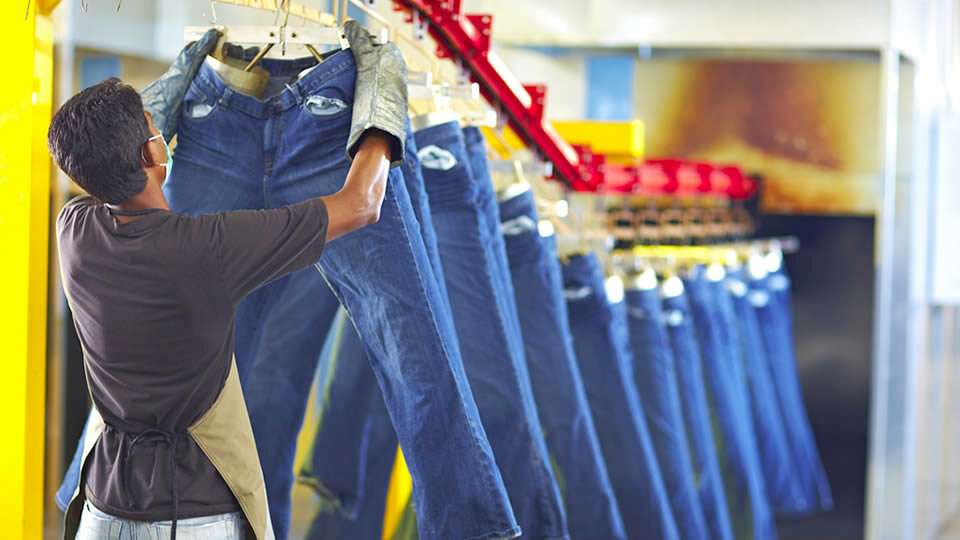
Garment makers feel that India needs to focus on getting duty-free access to European Union and the US, two of our biggest export markets, as the country has been facing very stiff competition from South Asian countries. Atul Ujagar, Nike’s Country Director, feels that other countries have been actively working on free trade agreements which would help their apparel secure ‘duty-free’ into developed countries. The textile and apparel industry in India is very strong and it would emerge one of the fastest growing in case ample support is given. The government should be more aggressive on securing duty-free status to up the EU and US markets.
Indian apparel exports are worth $17 billion which is less than the textile, yarn, and cotton exports which amount to around $20 billion. Together, textile and garment exports are at around $37 billion. The industry employs 45 million people which makes it one of the top three employers. India is not able to realise the full supply chain value, Ujagar observes.
Compared to other South-East Asian countries, India has a competitive labour rates. In fact, one of India’s core strengths is its cost-competitive labour but it lags behind in productivity and efficiencies in manufacturing. There needs to be a dedicated focus to improve India’s productivity, he said.
Anindya Ray, Senior Vice-President of Arvind Lifestyle feels, Chinese government provides a platform for buyers through huge exhibitions throughout the year. Indian textile industry is the second largest employer after agriculture. It is unfortunate that the government is not trying its best to help the industry. This industry will become a dying industry without government support. India exports around $17 billion, whereas Bangladesh exports around $24 billion and China’s exports are around $65 billion. China is becoming expensive and people want to move out despite the industry still growing there. India is not a position to make use of the minimum shift away China as India lacks infrastructure, he believes.
- 1
- 2
- 3
- 4
- 5
- 6
- 7
- 8
- 9
- 10
Beyond the DTC Rush: Levi’s hybrid channel strategy sets a new retail benchmark
The global apparel sector is entering a phase where channel strategy is no longer a tactical lever but a core... Read more
The New Rules of Resale: EPR turning secondhand into fashion’s strategic growth …
The global fashion industry is facing a decisive regulatory and commercial reset. What began as a sustainability narrative around reuse... Read more
The 2027 Mandate: Why denim’s future hinges on verifiable data
For decades, the global denim industry has relied on a narrative of durability, heritage, and authenticity. That narrative is now... Read more
Europe’s textile core unravels as costs, imports and policy pressure bite
Europe’s textile and apparel sector, long seen as a benchmark for craftsmanship and industrial depth, is slipping into a prolonged... Read more
Automation, innovation, regulation are the forces shaping textiles in 2026
The global textile sector has entered a new era. Early 2026 saw the industry breach a $1.06 trillion valuation, reflecting... Read more
The new Brussels rulebook, every EU apparel order is now a balance-sheet risk
The humble export order sheet is undergoing a transformation. What was once a straightforward commercial instrument: SKU, volume, FOB price,... Read more
Why 2026-27 could be a defining cotton year for India’s farm-to-fashion economy
The global cotton economy is entering a more constrained phase, and for India, the implications run far beyond the farm... Read more
Luxury resale’s next big battle is no longer digital, it is about who controls s…
For nearly a decade, the luxury resale story was written in the language of platforms. Market leadership was measured by... Read more
Digital Arms Race: Indian apparel giants deploy AI to neutralize tariff crisis
The Indian textile and apparel sector is in a digital survival phase in 2026, shifting from traditional labor-intensive models to... Read more
Europe’s Textile Endgame: Why Project FAE is becoming fashion’s most critical in…
Europe’s apparel majors are no longer treating circularity as a branding layer. With Project FAE or Feedstock Activation Europe, the... Read more