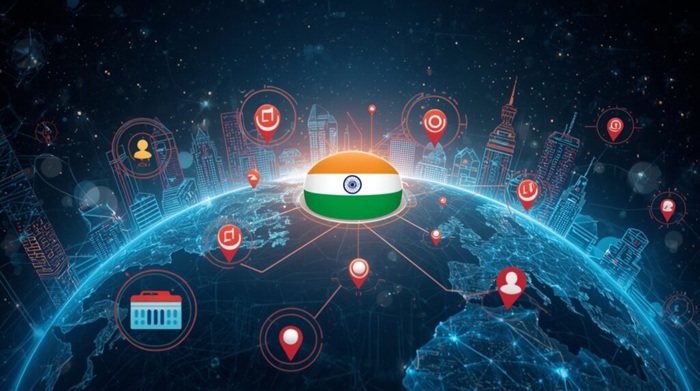
Apparel exports from India are expected to make a recovery in the current fiscal year. The declining trend witnessed in the last two years may be reversed. So far there were intense competitive pressures from nations having a cost advantage over India. This constrained the overall momentum of the apparel export sector in India. But now changes are taking place in the global market. Both Bangladesh and Vietnam are now seeing some sort of slowdown. Apart from price differential, buyers are now also looking at various other factors including compliance, diversity and stability. Considering all these factors, India is gradually gaining an edge over them.
The domestic apparel market is expected to continue its growth trajectory. Having grown at a CAGR of 13.8 per cent from fiscal 2010 to fiscal 2018, the domestic market is likely to grow at a CAGR of around 12 per cent in the coming years, driven by the growth in the economy leading to a rise in disposable income as also other favorable macro-economic factors.
Presence in the niche and value-added product segments, together with access to an established client base, has helped export-based companies to maintain revenue growth. Favorable currency movements and a healthy growth in revenues have facilitated an improvement in margins.
- 1
- 2
- 3
- 4
- 5
- 6
- 7
- 8
- 9
- 10
Beyond the DTC Rush: Levi’s hybrid channel strategy sets a new retail benchmark
The global apparel sector is entering a phase where channel strategy is no longer a tactical lever but a core... Read more
The New Rules of Resale: EPR turning secondhand into fashion’s strategic growth …
The global fashion industry is facing a decisive regulatory and commercial reset. What began as a sustainability narrative around reuse... Read more
The 2027 Mandate: Why denim’s future hinges on verifiable data
For decades, the global denim industry has relied on a narrative of durability, heritage, and authenticity. That narrative is now... Read more
Europe’s textile core unravels as costs, imports and policy pressure bite
Europe’s textile and apparel sector, long seen as a benchmark for craftsmanship and industrial depth, is slipping into a prolonged... Read more
Automation, innovation, regulation are the forces shaping textiles in 2026
The global textile sector has entered a new era. Early 2026 saw the industry breach a $1.06 trillion valuation, reflecting... Read more
The new Brussels rulebook, every EU apparel order is now a balance-sheet risk
The humble export order sheet is undergoing a transformation. What was once a straightforward commercial instrument: SKU, volume, FOB price,... Read more
Why 2026-27 could be a defining cotton year for India’s farm-to-fashion economy
The global cotton economy is entering a more constrained phase, and for India, the implications run far beyond the farm... Read more
Luxury resale’s next big battle is no longer digital, it is about who controls s…
For nearly a decade, the luxury resale story was written in the language of platforms. Market leadership was measured by... Read more
Digital Arms Race: Indian apparel giants deploy AI to neutralize tariff crisis
The Indian textile and apparel sector is in a digital survival phase in 2026, shifting from traditional labor-intensive models to... Read more
Europe’s Textile Endgame: Why Project FAE is becoming fashion’s most critical in…
Europe’s apparel majors are no longer treating circularity as a branding layer. With Project FAE or Feedstock Activation Europe, the... Read more