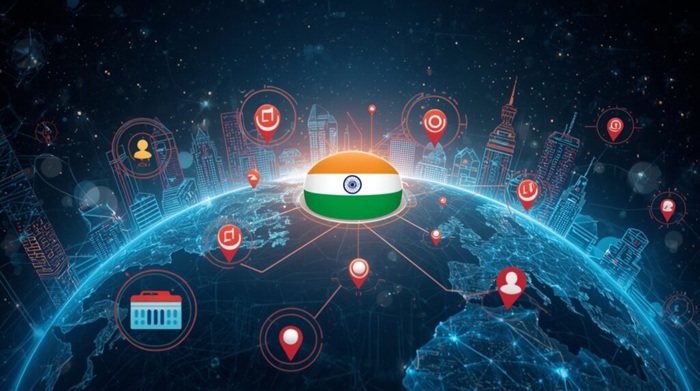
Digitisation will boost India’s GDP growth by 50 to 75 basis points in the next decade and may lead India to become a $6 trillion economy, the third largest in the world says a Morgan Stanley report ‘India's digital leap - The multi-trillion dollar opportunity’. The study further states real and nominal GDP growth is expected to compound annually by 7.1 per cent and 11.2 per cent respectively over the next ten years.
Despite some short-term teething problems, including implementation of GST, there is scope for visible shifts in economic activity starting in 2018, which would eventually lead India to be among the top five equity markets in the world and the third-largest listed financial services sector globally.
India’s consumer sector is also likely to add about $1.5 trillion over the next 10 years. However, GST is expected to disrupt smaller businesses causing job losses and a general slowdown in economic growth. There are also risks related to political stability and the privacy debate over the Aadhaar unique identity number.
Gross foreign direct investment inflows amounting to $120 billion by fiscal 2026-27 and robust stock markets should drive stronger corporate earnings growth. The country is also likely to witness strong domestic participation in equities. <br/
- 1
- 2
- 3
- 4
- 5
- 6
- 7
- 8
- 9
- 10
Beyond the DTC Rush: Levi’s hybrid channel strategy sets a new retail benchmark
The global apparel sector is entering a phase where channel strategy is no longer a tactical lever but a core... Read more
The New Rules of Resale: EPR turning secondhand into fashion’s strategic growth …
The global fashion industry is facing a decisive regulatory and commercial reset. What began as a sustainability narrative around reuse... Read more
The 2027 Mandate: Why denim’s future hinges on verifiable data
For decades, the global denim industry has relied on a narrative of durability, heritage, and authenticity. That narrative is now... Read more
Europe’s textile core unravels as costs, imports and policy pressure bite
Europe’s textile and apparel sector, long seen as a benchmark for craftsmanship and industrial depth, is slipping into a prolonged... Read more
Automation, innovation, regulation are the forces shaping textiles in 2026
The global textile sector has entered a new era. Early 2026 saw the industry breach a $1.06 trillion valuation, reflecting... Read more
The new Brussels rulebook, every EU apparel order is now a balance-sheet risk
The humble export order sheet is undergoing a transformation. What was once a straightforward commercial instrument: SKU, volume, FOB price,... Read more
Why 2026-27 could be a defining cotton year for India’s farm-to-fashion economy
The global cotton economy is entering a more constrained phase, and for India, the implications run far beyond the farm... Read more
Luxury resale’s next big battle is no longer digital, it is about who controls s…
For nearly a decade, the luxury resale story was written in the language of platforms. Market leadership was measured by... Read more
Digital Arms Race: Indian apparel giants deploy AI to neutralize tariff crisis
The Indian textile and apparel sector is in a digital survival phase in 2026, shifting from traditional labor-intensive models to... Read more
Europe’s Textile Endgame: Why Project FAE is becoming fashion’s most critical in…
Europe’s apparel majors are no longer treating circularity as a branding layer. With Project FAE or Feedstock Activation Europe, the... Read more