The global Acrylic Staple Fibre (ASF) market, long known for its sensitivity to violent swings in petrochemical feedstocks is facing one of the most profound structural resets in its history. In 2025, while the price of Acrylonitrile (ACN), its primary feedstock, endured one of the steepest collapses in recent memory, the world’s major acrylic fiber producers resisted the old reflex of passing on raw material savings. Instead, they showcased a new playbook: price stability, strategic discipline, and an unquestioned prioritization of supply reliability over cost alignment.
This year marks a turning point where ASF leaders deliberately delinked their pricing from ACN volatility, engineering a new ecosystem where stability, not reactivity has become the core selling proposition. It is a development with sweeping implications for apparel, home furnishings, and technical textiles worldwide.
Market tested by turbulence, redefined by restraint
The first half of 2025 unfolded against a backdrop of global instability. Continued geopolitical aftershocks of the Russia-Ukraine conflict, intermittent shutdowns in Europe’s petrochemical clusters, and sporadic supply disruptions from Asian refineries all contributed to extreme swings in ACN prices. In certain markets, the feedstock fell by as much as 35 per cent in a rapid correction, creating pressure on fiber producers to slash prices.
Historically, that pressure would have resulted in near-linear declines in ASF pricing, as manufacturers competed aggressively for volume. But this time, sentiment shifted. A senior global fiber market analyst summarized the change: “Large buyers are rewarding predictability more than short-term cost gains. In a post-shock world, volatility is the bigger risk, not price.” This subtle but significant shift has enabled downstream manufacturers especially winter apparel exporters, upholstery suppliers, and carpet producers to stabilize their pricing cycles and focus on demand planning rather than firefighting input cost shocks. It has also created a new competitive advantage for the most integrated fiber producers.
When integration becomes insulation
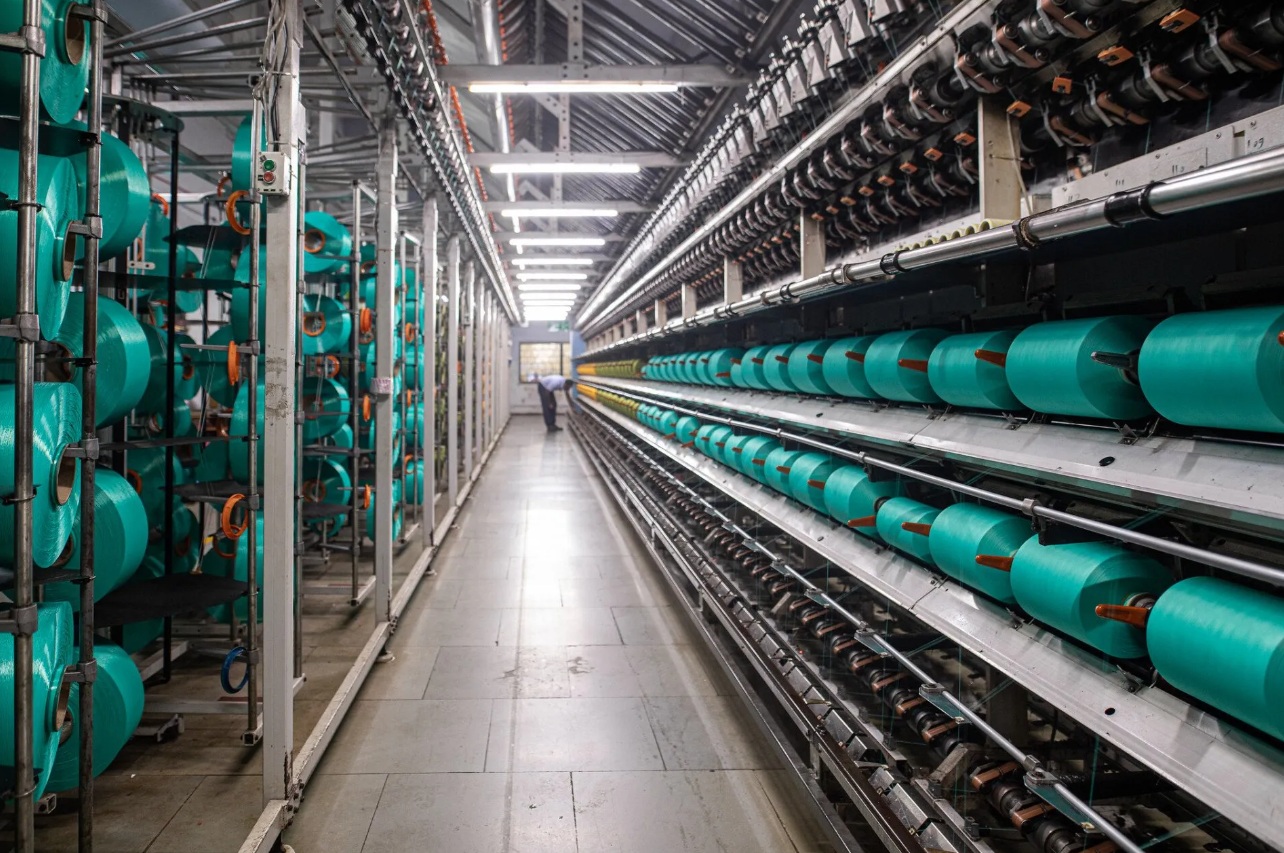
The ability of the world’s largest ASF producers to decouple fiber prices from ACN turbulence is not accidental. It is the result of structural sophistication, vertical integration, and a long-term shift in financial hedging strategies. Industry leaders like Aksa Akrilik in Turkey, Jilin Chemical Fiber in China, and India’s Aditya Birla Group have leveraged their consolidated petrochemical ecosystems, strategic sourcing networks, captive ACN units, and risk-hedging mechanisms to buffer against the volatility that rattles smaller competitors.
To illustrate the scale and strategic differentiation among leaders, the following table captures how key producers gained from their integration models in 2024-25.
Table: Global ASF leader’s advantage and 2024 market position
|
Company/region |
Strategic advantage |
Market share 2024 |
Performance impact |
|
Aksa Akrilik (Turkey) |
Captive ACN capacity; Proximity to EU/MENA markets. |
Largest single-site producer. |
Profitability compressed in 2025 due to ACN spikes, but sustained operating rates better than smaller peers. |
|
Chinese Giants (e.g., Jilin) |
Massive scale, government backing, control over domestic supply. |
Dominates the Asia-Pacific (APAC) region. |
Stable domestic ASF prices reported (e.g., $1.98 USD/kg average in China), despite ACN volatility. |
|
Aditya Birla Group (India) |
Global sourcing network; Diversified MMF portfolio. |
Major South Asian player. |
Focus on high-margin Recycled Acrylic Fibre (Re-ASF) to mitigate volatile virgin ACN costs and align with sustainability mandates. |
Demand, volume, and pricing
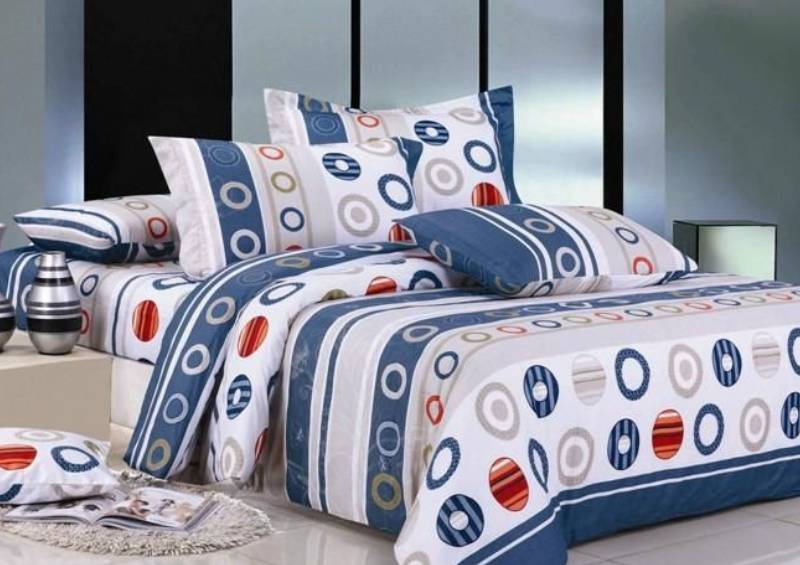
With the global ASF market now valued at around $5.72 billion in 2025, demand continues to flow from both traditional and emerging application segments. Winter apparel, sportswear blends, modacrylic flame-retardant textiles, and high-bulk insulation continue to anchor market volumes. The following snapshot provides a clearer understanding of where ASF is headed through 2030.
Table: Global acrylic staple fibre market segmentation (2024 volume)
|
Segment |
Volume share (approx.) |
CAGR forecast (2025-30) |
Primary driver |
|
Apparel (Sweaters, Sportswear) |
58.85% |
3.50% |
Wool-like feel, affordability, easy-care. |
|
Home Furnishing (Carpets, Blankets) |
20.00% |
3.00% |
Durability, flame retardancy (in modacrylic), vivid colors. |
|
Industrial/Technical (Filtration, Auto) |
Remainder |
4.02% (Fastest) |
Chemical resistance, high-bulk insulation, specialized performance. |
Despite the dramatic ACN correction, ASF prices across China, Vietnam, and Indonesia saw only a marginal decline of 2.5-3 per cent in Q3 2025. This narrow adjustment reinforces the narrative of disciplined pricing, as producers absorb shocks rather than replicate them downstream.
A market reinvented by sustainability and specialty innovation
Behind the newly established pricing power lies another force is quietly reshaping the ASF market: a shift towards sustainability, recycling, and bio-based raw material innovation.
Recycled Acrylic (Re-ASF) emerges strong: With governments in the EU, Japan, and North America tightening Extended Producer Responsibility (EPR) mandates, global brands now actively seek recycled acrylic fiber for knitwear and home textiles. This demand allows manufacturers to invest in technologies that extract and purify polyacrylonitrile (PAN) from textile waste streams.
A notable consequence is that Re-ASF operates on an entirely different cost logic, one decoupled from virgin ACN markets. For leading producers, this creates a dual benefit: insulation from petrochemical swings and access to higher-margin sustainability-driven orders.
Bio-Based ACN the next frontier: R&D-led companies, especially in Japan and Europe, are pushing aggressively toward bio-based ACN. Asahi Kasei’s development of biomass-derived propylene certified under ISCC PLUS marks a landmark achievement. This innovation not only answers environmental scrutiny but also forms a long-term hedge against petroleum price volatility, an important factor as crude oil markets become more unpredictable due to climate transition policies.
Moving from commodity to specialty powerhouse
Taken together, these developments, price discipline, structural integration, sustainability pivots, and specialty innovation signify a clear evolution. The ASF industry is no longer playing the role of a commodity chemical sub-sector reacting to petrochemical shocks. Instead, it is emerging as a specialty materials category where value creation stems from control, consistency, technology, and environmental compliance.
The decoupling of ASF pricing from ACN volatility is not a temporary anomaly; it is a strategic reset. The global acrylic fiber market has entered a new era, one in which power rests with producers who can offer reliability in an increasingly unpredictable world. In that sense, 2025 will be remembered not for the ACN crash but for the moment when the world’s fiber giants turned volatility into an advantage and redefined the future of synthetics.