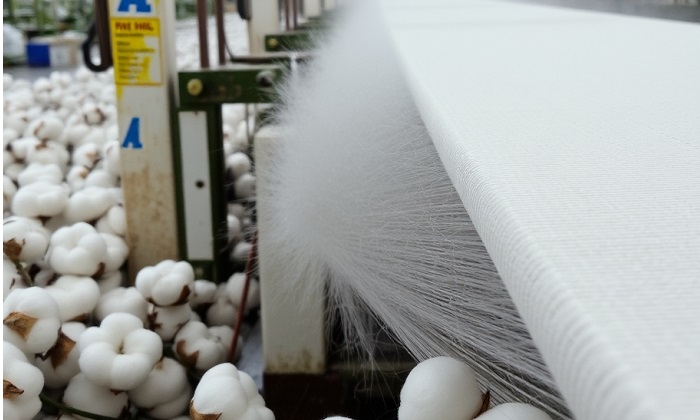
In the back drop of farmer suicides in Punjab and Haryana due to extensive damage to the cotton crop in 2015-16 because of pest attack has led to a swing in official opinion against genetically modified (Bt) seeds. The two state governments appointed a Joint Action Committee to ascertain the causes and to suggest remedies for white fly infestation. According to its report, the native variety (arboreum) is immune to cotton leaf curl viral disease and comparatively tolerant to white fly and other sucking insect pests. Hence, its cultivation should be promoted in Haryana, Punjab and Rajasthan.
According to sources in the Haryana government, an effort is on to assess the availability of traditional variety seeds with the agriculture universities, the Central Institute of Cotton Research and private seed producers. They expect to replace 15-20 per cent of the area under Bt cotton seed with the traditional one this year (rabi 2016-17) and in the next few years to take it to 50 per cent. Co-existence of Bt and non-Bt crop would curtail the chance of spread of epidemics like white fly, as the two crops are resistant to different kinds of diseases. Monoculture in agriculture is one of the causes of widespread diseases in plants. Presently, 95 per cent of the cotton grown in Punjab and Haryana is the Bt variety and this triggered the quick spread of disease.
- 1
- 2
- 3
- 4
- 5
- 6
- 7
- 8
- 9
- 10
Cotton markets hold firm as tariffs, higher supply reshape global fiber economic…
In a year marked by tariff escalations, geopolitical brinkmanship and a recalibration of global trade flows, the international cotton market... Read more
Beyond Cotton How Kapok could redefine sustainable insulation in textiles
In the lush, humid heart of Southeast Asian rainforests stands a giant, a silent sentinel of the forest canopy. Growing... Read more
Bharat Tex 2026: Redefining the global textile value chain
Union Minister of Textiles, Giriraj Singh, has officially unveiled Bharat Tex 2026, signaling a significant leap in India’s influence over... Read more
Intertextile Shanghai Spring 2026: A hub for global textile innovation
The textile industry’s pulse is quickening as Intertextile Shanghai Apparel Fabrics – Spring Edition prepares to open its doors from... Read more
Moscow Fashion Week 2026: Blending sustainable innovation with timeless glamour
Scheduled to run from March 14-19, 2026 in Moscow, Russia, the Moscow Fashion Week (MFW) is cementing its status as... Read more
The Store as Stage: How fashion is crafting immersive consumer worlds
The North American fashion retail sector in 2026 is shedding its product-first identity and shifting towards a model that values... Read more
Turning the supply chain upside down, on-demand production reshapes apparel
The global fashion industry, long celebrated for its creativity and scale, is facing a structural reckoning. For decades, retailers and... Read more
Intertex Milano 2026 - A global nexus for textile innovation
Intertex Milano is set to return this summer, confirming its status as a premier international destination for the textile and... Read more
Primark at crossroads as AB Foods weighs spin-off amid digital and Lefties press…
The long-standing supremacy of Europe’s budget fashion champion, Primark, is facing a test. As of February 2026, Associated British Foods... Read more
Vietnam, Bangladesh, Cambodia drive US apparel imports in 2025
The 2025 year-end data for the US apparel sector reveals an industry in structural flux. Despite aggressive tariff measures and... Read more