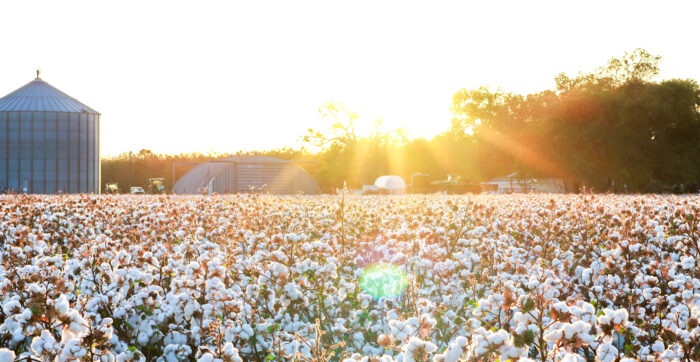
Gujarat is witnessing a sharp decline in forward contract of cotton for export in the new season. This is because exporters have had bad experiences in the past few years and faced losses due to advance commitment of cotton buying. Gujarat, a leading cotton producing state has sown cotton on 2.63 million hectares as on September 4 as against 2.38 million hectares in the corresponding period of 2016. Gujarat accounts for a 25 to 30 per cent share in India’s cotton exports.
Usually a month before the new season, exporters commit advance orders with ginners and cotton suppliers for exports in November and December. However, in view of unfavorable experiences in recent years, exporters are not taking risks in forward contracts resulting in virtually no forward contracts this year.
Good monsoon has increased cotton sowing by almost 18 per cent nationally and 10.50 per cent in Gujarat. Higher sowing has brightened the expectation of better production. India will remain the world’s largest cotton producer in 2017-18 with a four per cent increase in output. The country has exported six million bales of cotton so far during cotton year 2016-17. Cotton production in the US is forecast to increase by 20 per cent.
- 1
- 2
- 3
- 4
- 5
- 6
- 7
- 8
- 9
- 10
Beyond the DTC Rush: Levi’s hybrid channel strategy sets a new retail benchmark
The global apparel sector is entering a phase where channel strategy is no longer a tactical lever but a core... Read more
The New Rules of Resale: EPR turning secondhand into fashion’s strategic growth …
The global fashion industry is facing a decisive regulatory and commercial reset. What began as a sustainability narrative around reuse... Read more
The 2027 Mandate: Why denim’s future hinges on verifiable data
For decades, the global denim industry has relied on a narrative of durability, heritage, and authenticity. That narrative is now... Read more
Europe’s textile core unravels as costs, imports and policy pressure bite
Europe’s textile and apparel sector, long seen as a benchmark for craftsmanship and industrial depth, is slipping into a prolonged... Read more
Automation, innovation, regulation are the forces shaping textiles in 2026
The global textile sector has entered a new era. Early 2026 saw the industry breach a $1.06 trillion valuation, reflecting... Read more
The new Brussels rulebook, every EU apparel order is now a balance-sheet risk
The humble export order sheet is undergoing a transformation. What was once a straightforward commercial instrument: SKU, volume, FOB price,... Read more
Why 2026-27 could be a defining cotton year for India’s farm-to-fashion economy
The global cotton economy is entering a more constrained phase, and for India, the implications run far beyond the farm... Read more
Luxury resale’s next big battle is no longer digital, it is about who controls s…
For nearly a decade, the luxury resale story was written in the language of platforms. Market leadership was measured by... Read more
Digital Arms Race: Indian apparel giants deploy AI to neutralize tariff crisis
The Indian textile and apparel sector is in a digital survival phase in 2026, shifting from traditional labor-intensive models to... Read more
Europe’s Textile Endgame: Why Project FAE is becoming fashion’s most critical in…
Europe’s apparel majors are no longer treating circularity as a branding layer. With Project FAE or Feedstock Activation Europe, the... Read more